

A single porcelain veneer typically costs $900 to $2,500 per tooth, while composite veneers range from $250 to $1,500 per tooth. Your total bill scales directly with the number of teeth treated, so a smile makeover costs far more than the per-tooth quote suggests.
That distinction matters most in Manhattan, where patients often want a balanced smile rather than a repair for one isolated tooth. A six-to-eight-tooth porcelain case can average roughly $13,954 to $15,486 nationally, according to CareCredit's 2026 veneer cost guide. In a Midtown consultation, the useful question isn't, “What does one veneer cost?” It's, “What will my complete aesthetic plan cost, including preparation, temporaries, laboratory work, and follow-up care?”
Understanding Veneer Pricing in 2026
The national pricing structure is straightforward. Porcelain veneers generally cost $900 to $2,500 per tooth, while composite veneers generally cost $250 to $1,500 per tooth. Those ranges provide a useful starting point, but they don't describe the investment most patients are considering. A single veneer may correct one discolored or chipped tooth. A visible smile transformation usually involves several teeth treated together so the color, shape, proportions, and midline look intentional.
For a six-to-eight-tooth porcelain makeover, national averages can reach roughly $13,954 to $15,486, while broader pricing guides place six-to-eight-tooth cases around $6,000 to $20,000 or more, depending on material and complexity. Recent veneer pricing guidance also places a 16-to-20-tooth full-mouth case at approximately $15,000 to $50,000 or more. These figures aren't interchangeable quotes. They illustrate why scope matters more than a promotional per-unit price.
The smile arc changes the budget
Most cosmetic plans focus on the teeth visible during speech and smiling, not every tooth in the mouth. Your dentist should evaluate how broadly you smile, whether your lower teeth show, how your teeth meet, and whether the proposed shade will look natural beside untreated teeth.
A quote for eight veneers may sound manageable until you add diagnostic records, temporary restorations, gum treatment, or restorative work on teeth that aren't healthy enough for veneers. Before comparing Manhattan offices, ask each practice to define the exact number of teeth included and identify every excluded service.
| Veneer Type | Per-Tooth Cost | Full Smile (6–10 Teeth) | Typical Lifespan |
|---|---|---|---|
| Porcelain | $900–$2,500 | Varies by scope, materials, and complexity | Depends on care and clinical conditions |
| Composite | $250–$1,500 | Varies by scope, materials, and complexity | Depends on care, repairs, and clinical conditions |
The ranges above reflect current U.S. consumer pricing information. For a busy Midtown professional, the right comparison is not the cheapest veneer. It's the clearest complete plan. Review the broader context of restorative and cosmetic dentistry in Manhattan before treating cosmetic work as an isolated purchase.
Porcelain vs Composite Veneers Cost Comparison
Porcelain and composite veneers address similar cosmetic concerns, but they suit different budgets, timelines, and maintenance expectations. Composite has the lower entry price and can usually be shaped directly by the dentist. Porcelain costs more upfront because a laboratory fabricates each restoration for its planned shape, shade, texture, and fit.
For a full-smile case in Midtown, compare the treatment plan rather than multiplying a per-tooth price. Six front teeth may require a different design, shade-matching process, and bite assessment than a broader smile that exposes upper and lower teeth. Ask whether the quote includes temporaries, digital planning, laboratory communication, and adjustments.
Porcelain is usually the stronger choice for a long-term smile makeover when the budget allows. Its glass-like surface resists staining and reflects light more like natural enamel. Composite can look excellent when an experienced dentist sculpts it carefully, especially for a limited correction, but resin generally shows wear and discoloration sooner.
Upfront cost versus replacement risk
The price difference is substantial. Porcelain commonly falls between $900 and $2,500 per tooth, while composite commonly falls between $250 and $1,500 per tooth, as documented in GoodRx's veneer cost comparison. Premium porcelain options are often priced at about two to three times the cost of composite resin in U.S. pricing guides.
Composite can suit a conservative correction, a lower initial investment, or a trial change in tooth shape before laboratory-made restorations. A small chip may also be easier to repair or modify. Those advantages matter, but frequent repairs, polishing, replacement visits, and time away from work can change the full-smile cost.
Porcelain generally makes more sense if you prioritize stain resistance, refined translucency, and a stable appearance over many years. Composite demands closer attention to staining foods, hard objects, clenching, and repairs. Your dentist should assess bite forces and maintenance needs before recommending either material.
A practical long-term calculation
Across a long treatment horizon, composite may require repair or replacement, while porcelain can remain serviceable longer with proper care. The lower initial bill can therefore lead to additional treatment cycles, appointment time, and replacement spending.
No responsible dentist should promise an exact lifespan. Bruxism, bite design, oral hygiene, trauma, dietary habits, and preparation quality all affect performance. Review the functional differences in this comparison of porcelain veneers and crowns.
For a Midtown professional seeking a polished full-smile result with less visible maintenance, porcelain is usually the better investment. For a smaller, budget-sensitive correction, composite deserves serious consideration. Choose the material after reviewing the complete scope, not a discounted per-tooth headline.
Key Factors That Affect Your Veneer Bill
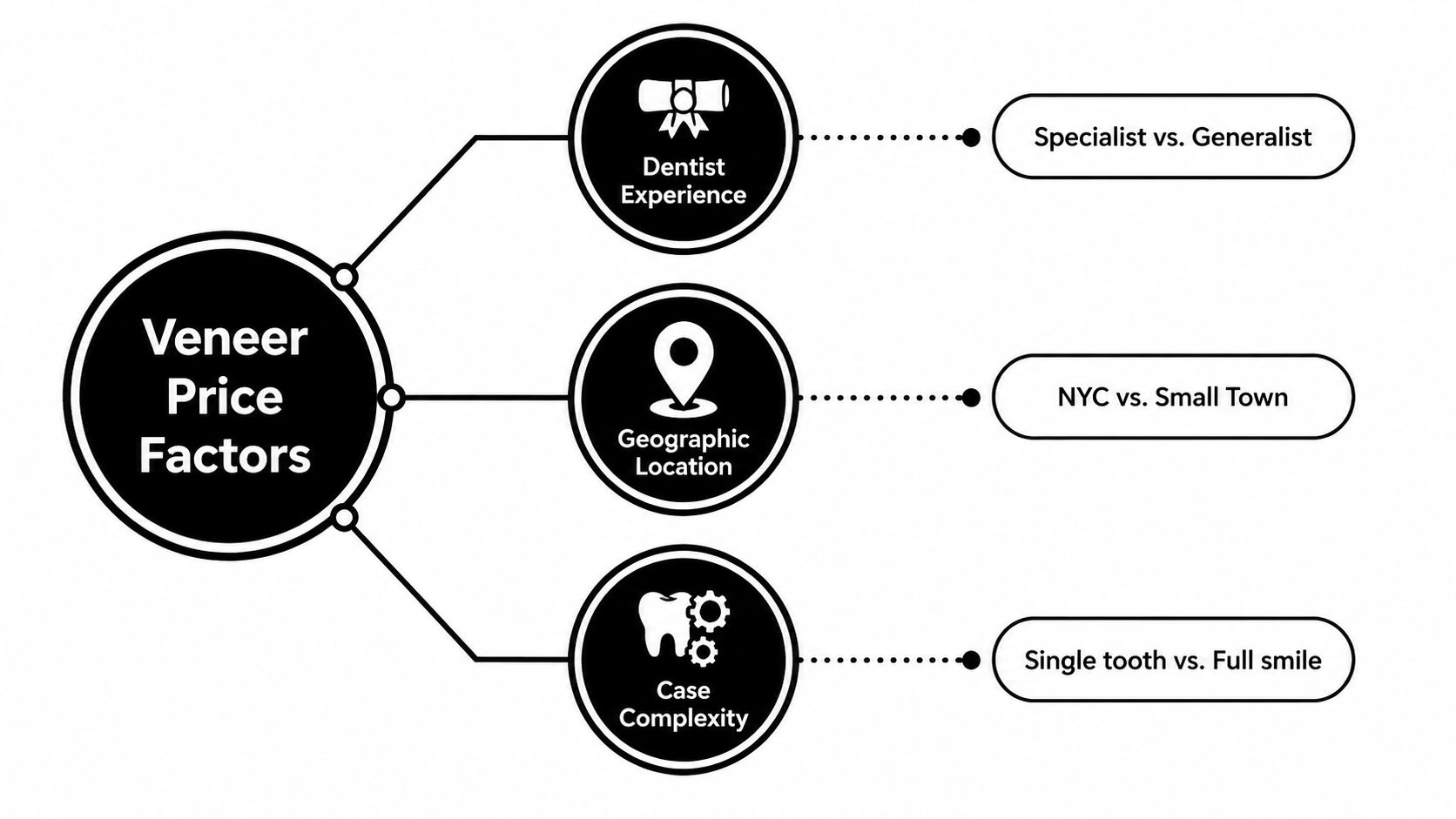
The dentist's fee is only one part of veneer pricing. Two Manhattan practices can quote different amounts for what sounds like the same treatment because they may be using different laboratory partners, planning protocols, materials, and levels of clinical oversight.
Four variables deserve close attention
Cosmetic training and experience: A dentist who routinely designs complete smiles will evaluate facial proportions, lip movement, tooth display, phonetics, and bite. A general dentist who places veneers occasionally may offer a lower quote, but the planning process may not be comparable.
Laboratory craftsmanship: The ceramist's work affects edge texture, translucency, contact points, shade layering, and symmetry. Ask whether the dentist works with a named laboratory and whether the lab can review digital scans, photographs, and temporary designs before final fabrication.
Manhattan overhead: A Midtown office has different operating costs from a suburban clinic. Rent, staffing, technology, appointment coordination, and laboratory logistics all influence the final fee. Location alone doesn't prove quality, but it does help explain why city pricing differs.
Case complexity: A straightforward color and shape correction is not priced like a case involving uneven gum levels, worn enamel, crowding, bite interference, or existing restorations. If gum contouring, orthodontic alignment, periodontal treatment, or restorative work is needed first, those services belong in the total plan.
Ask for a complete written estimate
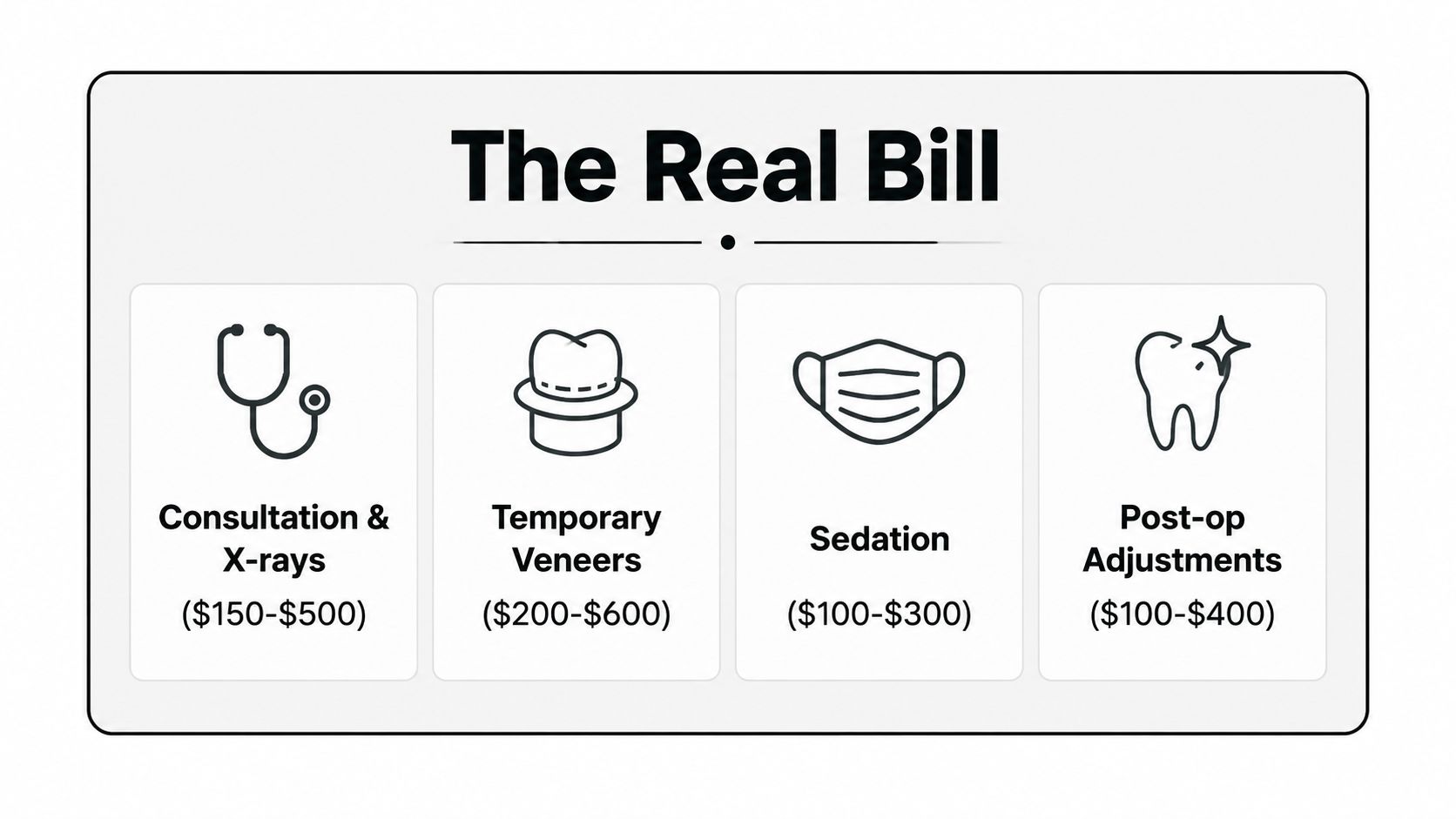
The number of teeth can affect the quoted unit price, but don't assume a volume discount. Ask whether the estimate includes digital scans, photographs, a mock-up or provisional design, temporaries, laboratory fees, insertion, and follow-up adjustments.
A good consultation should also explain what happens if a veneer doesn't fit, chips, or needs a shade adjustment. You should know whether those situations fall under a practice warranty, a laboratory policy, or an additional fee. If you're comparing veneers with broader restorative needs, review the cost considerations in this guide to dental crowns.
Hidden Costs Most Pricing Guides Ignore
The per-tooth quote often excludes the work that makes the final result predictable. That's why a seemingly attractive price can expand after the dentist evaluates your gums, bite, existing fillings, and smile dynamics.
Diagnostic planning may include digital photographs, intraoral scans, radiographs, and a digital smile design. These records help the dentist evaluate tooth proportions and plan the relationship between the proposed veneers and your lips, gums, and neighboring teeth. A scan isn't decorative technology. It can reduce ambiguity before the laboratory starts fabrication.
Costs before placement
Temporary veneers protect prepared teeth during the laboratory phase and give you an opportunity to assess speech, length, fullness, and overall appearance. If the temporaries reveal that the teeth look too long or too square, the dentist can revise the design before placing the final restorations.
Gum contouring is another possible add-on. Uneven gum margins can make otherwise well-made veneers look asymmetrical. Treating the gumline may improve the proportions, but it should be recommended for a clinical or aesthetic reason, not added automatically.
Costs after delivery
The final appointment may require bite refinement. A veneer can look perfect in a photograph and still feel high if the occlusion isn't balanced. Follow-up visits may also address rough edges, speech adaptation, gum response, or a contact that feels too tight.
Laboratory selection affects the bill as well. A local ceramist may provide more direct communication during the design process, while an overseas laboratory may be priced differently and involve different shipping and revision logistics. Neither label guarantees a result. Ask who makes the restorations, how revisions are handled, and who evaluates the final fit.
Practical rule: Ask for the cost of the complete treatment sequence, not just the cost of each shell.
A full-mouth plan may also expose unrelated restorative needs. If a tooth needs a crown, periodontal care, or an implant rather than a veneer, forcing it into a cosmetic package can create a poor long-term decision. Compare the treatment sequence with other restorative options, including the cost considerations for dental implants, before approving a large aesthetic plan.
Insurance Coverage and Financing Options
Most dental insurance plans treat veneers as elective cosmetic treatment, so routine coverage is uncommon. The exception may involve a tooth damaged by trauma or severe enamel loss, where the restoration has a functional purpose. Coverage depends on the specific plan and clinical documentation, so ask the dentist's office to submit a pre-authorization request before treatment begins.
A useful submission typically includes clinical photographs, radiographs, the diagnosis, the proposed restoration, and an explanation of why a cosmetic-only alternative isn't the complete clinical answer. Don't assume pre-authorization guarantees payment. It tells you how the carrier is likely to process the claim, subject to the plan's rules.
Build financing around treatment phases
For a multi-tooth case, ask whether payments can be scheduled around the diagnostic phase, preparation and temporaries, and final placement. That structure may be easier to manage than paying the full balance at the first appointment.
Available approaches can include:
In-house arrangements: Some Midtown practices offer staged payments or office-based plans. Request the written balance, due dates, cancellation terms, and refund policy.
Third-party financing: CareCredit and Sunbit may offer healthcare payment plans, subject to approval and current terms. Promotional periods can look attractive, but deferred-interest language deserves careful review.
HSA or FSA funds: These accounts use pre-tax dollars for eligible healthcare expenses. Cosmetic treatment may receive different treatment from medically necessary care, so confirm eligibility with your plan administrator before relying on those funds.
| Financing Method | Typical Terms | Interest Rate | Best For |
|---|---|---|---|
| In-house payment plan | Practice-specific schedule | Practice-specific | Patients seeking direct coordination |
| Third-party healthcare financing | Lender-specific installment or promotional plan | Credit and offer dependent | Patients who prefer monthly payments |
| HSA or FSA funds | Account and plan rules apply | Not a loan rate | Patients with eligible pre-tax funds |
| Direct staged payments | Tied to treatment milestones | Practice-specific | Patients paying across appointments |
Don't choose a plan based only on the advertised monthly amount. Confirm the total repayment, the date promotional terms expire, what happens if treatment changes, and whether missed payments trigger additional charges. For broader context on coverage questions, review how dental insurance handles crowns, while remembering that veneers are commonly classified differently.
Choosing the Right Practice for Your Investment
A veneer case is a permanent treatment decision, not a commodity purchase. Saving a few hundred dollars per tooth won't matter if the shade is wrong, the margins trap plaque, the bite feels uncomfortable, or the final design requires replacement.
Evaluate the process, not the sales pitch
Start with the dentist's actual cosmetic portfolio. Look for cases resembling your own teeth, including work with natural translucency, controlled brightness, realistic proportions, and gumlines that look healthy. Ask whether the images show the dentist's own patients and whether the practice can explain the planning behind each case.
Then ask practical questions:
Who designs the smile? The dentist should explain how facial features, lip movement, tooth display, and phonetics influence the plan.
Who makes the veneers? Request the laboratory's name and ask how the dentist communicates with the ceramist.
What happens before preparation? A responsible plan addresses cavities, gum inflammation, unstable fillings, tooth wear, and bite concerns first.
Can I preview the proposed shape? A mock-up or provisional design can reveal whether the teeth feel too prominent, too long, or too uniform.
What does the quote include? Get a written list covering diagnostics, temporaries, laboratory work, insertion, adjustments, and possible additional treatment.
Who handles follow-up care? Continuity matters if a veneer needs adjustment or repair months after placement.

Discount packages deserve scrutiny. A low quote may exclude the design appointment, temporary restorations, gum treatment, or refinements. It may also use a material or laboratory process that doesn't match your expectations. A skilled cosmetic dentist should be willing to explain trade-offs plainly and recommend fewer veneers when that produces the more conservative, coherent result.
For Midtown patients with demanding schedules, continuity under one roof can also simplify care when cosmetic planning intersects with crowns, periodontal treatment, implants, orthodontics, or emergency needs. Paul L. Gregory, DDS provides cosmetic and restorative services, digital diagnostics, and insurance and fee communication at its Midtown Manhattan practice. Visit Paul L. Gregory, DDS to request a consultation and ask for a complete veneer estimate that separates the per-tooth fee from every preparation, laboratory, temporary, and follow-up cost.