

Dental insurance usually covers a crown at about 50% after deductible when it's medically necessary, not cosmetic, and after any waiting period has been satisfied. Even then, the plan's annual maximum and allowance rules can leave you with a much bigger bill than you expected.
That's why a crown estimate can feel frustratingly vague. You're looking at a real tooth problem, a treatment plan that sounds straightforward, and an insurance summary that seems to answer everything without explaining what you'll owe.
A patient can hear one number from the dentist, another from the insurer, and still not know whether to move ahead. The part that usually creates the most confusion is not whether crowns are ever covered, it's how the diagnosis is written, when the claim is filed, and how much benefit is left for the year. If you're already comparing treatment options, this overview of cavity fillings can help you see why some repairs stay in the basic category while crowns move into a different tier.
Why Your Crown Estimate Feels More Complicated Than It Should
A Manhattan patient sits in the chair, hears the crown fee, and starts running the numbers before the hygienist has even left the room. Then the insurance portal says the crown may be covered, but only in part, and only if the paperwork matches the plan's rules. That is the moment the question becomes does insurance cover dental crowns, and under what conditions.
The confusion is normal because dental benefits do not work like a simple yes-or-no warranty. Crowns are usually treated as major restorative care, so coverage often lands in the partial range instead of being paid in full. Many plans use a 100/80/50 structure, where crowns are commonly placed in the 50% category after deductible, and many plans also have annual maximums of about $1,000 to $2,500 and waiting periods of 6 to 12 months for major procedures. That mix is why a crown can be medically necessary and still leave a meaningful balance for the patient.
What the estimate is really telling you
The estimate usually reflects more than the tooth itself. It reflects the plan category, the allowed amount, your deductible status, and whatever benefits you have already used this year.
A crown estimate can also feel different from a filling estimate because the procedures sit in different coverage tiers. If you want a simple comparison of how repair choices are often classified, our page on cavity fillings shows why some treatments stay in the basic category while crowns move into a higher one.
Practical rule: if the crown is being recommended, ask which part of the bill is the allowed amount, which part is your share, and whether any benefit has already been used on earlier treatment.
The national picture helps explain why this comes up so often. The National Association of Dental Plans reported that at the end of 2024, about 290 million Americans had some form of dental benefit through employer-sponsored, group, individual, or public plans, yet crowns still sit near the bottom of reimbursement schedules, usually around 50% for major procedures like crowns, bridges, inlays, and dentures. That means coverage is common, but full payment is not.
A crown estimate can feel opaque, but it usually follows a pattern. The plan is not promising to pay the whole charge, it is applying its rules to the claim.
How Dental Plans Classify Crowns and Why It Matters
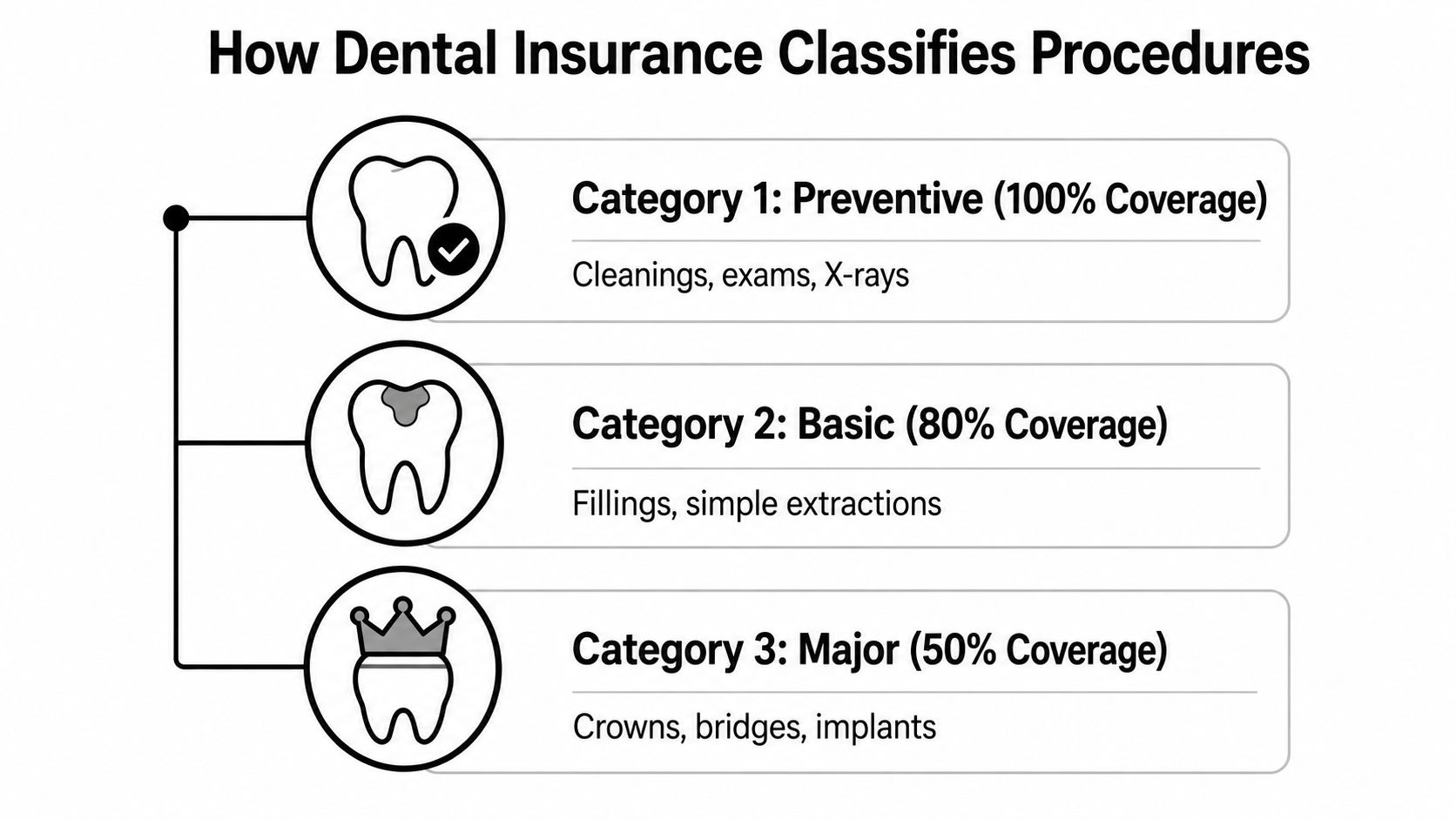
Dental plans usually sort treatment into categories before they sort it into dollars. That classification is what turns a crown from “a tooth repair” into major restorative care, and it's the main reason the coverage percentage is lower than it is for cleanings or fillings.
The 100 80 50 framework
A common dental benefit structure is 100% for preventive care, 80% for basic restorative care, and about 50% for major restorative care. Crowns usually fall in that last bucket, along with bridges and dentures. Humana's crown coverage guidance describes crowns as major restorative care, commonly capped at about 50% of the allowed amount after deductible.
That category matters because it sets the starting point for your bill. If your crown is allowed under the plan, the insurer may still pay only part of it, and the rest becomes your responsibility. If the dentist's fee is higher than the plan's allowed amount, the difference can also land on you.
| Coverage Factor | Typical Range | What It Means for You |
|---|---|---|
| Preventive care | 100% | Cleanings and exams are usually the easiest benefits to use |
| Basic restorative care | 80% | Fillings often fall here, so the share is lower than major work |
| Major restorative care | 50% | Crowns usually sit here, so your share is often substantial |
The reason patients get caught off guard is simple. They see “covered” and assume that means paid in full. It doesn't. It usually means the plan recognizes the procedure, then applies its own percentage and limit rules.
For patients comparing treatment options, crown-specific service information can help frame the conversation around restoration rather than just replacement.
Why two crown estimates can look so different
Two patients can get the same crown and still owe very different amounts. One may have already used preventive or basic benefits, another may still have most of the annual maximum available, and a third may be close to the plan cap. The category stays the same, but the final bill doesn't.
That's why the phrase “covered” is only the starting line. The actual number depends on the plan's structure, not just the procedure name.
Medical Necessity versus Cosmetic Reason for the Crown
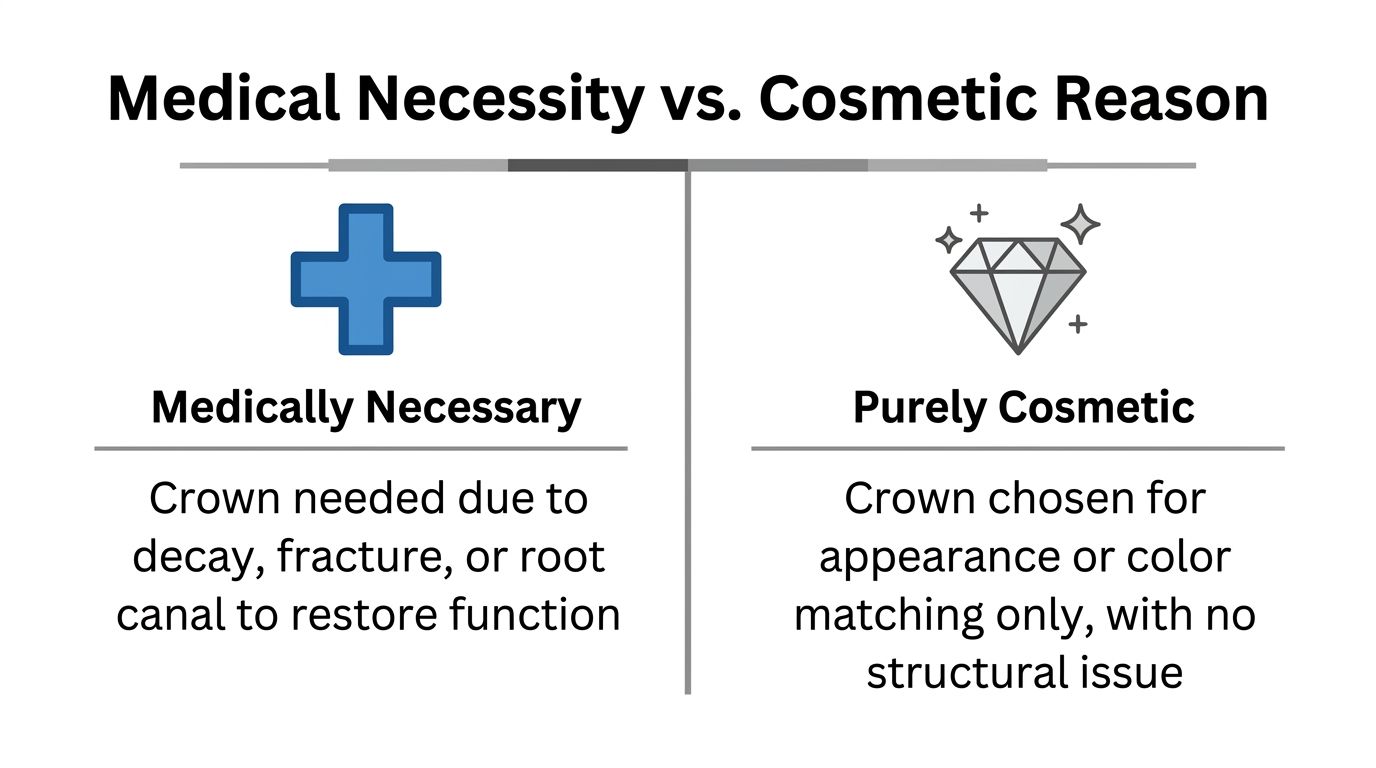
The biggest coverage divide is usually not the type of crown, it's why the crown is being placed. Dental insurance often pays when the tooth needs structural repair, and often denies when the goal is appearance alone.
A crown after a root canal or on a fractured tooth is the kind of case insurers are built to review. A crown requested to improve color, shape, or a minor chip on an otherwise healthy tooth lives in a much weaker coverage zone. That distinction sounds obvious until you see how much depends on the diagnosis wording.
What insurers look for
Insurers typically want documentation that the crown restores function, not just appearance. That usually means x-rays, decay notes, fracture documentation, or a diagnosis tied to chewing, support, or tooth survival. The ADA's crown claim guidance emphasizes that the restoration must involve substantial structural loss, and replacement crowns are generally not covered if the earlier crown is less than 5 to 7 years old, which reflects insurer policies against frequent replacement.
A patient can hear “the tooth is cracked” and assume coverage is automatic. It isn't always. The chart note has to show that the tooth can't reasonably be maintained without a crown, and that the need is clinical rather than cosmetic.
The cleaner the documentation, the easier the claim is to review.
That's also where plan type matters. In some cases, a dental issue tied to trauma, reconstruction, or a qualifying medical condition may be handled differently under medical insurance, not just dental. Patients often miss that possibility because most office conversations stay focused on the dental claim alone.
If you're comparing a crown to another appearance-focused treatment, veneers are a useful contrast because they're often discussed in cosmetic terms rather than structural repair.
A simple way to think about the gray zone
Ask one question. Is the tooth being rebuilt to function, or is the tooth being changed to look better? The answer doesn't decide the claim by itself, but it usually points you toward how the insurer will view it.
Crowns live in that gray zone because the same restoration can be medically necessary in one mouth and cosmetic in another. The documentation decides which story the insurer sees.
The Coverage Rules That Determine Your Actual Out-of-Pocket Cost
A crown can be covered and still feel expensive. That's because several plan rules stack on top of one another, and each one affects the final amount you owe.
The rules that shape the bill
First comes the deductible, which is the amount you pay before the plan starts contributing. Then comes the coverage percentage, which for crowns is commonly about 50% of the allowed amount after deductible. After that, the plan's annual maximum limits what the insurer will pay across the year, and many plans set that cap at roughly $1,000 to $2,500. Waiting periods can also delay eligibility for major work, with many plans requiring 6 to 12 months before crowns qualify for payment.
| Coverage Factor | Typical Range | What It Means for You |
|---|---|---|
| Coverage percentage | About 50% | The plan may pay only half of the allowed amount |
| Annual maximum | About $1,000 to $2,500 | The plan stops paying once the yearly cap is reached |
| Waiting period | 6 to 12 months | New coverage may not apply right away |
| Crown price without insurance | About $800 to $2,500 | The starting cost can already be substantial |
Here's where timing matters. If you already used part of your annual maximum on cleanings, fillings, or earlier treatment, there may be very little left for the crown. If your waiting period hasn't ended, the claim may not pay at all yet. If the crown is a replacement, the ADA guidance on the 5 to 7 year window can also affect approval.
Bottom line: “covered” doesn't mean “fully funded,” it means the claim fits the plan's rules.
That's why a crown in January can play out differently from the same crown in November. The tooth is the same, but the remaining benefit balance isn't.
For patients who want office help organizing the paperwork and benefit questions, Paul L. Gregory, DDS offers claim support and benefit guidance as part of treatment planning.
Real Scenarios That Show When Crowns Are Covered or Denied
A rules page is one thing. A real patient is something else. The fastest way to understand crown coverage is to see how the same benefit rules play out in everyday dental situations.

A crown after root canal treatment
A patient with a fractured molar has a root canal and then needs a crown to protect the tooth. That's a classic medically necessary case, and it usually fits the major restorative category. The insurance outcome is often partial payment rather than full payment, with the patient still responsible for the rest of the allowed amount and any overage.
A replacement crown that failed early
Another patient returns because a crown placed only a few years ago failed under decay. That case can be tricky because the ADA's crown claim guidance flags replacement crowns that are less than 5 to 7 years old. Even if the tooth needs treatment, the insurer may review whether the replacement is excluded, delayed, or treated as a special exception depending on the documentation.
A crown chosen mainly for appearance
A third patient wants a crown on an otherwise healthy tooth to improve shape or color. That is the weakest coverage scenario. Without a structural reason, the claim is likely to be denied or treated as non-covered cosmetic care.
For a separate clinical path, root canal treatment information helps explain why the crown is often the restorative follow-up rather than the first step.
Practical rule: if the tooth can still function without the crown, insurance will ask harder questions.
These scenarios all sound different, but the insurer is asking the same thing each time. Is the crown restoring a damaged tooth, or is it changing a healthy one?
What to Ask Your Insurer Before You Get the Crown
A crown estimate can look straightforward on paper, then turn into a surprise once the claim is processed. The fastest way to reduce that gap is to ask your insurer for the details that control payment, not a general yes or no.
Questions worth asking
- What is left in my annual maximum? If the plan has already paid for exams, fillings, or other treatment, there may be less coverage left for the crown than you expected.
- Has my waiting period ended for major procedures? If the waiting period is still open, the claim can be delayed or denied even when the tooth needs treatment.
- Is this crown considered medically necessary under my plan? The diagnosis wording carries more weight than the way the tooth looks.
- What documentation do you want from my dentist? Ask whether they need x-rays, treatment notes, or specific diagnosis language before they review the claim.
- Is my dentist in network for this claim? Network status can change the allowed amount and the share you pay yourself.
- What is the plan's allowed amount for a crown? That is the figure the insurer uses before applying its coverage percentage.
What to write down during the call
Record the representative's name, the date, and the answers you receive. If the insurer says the crown is covered, ask whether that means the plan covers the procedure in principle or whether preauthorization is still required. A short note with those details can matter later if the claim is reviewed against the original estimate.
You want clear answers on benefit left, waiting periods, and whether the diagnosis fits the plan's rules. Those three points usually explain why one crown is paid, partially paid, or denied.
If you are comparing offices, the practice's Manhattan location and treatment guidance can help you line up the office estimate with the insurance estimate before you commit.
Making the Most of Your Crown Coverage
The cleanest way to think about crown insurance is this, coverage is usually available, but it's rarely automatic. The plan's category, the diagnosis wording, the timing of the claim, and the remaining annual maximum all shape the final outcome.
That means the patient who asks early usually has the most control. Verify the benefit before treatment, confirm that the crown is documented as medically necessary, and make sure your dentist has what the insurer wants before the claim goes out. A clear claim is often the difference between a smooth payment and a confusing denial.
You do not need to memorize every insurance rule. You just need to know which questions change the result. Once you have those answers, a crown estimate stops feeling like a guessing game and starts looking like a plan.
If you're weighing a crown and want help sorting out insurance language before treatment starts, Paul L. Gregory, DDS can review your options, explain the paperwork, and help submit claims for restorative care. The office also provides crowns and other dental treatment for patients who want clear guidance on what their plan may cover.