

You've just left the office with a new crown, a numb mouth, and a question that matters more than people think. The crown looks finished, but the first day, and the habits after that, decide whether it stays comfortable, seals well, and lasts. Most failures don't start with a dramatic break, they start with a small margin leak, a bite that feels slightly off, or plaque sitting where the crown meets the tooth.
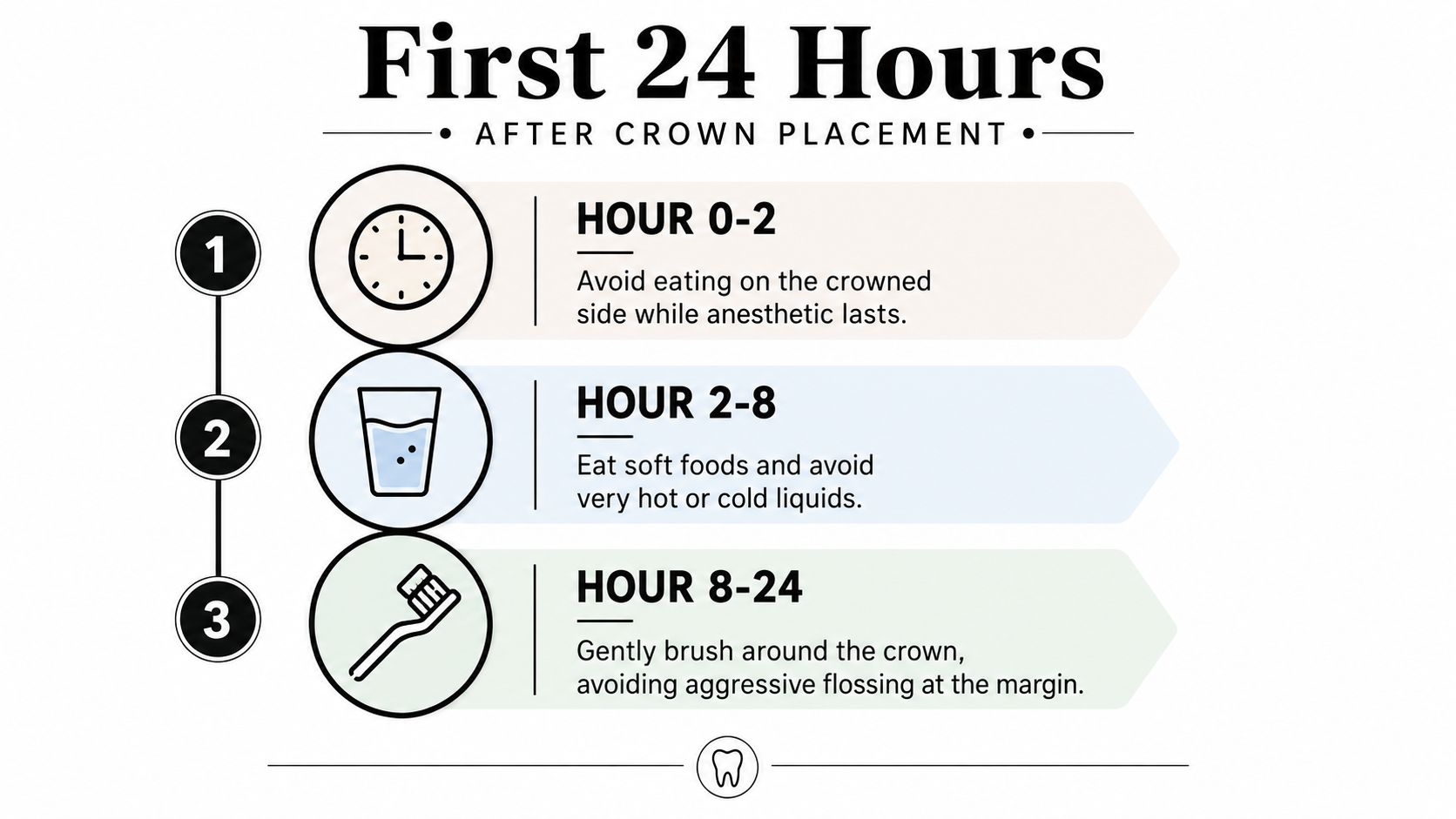
First 24 Hours After Crown Placement
The first day is about protecting the bond, not testing the crown. Cement and surrounding tissues need a little time to settle, and that means no aggressive chewing on the crowned side, no sticky foods, and no shortcuts with flossing that can tug at the edge. If your mouth is still numb, chew on the other side and keep your tongue away from the area so you don't accidentally bite yourself.
What to do first
For the first stretch after placement, keep things simple. The post-op instructions many dentists use are consistent, avoid food and drink for the first 1 to 2 hours, then move to a soft diet for 24 hours and stay off the crowned side until numbness fades and the bite feels stable, as outlined in a common crown aftercare guide from Greater Dental Health's post-operative instructions for dental crowns. That same guide warns against snapping floss upward, because that motion can dislodge a temporary or fresh restoration, which is why the safer move is to slide floss out sideways (Greater Dental Health).
If you were told your crown is part of a larger restorative plan, keep your expectations practical and specific. The right follow-up matters just as much as the placement itself, especially if you're reading this after a fast appointment and want a broader overview of crown treatment options, including same-day care, on crowns for teeth.
Practical rule: If the crown feels stable, eat like it's fragile anyway for the first day. That caution prevents the most avoidable early problems.
What to avoid
Sticky foods are the worst idea in the first 24 hours. Caramel, taffy, hard crusts, and chewing gum can pull at the margin or put the crown under a force it wasn't ready for yet. Very hot or very cold drinks can also make a newly treated tooth more reactive, so room-temperature or lukewarm choices are easier on the tooth and the tissues around it.
Gently brush the rest of your mouth that night, but don't scrub the crown line. If you need to floss, keep the motion controlled and let the floss slide out instead of snapping upward. If the crown feels loose, or if the bite feels obviously wrong once the numbness wears off, call your dentist rather than waiting it out.
Why Crown Longevity Depends on Your Daily Habits
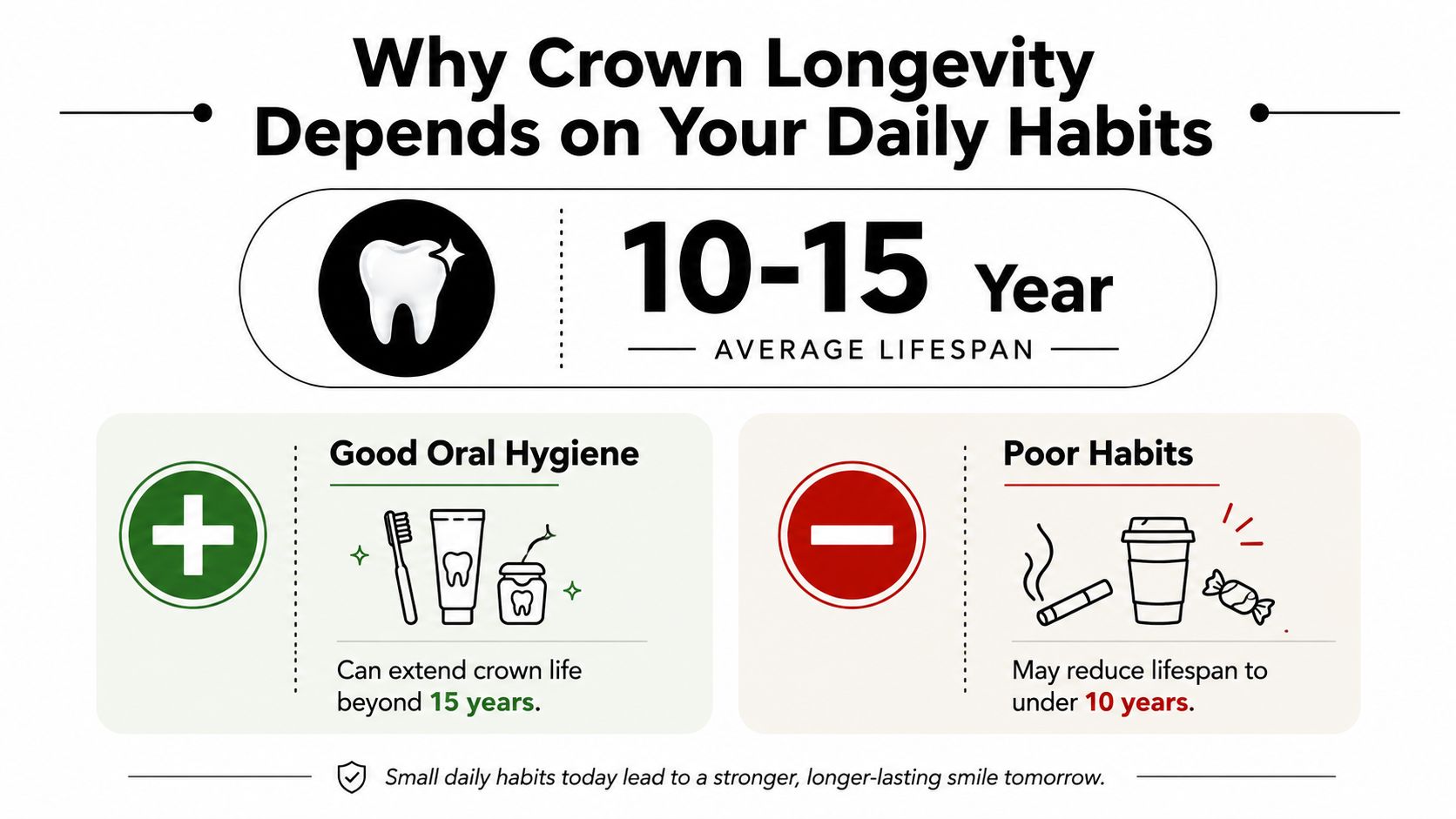
A crown is durable, but it isn't permanent. In one large longevity analysis from England and Wales, 77% of crowns survived to 5 years, 63% to 10 years, and 53% to 15 years (Nature BDJ article). Another retrospective study of tooth-supported single crowns reported cumulative survival of 89.9% at 5 years, 80.9% at 10 years, 70.5% at 15 years, and 61.8% at 20 years (PubMed study). Those are solid numbers, but they also make the same point, crowns do better when patients protect them consistently.
What crown failure usually looks like
Failure usually isn't sudden. The evidence base describes crown loss through identifiable problems such as loss of retention, tooth loss, and tooth fracture (Nature BDJ article). That matters because aftercare is aimed at reducing those pathways, not just keeping the crown looking polished.
The biggest day-to-day threats are usually at the edges, not the center. Plaque around the crown margin can lead to decay under the restoration, and heavy chewing forces can stress the tooth and the cement that holds everything together. The result is often slow, not dramatic, which is why people can feel fine for months before a problem becomes visible.
Why the tooth underneath matters
Long-term survival also depends on what's being crowned. In a 10-year study from England and Wales, metal crowns had 68% survival at 10 years, while all-porcelain crowns had 48% survival at 10 years (PubMed study). The same study found that root fillings were associated with reduced survival time for crowns. That doesn't mean a crown on a root-filled tooth will fail, it means that tooth needs more careful monitoring, especially at the margin and in the bite.
For patients who want maintenance framed as part of a broader prevention plan, routine cleanings and periodontal support matter just as much as the crown itself. A practical overview of maintenance-oriented care is available through dental periodontal maintenance, because the crown margin doesn't live in isolation from the gums around it.
Crowns don't usually fail all at once. They wear down in predictable ways, and daily habits decide whether those problems stay small.
Cleaning Around Crown Margins Without Damaging the Restoration
The crown material is rarely the weak link. The vulnerable spot is the junction where the crown meets your natural tooth, because that's where plaque can hide and where decay can start under the edge. Regular brushing helps, but it's the gumline cleanup that really protects crown longevity.
Floss without lifting the crown
The flossing mistake I see most often is force. If someone snaps floss straight back up, that tug can catch the margin, especially soon after placement. The safer move is to guide the floss down, curve it around the side of the tooth, and slide it out laterally instead of popping it upward, a point also reinforced in common crown aftercare instructions from Healthy Living Dentistry (Healthy Living Dentistry).
A soft-bristled brush and fluoride toothpaste are still the basics. What changes with a crown is the angle and the attention at the gumline, especially around the back teeth where plaque is harder to see. If you've got multiple restorations, dry mouth, or a history of gum inflammation, don't rely on a quick once-over.
Make the margin easier to keep clean
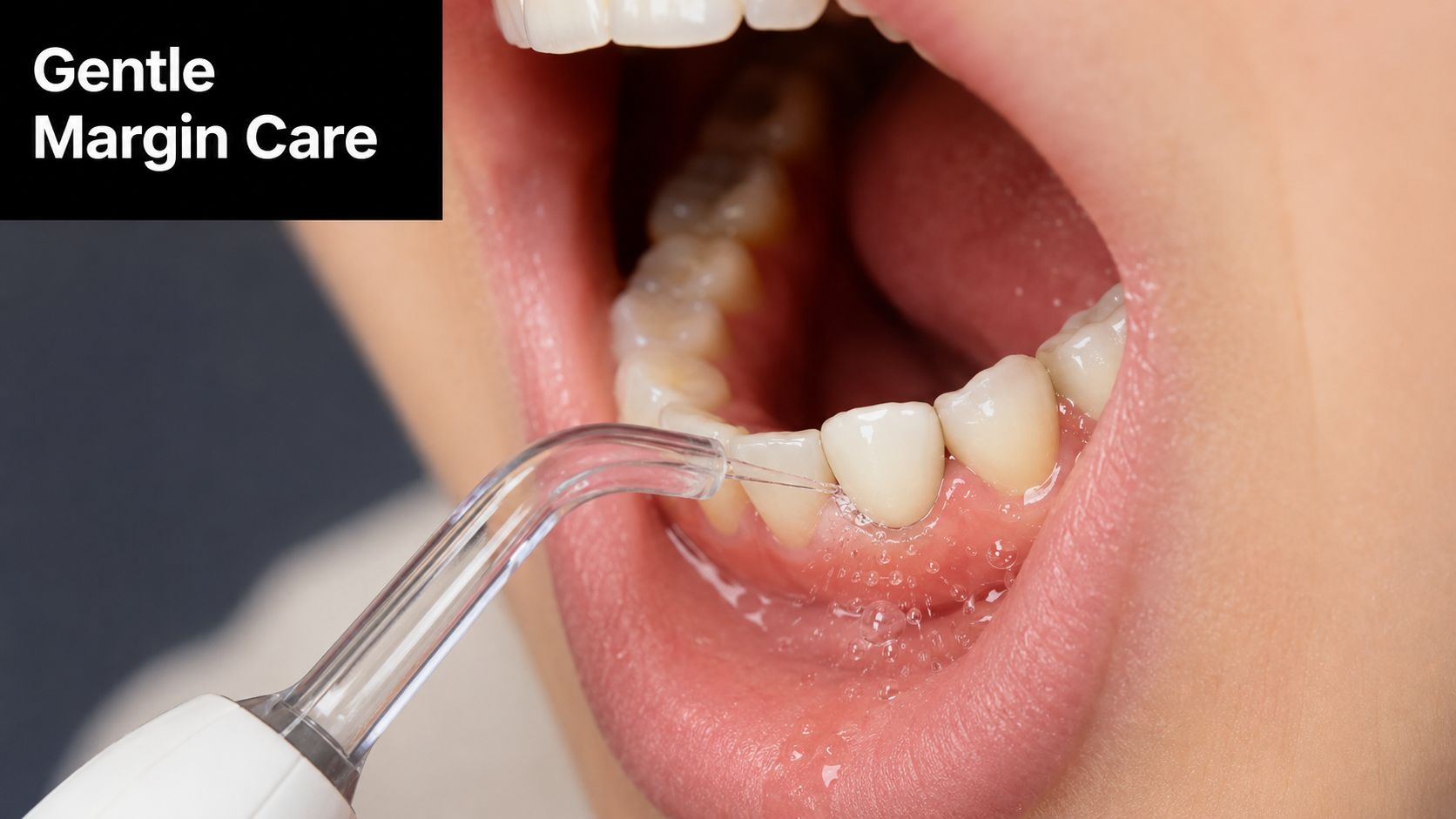
Interdental brushes and a water flosser can help around contours that string floss misses. The water flosser is especially useful if your hands are busy, your gums are tender, or the crown sits close to the gumline. It's not a substitute for regular cleaning, but it can make the margin easier to manage between visits.
Watch for bad breath, bad taste, sharp edges, or a crown that starts feeling different when you run your tongue along it. Cleveland Clinic also advises patients to stay alert to cracks and use regular cleanings and fluoride toothpaste as part of crown care (Cleveland Clinic). If you notice those changes, the issue may be margin leakage or early decay, not just a little irritation.
A professional cleaning and exam schedule helps catch what daily brushing can't see. If you need a place to compare routine exam support with restorative follow-up, professional dental cleanings and exams are a practical part of crown maintenance, not an extra.
When Your Bite Feels Off After Crown Placement
A crown that feels “high” isn't something to ignore. Even a small occlusal discrepancy can leave the tooth sore, make chewing uncomfortable, or trigger lingering sensitivity. Waiting usually doesn't solve that, because every bite keeps loading the same contact point.
Many crowns are placed on teeth that were already compromised. Research on crown indications shows that fractured or cracked teeth, endodontic therapy, and broken restorations are major reasons crowns get placed (PMC article). That matters because a tooth that's already been through damage or root canal treatment may react more strongly to a bite change than a straightforward cosmetic crown.
If the crown only feels slightly off when you close, that can still be enough to create inflammation. Soft tissue irritation can fade, but a bite issue often keeps announcing itself every time you chew. The cleanest solution is an adjustment, not a test of patience.
Call sooner if: the crown hurts to bite on, the tooth feels tapped-in, or chewing on that side changes the discomfort instead of improving it.
A quick recheck is a normal part of restorative care. If you're unsure whether pressure is routine adaptation or a genuine problem, contact a dentist rather than assuming it will settle on its own. For urgent concerns, emergency dentist is the right kind of follow-up when the bite feels clearly wrong or the discomfort is increasing.
Protecting Crowns from Grinding and Excessive Force
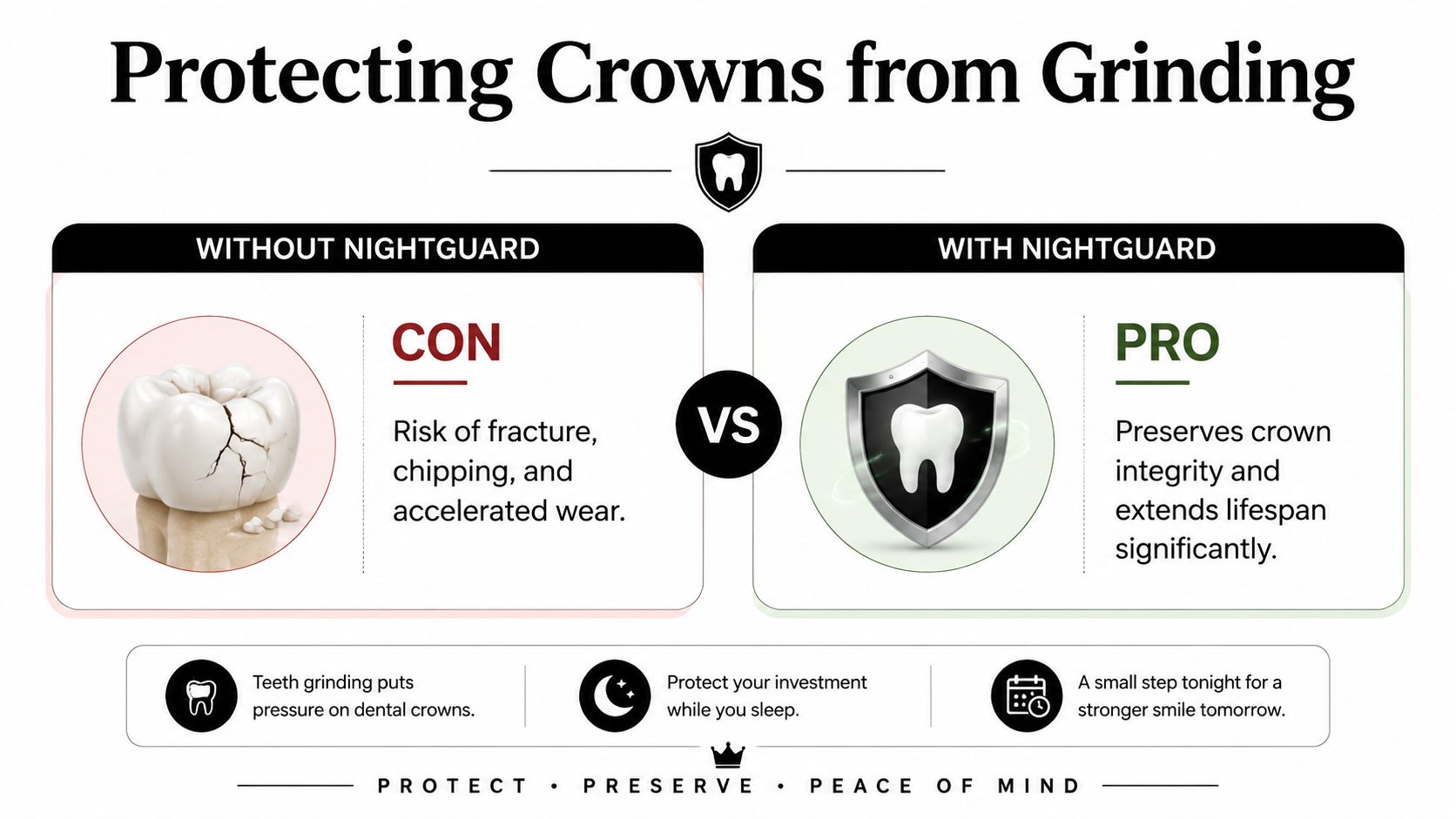
Grinding and clenching shorten the life of crowns because the force is repetitive, not gentle, and not limited to nighttime. A custom nightguard can reduce that load by creating a barrier between upper and lower teeth, which helps protect the crown surface, the cement, and the tooth under it.
Why protection matters
Bruxism doesn't always look dramatic. Some people wake with jaw tightness, some notice flattened teeth, and some only learn they grind because a partner hears it. The crown is often the first restoration to show the stress, especially if the restoration is on a back tooth that already carries heavy chewing load.
The point of a guard is simple. It doesn't stop every clenching episode, but it reduces the direct force on the crown and spreads contact more evenly. That's especially relevant for patients with several crowns or teeth that have already had endodontic treatment, because those teeth are more vulnerable to cumulative strain.
What actually helps
A custom-fitted nightguard from a dentist is different from a one-size-fits-all appliance you heat and bite into at home. The custom option is designed around your bite, which makes it more stable and more comfortable to wear consistently. That consistency is what matters, because an unused guard doesn't protect anything.
If you suspect grinding, bring it up at your next visit instead of treating it like a minor habit. A jaw exam, wear pattern review, and discussion about nighttime protection are worth the time, especially if you want the crown to stay in service longer. For patients considering more extensive rebuilding, full mouth reconstruction can include bite protection as part of the larger plan.
Long-Term Monitoring and Early Detection of Problems
The difference between a crown that keeps working and one that fails early is often the checkups in between. A dentist is looking for wear, leakage, gum inflammation, loosening, and changes in the bite before the crown becomes uncomfortable enough to demand emergency repair. That kind of early detection preserves the tooth under the crown as much as the restoration itself.
Root-filled teeth need a little more scrutiny here. The evidence on crown survival shows reduced longevity when root fillings are part of the picture, which means symptoms, bite force, and recurrent decay deserve close attention in those cases (PubMed study). If a crowned tooth has a history of endodontic treatment, don't assume silence means everything is fine.
A good exam doesn't just look at the porcelain. It checks the gumline, the adjacent teeth, and the way the crown contacts the opposing arch. Small chips, minor roughness, or a barely noticeable shift in retention can often be corrected before they turn into replacement work.
That's why crown aftercare is really a maintenance habit, not a one-time instruction sheet. Daily plaque control, bite awareness, and routine reviews work together, and each one covers a different failure pathway. If you're in Manhattan and want crown care handled with the same attention as placement, Paul L. Gregory, DDS provides restorative dentistry, emergency assessment, cleanings, exams, and support for crowns, bite concerns, and follow-up care.
If your crown feels high, sensitive, or hard to clean at the margin, schedule a visit before the issue gets harder to fix. Paul L. Gregory, DDS can evaluate the bite, check the crown edges, and help you protect the tooth underneath with practical aftercare and maintenance. Visit Paul L. Gregory, DDS to arrange a crown checkup in Midtown Manhattan.