

Periodontal deep cleaning typically costs $150 to $400 per quadrant, and a full-mouth treatment across four quadrants usually lands around $600 to $1,600. In major metro markets, severe gum disease, add-on care, and insurance limits can push your out-of-pocket total higher.
If you just got quoted for “deep cleaning” and your first reaction was sticker shock, that's normal. A lot of patients think they're scheduling a routine cleaning, then learn they need scaling and root planing, which is a therapeutic treatment for gum disease, not a preventive polish.
Why Your Deep Cleaning Quote Might Surprise You
A Manhattan professional can walk into a dental office expecting a standard cleaning and leave with a periodontal estimate that looks completely different. That's not a bait-and-switch, it's a clinical correction. A routine cleaning removes buildup above the gumline, while periodontal deep cleaning treats infection and buildup below it, which takes more chair time, more skill, and often more than one visit.
The price jump makes sense once you stop comparing it to a prophylaxis visit. A regular cleaning is maintenance for a healthy mouth. A deep cleaning is treatment for active disease, and the bill reflects that difference.
What you are actually paying for
The issue is not the label, it's the work. If your hygienist or dentist finds deep pockets, heavy calculus, or inflammation, they're no longer doing a simple preventive service. They're cleaning root surfaces under the gums so tissue can heal, which is why the cost of periodontal deep cleaning is usually several times higher than a standard visit.
Practical rule: If your estimate sounds too close to a routine cleaning price, ask whether it includes scaling and root planing or just a regular prophylaxis.
That distinction matters even more in a city with high overhead and busy schedules. A patient who thinks they need “one cleaning” may really need staged periodontal care, and the treatment plan should say that plainly. For a basic benchmark on what a preventive visit is versus a therapeutic one, a Manhattan office's own teeth cleaning overview is a useful starting point.
Breaking Down Per-Quadrant Pricing
A deep cleaning quote often looks lower on paper than it does at checkout because dentists usually bill per quadrant, not as one flat fee. The mouth is split into four sections, and each section can need a different amount of cleaning, anesthesia, and chair time. One patient may only need one or two quadrants treated, while another needs all four.
That pricing setup is why advertised base rates and real out-of-pocket totals often do not match, especially in high-cost urban markets. A quoted starting price may cover only the simplest case. Once the dentist sees heavy buildup, deeper pockets, or the need to stage treatment, the final bill rises fast.
Published estimates place $150 to $400 per quadrant as a common U.S. range, with full-mouth treatment across four quadrants totaling about $600 to $1,600 (Real Dental Costs). Delta Dental's coverage guide lists an average self-pay cost of $180 to $295 per quadrant, which sits in the same general range and shows how much the final number depends on the office and the case (Delta Dental).
| Source | Per Quadrant | Full Mouth (4 Quadrants) |
|---|---|---|
| Real Dental Costs | $150 to $400 | $600 to $1,600 |
| Aspen Dental pricing data, as summarized in the published estimate | $210 to $435 | Not stated as a flat full-mouth figure |
| Delta Dental coverage guide | $180 to $295 | Not stated as a flat full-mouth figure |
| Gale Care market summary | $150 to $350 | $600 to $1,400 |
A dentist may also stage treatment in two visits, treating two quadrants first and two later. That is not just a scheduling choice. It can reduce discomfort, give inflamed gums time to settle, and let the office handle a larger case without forcing the patient into one long appointment. It also spreads the financial hit, which matters when the cost of periodontal deep cleaning is being compared with a standard cleaning that never needed this level of therapy.
For patients trying to understand how a basic dental cleaning differs from a therapeutic one, a Manhattan office's own teeth cleaning overview is a useful starting point.
Factors That Push Your Bill Higher or Lower
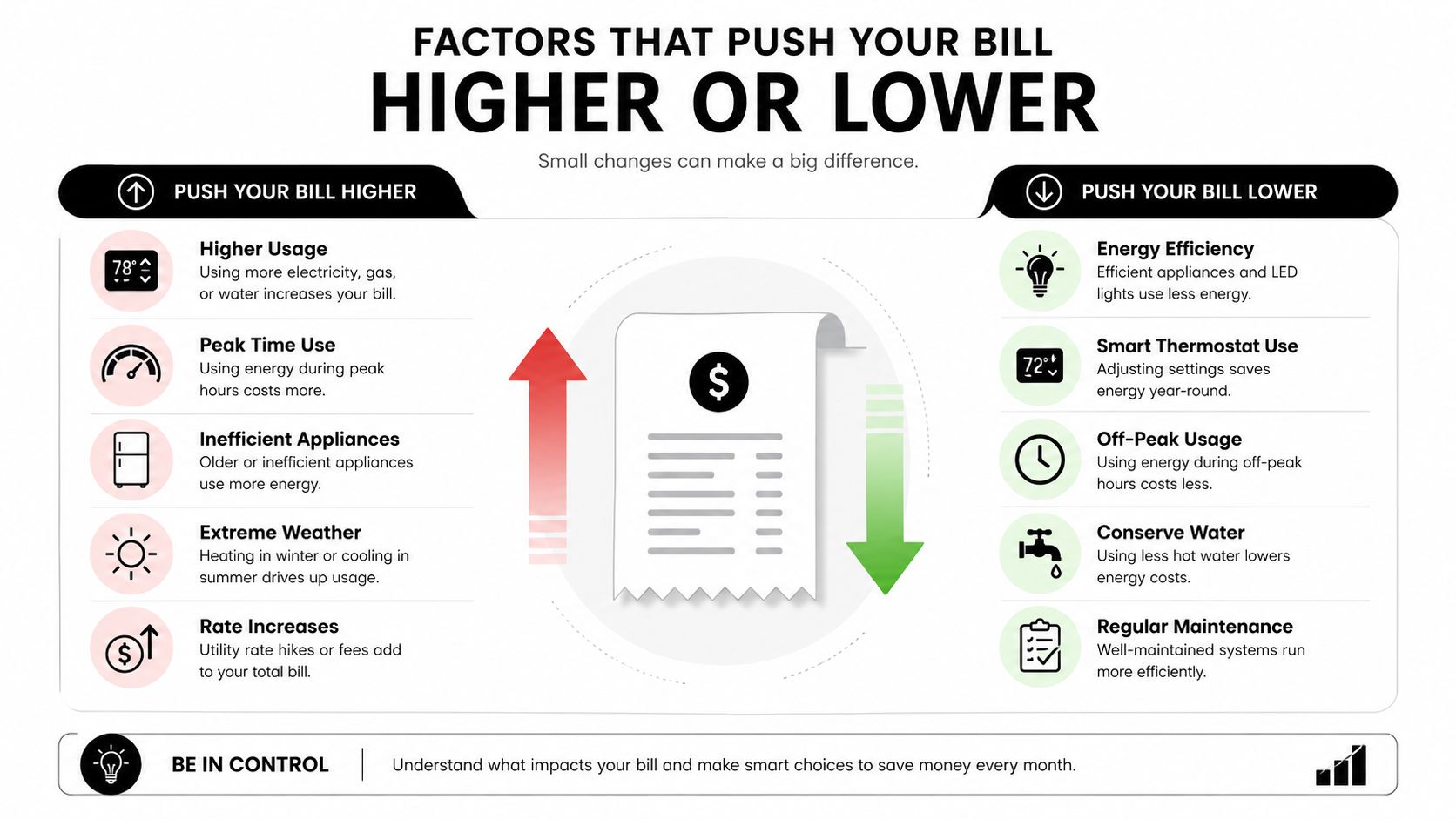
The price spread is not random. Two patients can get the same diagnosis and still receive different estimates because one has heavier deposits, deeper pockets, or a more complex appointment plan. Geography matters too, especially in high-cost urban markets where office overhead is higher.
Clinical complexity versus geography
A straightforward case usually means fewer quadrants, lighter buildup, and less chair time. A more advanced case means more subgingival debris, more inflammation, and often local anesthesia, which adds time and coordination. A patient in Manhattan or another major metro should expect the upper end of published ranges to show up more often than the lowest advertised number.
A 2026 market summary places Northeast per-quadrant costs around $250 to $400 and West Coast costs around $280 to $450, with lower Midwest and Southeast ranges below that and full-mouth estimates reaching $1,600 to $1,800 in higher-cost markets (ClearWave Dental). That doesn't mean every urban office charges the top of the range, but it does mean a Manhattan quote should be judged against local reality, not a national minimum.
A quoted base price is only the starting point. Severity, number of visits, and office setting decide whether your final total stays near the midpoint or climbs fast.
The practical comparison is simple. A lighter case may involve fewer quadrants and a cleaner bill. A complex case may require staged treatment, more diagnostics, and adjunct therapy, and that's where the cost of periodontal deep cleaning stops looking like one number and starts looking like a range.
How Dental Insurance Changes the Math
Insurance is the main reason two patients can leave with very different out-of-pocket totals for the same periodontal treatment. Many dental plans pay a portion of scaling and root planing after the deductible is met, and coverage commonly falls somewhere around 50% to 80%. That is a real discount from self-pay pricing, but only if the plan still has deductible room and annual maximum left.
How the calculation usually works
Start with the base fee. If a procedure is quoted at $300 per quadrant, insurance that pays 50% to 80% can bring the patient share down to roughly $60 to $150 out of pocket after deductible, if the benefit applies and the annual maximum has not already been used up. That is the math patients should get in writing before they book.
The fine print matters. Some plans treat scaling and root planing as a major service, some treat it as a basic service, and some apply waiting periods or frequency limits. If the annual maximum is already close to spent, the percentage on paper matters far less than the remaining benefit in the plan.
Manhattan patients should ask direct questions before treatment, because the difference between a quoted fee and the final bill often comes down to coverage rules, not the clinical work itself. A clear explanation from an insurance guide for Manhattan patients is the kind of documentation worth requesting before anyone starts scaling.
- Is scaling and root planing covered under my plan?
- What percentage do you pay after the deductible?
- Does my annual maximum still have room?
- Do I need pre-authorization before treatment?
If you want a practice that helps patients work through the paperwork, Paul L. Gregory, DDS in Midtown Manhattan offers insurance assistance and claim submission support. That matters when the office has to translate a clinical estimate into a real out-of-pocket number.
Hidden Costs Most Pricing Guides Ignore
The advertised per-quadrant fee is rarely the final number. That's the part most pricing guides gloss over, and it's where patients get surprised. Once treatment starts, the office may need diagnostics, local anesthesia, or post-treatment medication, and those items can sit outside the base periodontal fee.
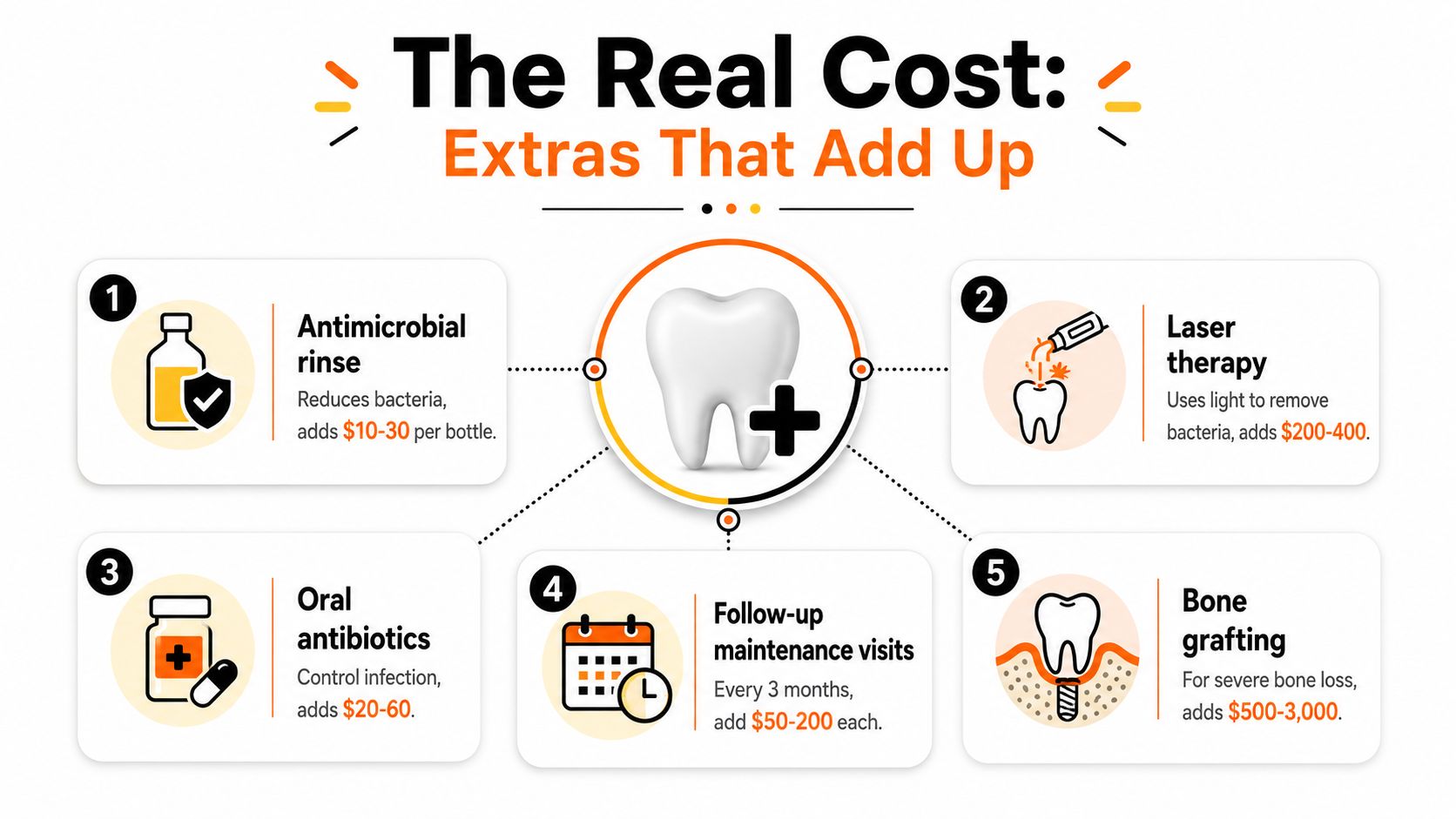
The add-ons that change the total
A deep cleaning estimate can change once the dentist sees the full picture. Some cases call for additional X-rays before treatment, and a diagnostic visit is often part of the process. In other cases, the plan may include local anesthesia for comfort, or post-SRP antimicrobial therapy when the pockets are more advanced.
The bigger mistake is assuming every line item is covered the same way. Insurance often pays for the core periodontal procedure but may handle adjuncts differently, which is why the total bill can climb beyond the advertised fee. That's especially true in high-overhead neighborhoods where a thorough treatment plan may bundle multiple services under one episode of care.
Ask for a written estimate that separates these items:
- X-rays or diagnostics
- Scaling and root planing by quadrant
- Local anesthesia
- Antimicrobial or adjunct therapy
- Follow-up periodontal maintenance
If the office can't itemize the plan, keep asking. A pricing sheet that only lists the base deep cleaning number is incomplete. For the diagnostic side of that conversation, the office's dental X-rays page is a useful reference for what may be included before treatment begins.
Long-Term Value of Periodontal Maintenance
A deep cleaning is not the finish line. It is the start of periodontal maintenance, which is the part patients often underestimate because it doesn't sound as dramatic as the original procedure. Once gum disease has been treated, the tissue still needs ongoing surveillance and cleaning to keep the infection from coming back.
Why the first bill isn't the whole story
The long-term value comes from preservation. If periodontal disease keeps progressing, the patient is no longer comparing a deep cleaning to a regular cleaning. They're comparing it to more invasive care, including surgery or tooth replacement, which is a much more expensive path to follow.
That's why supportive maintenance matters. A new patient should understand that a deep cleaning is the beginning of a periodontal relationship, not a one-off event. For patients who want to understand that clinical arc in more detail, the practice's periodontal therapy overview gives a sense of how scaling and root planing fits into ongoing care.
Treat the initial bill as the entry point, not the whole investment. The real savings show up when maintenance keeps the disease from returning.
For busy Manhattan professionals, that logic is practical. You pay more upfront to avoid a cycle of worsening inflammation, more chair time, and more complex treatment later. Viewed that way, the cost of periodontal deep cleaning is easier to defend, because it protects the teeth you already have.
Getting an Accurate Quote Before You Commit
The cleanest way to avoid surprise bills is to get a written periodontal plan before you schedule treatment. Start with an evaluation, not a quick glance. If the office uses digital diagnostics and periodontally focused charting, you'll get a better estimate and fewer billing surprises.
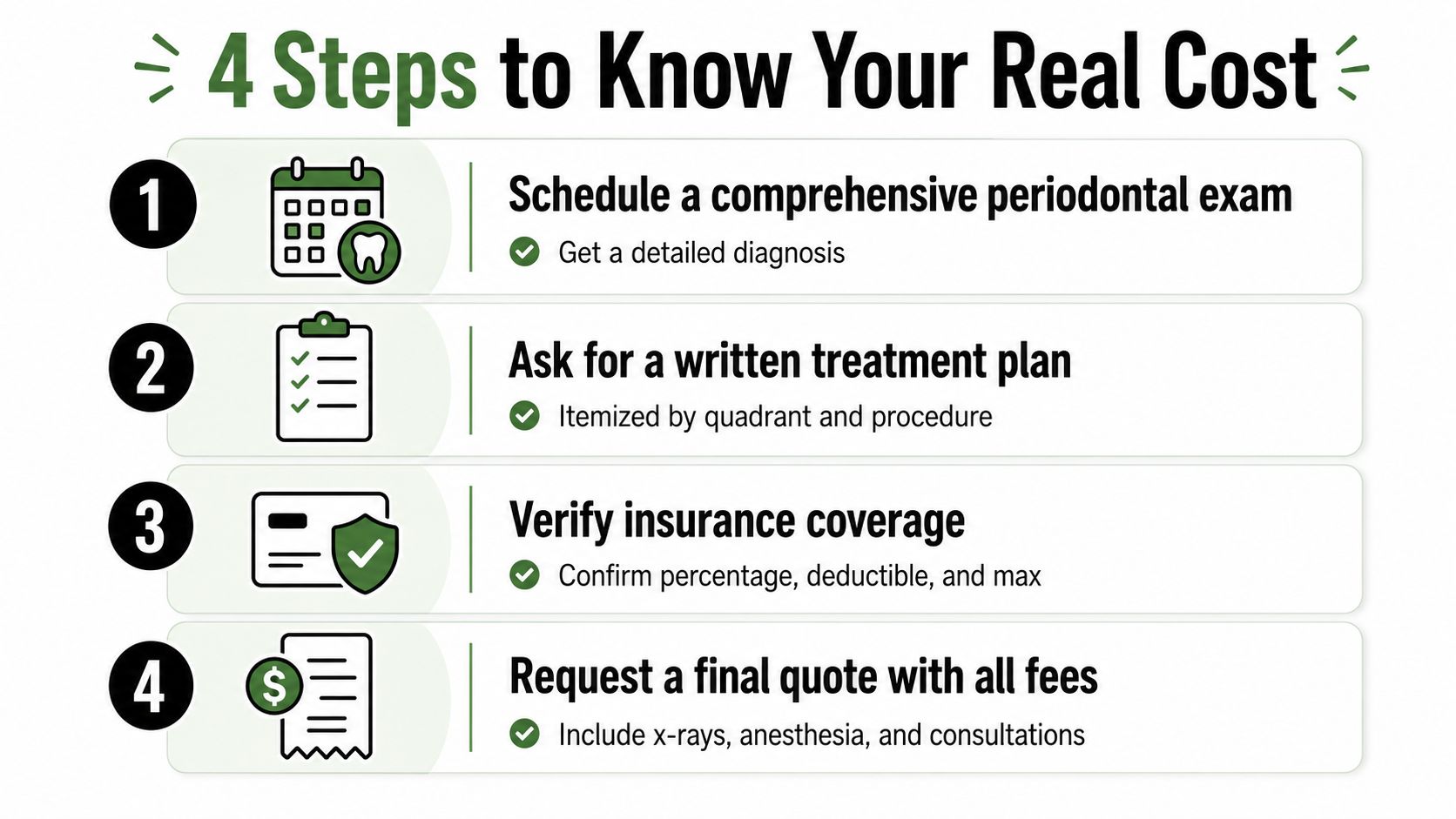
What to ask before you sign
Get the estimate in writing and make sure it breaks out each quadrant. If the office quotes a single number without saying what's included, that number is not good enough. Ask whether anesthesia, imaging, and follow-up care are part of the quote or billed separately.
Use this checklist:
- Schedule a periodontal exam. You need a real diagnosis, not a rushed guess.
- Request an itemized treatment plan. It should show quadrants, procedures, and any adjunct therapy.
- Verify insurance coverage before the visit. Confirm deductible, percentage, and remaining maximum.
- Ask for the final fee with all likely add-ons. Make sure imaging and anesthesia are listed if they apply.
If you need a fast consult or a way to review next steps without losing time in your workday, a teledentistry consult can help you sort through the basics before an in-office visit. For a local option, the practice's teledentistry page is the kind of service that can make the first conversation easier to manage.
Paul L. Gregory, DDS provides periodontal evaluation, digital diagnostics, scaling and root planing, and supportive maintenance in Midtown Manhattan, which makes it a practical place to compare your quote with a real treatment plan. If you're trying to understand the cost of periodontal deep cleaning before you commit, visit Paul L. Gregory, DDS to review services, ask for an itemized estimate, and get care that matches your diagnosis rather than a generic price tag.