

You notice blood when flossing before a morning meeting. Maybe your gums look puffy, or one tooth has started trapping food. At the dental visit, the phrase “periodontitis” can feel disproportionate to a symptom that seemed minor. The sensible next question is often, “Do I need surgery?”
Usually, the conversation starts somewhere less invasive. Nonsurgical gum disease treatment is a decision process built around removing bacterial deposits, measuring how the tissues respond, and adding targeted therapies only when the clinical situation justifies them.
Why Nonsurgical Gum Disease Treatment Matters More Than You Think
A patient in a Midtown dental chair may describe bleeding as occasional, harmless, or just part of flossing. Bleeding is a sign that gum tissue is inflamed. It doesn't tell us the full diagnosis by itself, but it does give the dentist a reason to examine gum pockets, attachment levels, plaque, calculus, and other risk factors rather than dismissing the symptom.
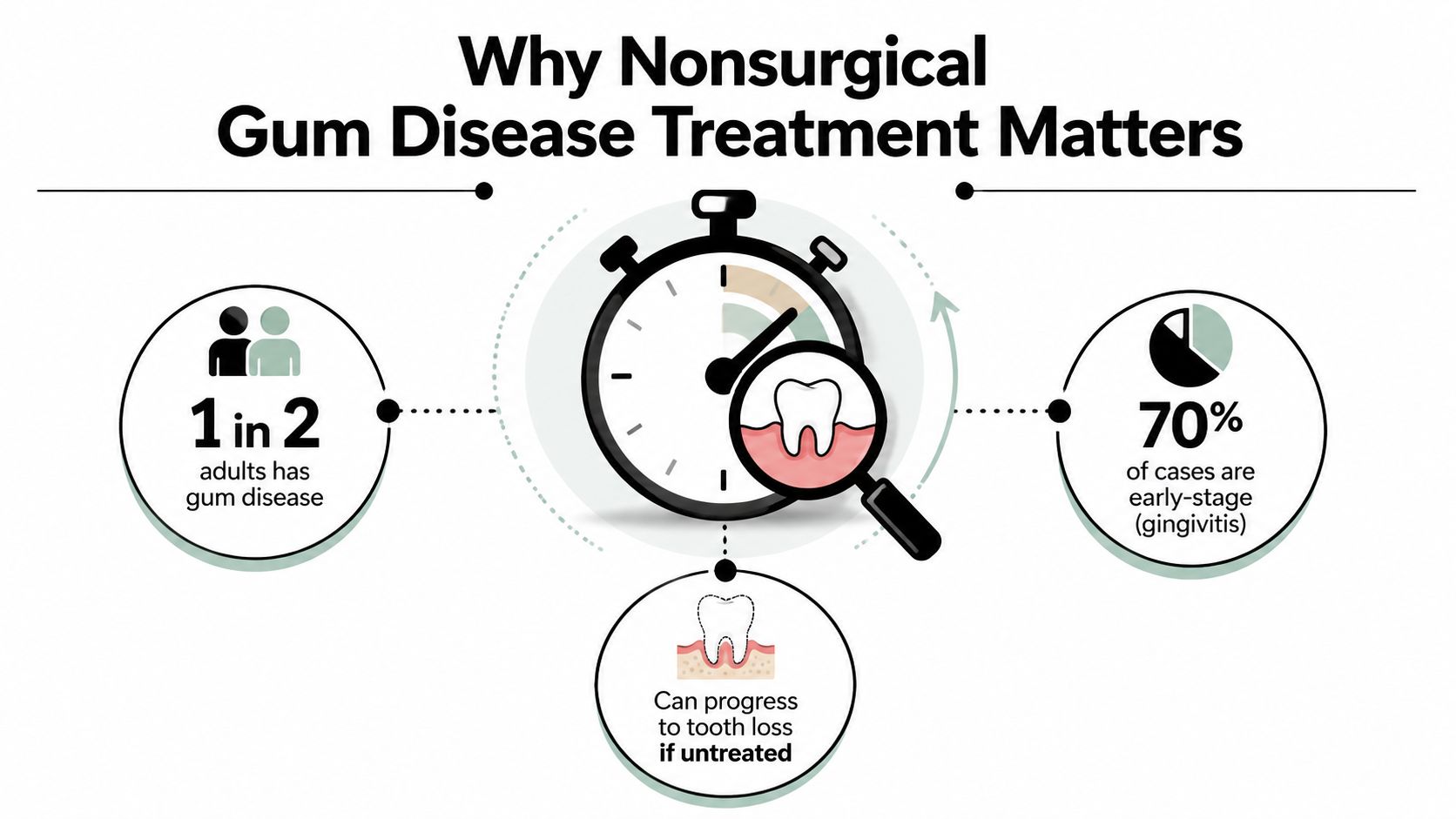
The scale of the problem explains why dentists take that examination seriously. A global burden analysis estimated that 1,066.95 million people had severe periodontitis worldwide in 2021, with a global age-standardized prevalence of 12.50%, according to the published global periodontitis burden analysis. An independent evidence review summarizing pooled studies reported that full-mouth examination protocols found periodontitis in about 45.7% of participants, while pooled prevalence over the last decade was nearly 60%, with severe disease affecting about 24% of studied populations, as discussed in the same dental evidence review.
Why the first step is usually conservative
Periodontitis is driven by bacterial biofilm and calculus beneath the gumline. The body responds with inflammation, and persistent inflammation can contribute to pocketing, attachment loss, and eventual tooth-support problems. Nonsurgical care addresses that environment before a clinician considers periodontal surgery, long-term maintenance alone, or selected adjunctive medication.
The initial menu can include professional assessment, scaling and root planing, daily plaque control, risk-factor management, supportive periodontal care, and carefully selected antimicrobials. The point isn't to offer every option to every patient. It's to start with the least invasive treatment that can reasonably control the disease, then reassess the result.
Practical rule: A deep cleaning isn't a generic upgrade from a regular cleaning. It should follow periodontal measurements and a diagnosis.
For someone with early gingival inflammation, improved home care and professional cleaning may be enough. For established periodontitis, the dentist may recommend periodontal therapy to remove deposits from affected root surfaces and create a healthier baseline for follow-up decisions. That early intervention matters because untreated disease can require more complex care later, while timely nonsurgical treatment gives the tissues a chance to stabilize without immediately moving to surgery.
How Scaling and Root Planing Works
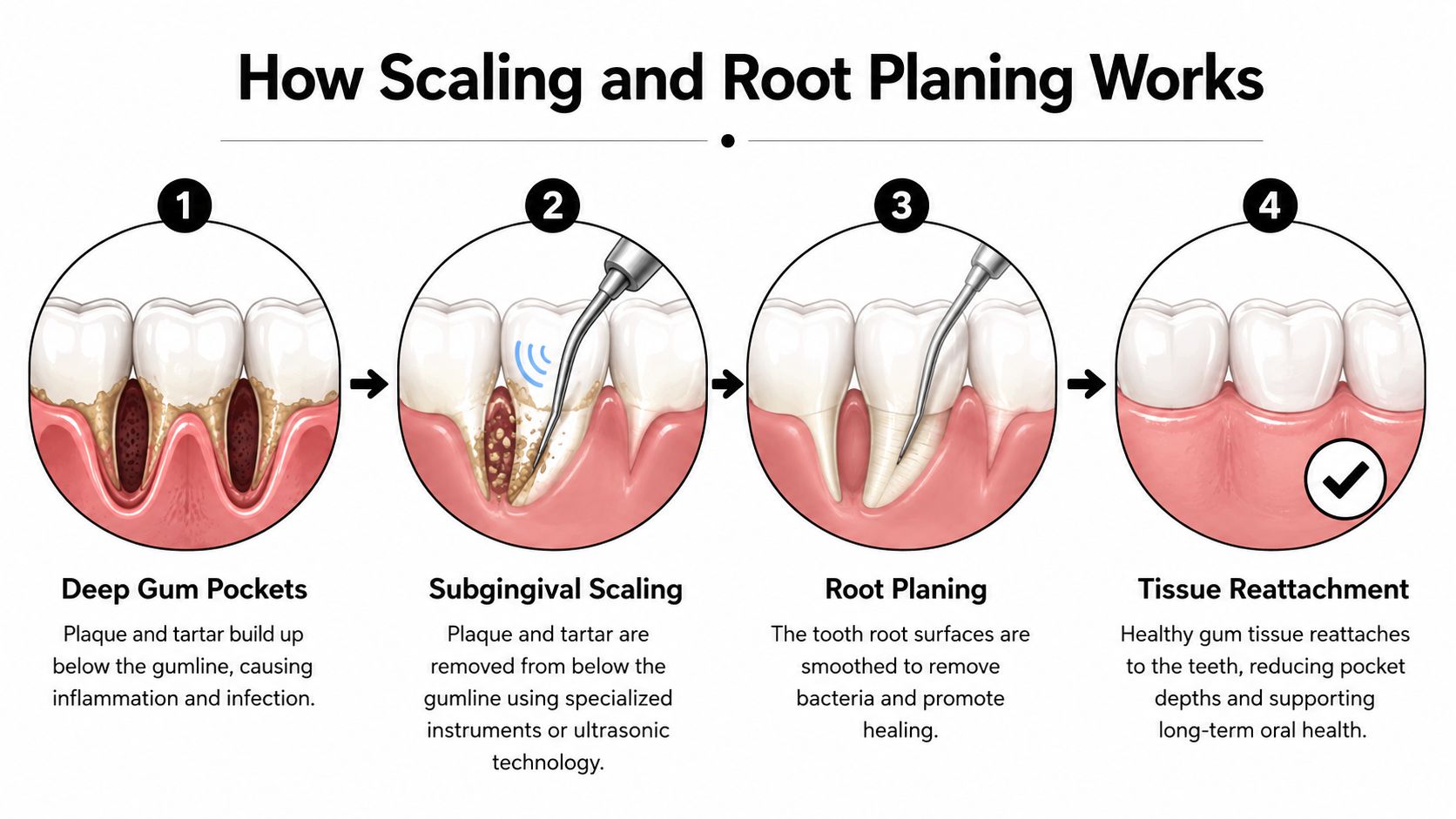
Suppose a patient has bleeding gums and several pockets that a toothbrush cannot clean. Scaling and root planing, often shortened to SRP, addresses those sheltered areas through a planned sequence rather than a single generic cleaning. The visible crown is like the part of a boat hull above the waterline. The root surface lies below the gumline, where hardened calculus can cling like barnacles.
The mechanical cleaning process
The clinician first maps the mouth. A periodontal probe measures pocket depths around each tooth, while visual examination and imaging help identify calculus, bone changes, furcations, mobility, and other findings. Those results guide the decision tree: which sites need treatment, which instruments may provide access, and whether treatment should be divided into separate appointments.
The next step is removing deposits beneath the gumline. Manual instruments provide tactile control, while sonic and ultrasonic instruments use vibration to disrupt and remove calculus and biofilm. They are different tools for the same mechanical goal. Access, deposit texture, tooth anatomy, sensitivity, and the clinician's judgment determine the choice.
Root planing follows deposit removal. The aim is to leave the root surface sufficiently clean and smooth so inflamed tissue has a better setting in which to heal and re-adapt. SRP does not “sterilize” the mouth or rebuild lost bone on demand. It lowers the local burden that keeps the inflammatory cycle active.
What the evidence means for a patient
A widely cited review by Charles M. Cobb established SRP as an evidence-based benchmark for comparing newer periodontal therapies. It examined manual, sonic, and ultrasonic instrumentation and placed modern mechanical treatment within roughly 4,000 years of periodontal treatment evolution, as described in this review of Cobb's landmark work. The same review reported that 39% of patients finished with pockets no deeper than 5 mm at evaluation, although individual results vary.
A separate guideline review found that SRP provides a moderate clinical benefit that outweighs potential adverse effects in chronic periodontitis. Systematic reviews report average clinical attachment gain of around 0.5 mm with SRP-based therapy, according to the clinical evidence review on nonsurgical periodontal treatment. Clinical attachment gain is not a cosmetic measurement. It describes the relationship among the gum, tooth, and supporting tissues.
Treatment planning also weighs time and comfort. Appointment length, anesthesia needs, tenderness, and the number of visits depend on disease extent and personal comfort. Exposed roots may feel sensitive afterward, so instructions for plaque control should protect healing tissue rather than traumatize it.
A visual explanation can make the process less abstract:
For a broader comparison between routine professional cleaning and periodontal therapy, see this guide to the best dental cleaning approach.
Adjuncts That Sit Alongside Scaling and Root Planing
SRP is the foundation, but some mouths don't respond evenly. A few isolated pockets may remain deep, bleeding may persist around particular teeth, or a patient's medical profile may change the risk calculation. Adjuncts are add-ons to mechanical treatment, not automatic substitutes for it.
Local antimicrobials
A locally delivered antibiotic, such as ARESTIN, is placed into a selected periodontal pocket. This approach concentrates treatment at a specific site and may make sense when a small number of pockets remain active after thorough instrumentation. It doesn't expose the entire body to medication in the same way as a systemic prescription, although the clinician still needs to consider appropriateness, allergies, resistance, and the overall treatment plan.
Systemic antimicrobials
Systemic antibiotics circulate throughout the body. They may be considered for selected patients with more advanced or rapidly progressing disease patterns, particularly when the potential benefit outweighs adverse effects and antibiotic stewardship concerns. They aren't a routine replacement for removing calculus and biofilm.
Host modulation
Host-modulating therapy aims to influence the inflammatory response rather than directly killing bacteria. The logic is important because tissue damage reflects both the microbial challenge and the body's response to it. This category requires careful patient selection and shouldn't be treated as a universal add-on.
Laser and photodynamic approaches
Laser therapy and antimicrobial photodynamic therapy use energy, light, or a photosensitizing agent as part of a targeted protocol. They may appeal to patients who want technology-based care, but “laser” describes a tool, not a guaranteed outcome. The clinical question remains whether the specific device and protocol add meaningful value after competent SRP.
| Adjunct category | Main purpose | Why it isn't interchangeable |
|---|---|---|
| Local antibiotic | Treat a selected persistent pocket | Local delivery suits localized disease |
| Systemic antibiotic | Affect infection throughout the body | Medication exposure and adverse effects are broader |
| Host modulation | Influence inflammatory pathways | It addresses response, not only bacterial deposits |
| Laser or photodynamic therapy | Add energy or light-based antimicrobial action | Results depend on the exact protocol and indication |
The systematic review of adjunctive periodontal therapies found that local antimicrobials offered a modest additional benefit after SRP, while systemic antimicrobials performed best in initially deep pockets, particularly those measuring 6 mm or more. Those findings support a targeted toolkit, not a menu where every patient receives every item.
Which Adjuncts Are Worth the Cost
A patient leaves a thorough scaling and root planing appointment with one stubborn pocket, bleeding that persists in one area, or deposits hidden by difficult tooth anatomy. The next decision is not which add-on sounds most advanced. It is whether the remaining problem is specific enough, and the expected improvement large enough, to justify extra cost, treatment time, inconvenience, and risk.
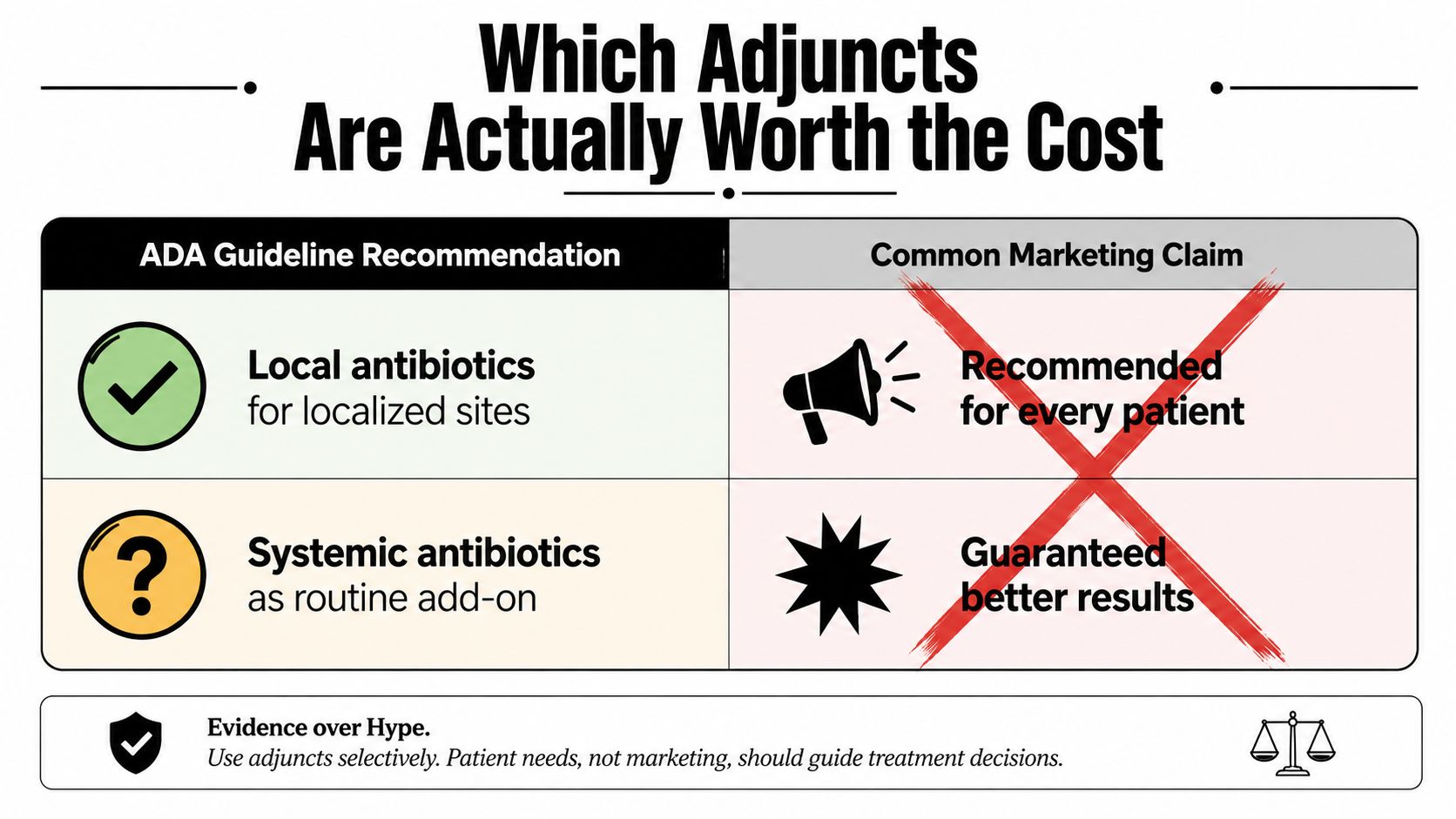
Evidence-based guidance places SRP at the center of nonsurgical care, rather than recommending routine add-ons for every patient. The ADA guideline on nonsurgical treatment of periodontitis describes SRP as the foundation, with moderate benefits and minimal adverse effects. Local antimicrobials may still have a role, but the reason should come from the patient's residual disease pattern, not from a general promise attached to the product.
What a modest benefit can mean
The adjunctive treatment evidence found that local antimicrobials provided additional pocket-depth reduction of about 0.19 mm long term and about 0.36 mm at 6 to 9 months, with clinical attachment gains around 0.26 mm. Systemic antimicrobials added roughly 0.45 to 0.49 mm of pocket-depth improvement and worked best in initially deep pockets, while also causing more adverse events than mechanical treatment alone.
Those differences may matter at a stubborn, localized site. They do not mean an antibiotic will transform every mouth. A small measurement change can be useful when it helps a specific tooth avoid further treatment, but it may offer poor value when disease is widespread or daily plaque control remains inconsistent.
Periodontal endoscopy shows why context matters. A 2025 meta-analysis found that it reduced residual calculus by 1.87% while adding about 6 minutes of treatment time, as summarized in the ADA guideline evidence discussion. The trade-off depends on access, operator skill, tooth anatomy, remaining deposits, and the patient's priorities.
A better question to ask: “What finding makes you recommend this adjunct for my mouth, and how will we judge whether it helped?”
The recommendation should identify the remaining clinical problem, expected benefit, alternatives, and follow-up measure. A local antibiotic may fit one persistent isolated pocket. A systemic antibiotic may suit a carefully selected advanced case. A laser may belong in a particular protocol, but the word itself does not prove superiority. This decision tree keeps treatment focused on the patient's pockets and risk profile, rather than on the appeal of a device or product.
Nonsurgical Treatment for Patients With Diabetes or Other Systemic Conditions
A patient with diabetes may sit in the treatment chair with two connected concerns: “Will this improve my gums?” and “Could it affect my blood sugar?” The dental plan must answer the first question directly while treating the second as a separate possibility. Diabetes, immune conditions, medications, smoking, and other systemic factors can influence inflammation, healing, infection risk, and daily plaque control. Coordination between the dental and medical teams may be needed when a condition or medication changes treatment planning.
Different endpoints favor different choices
A 2025 Bayesian network meta-analysis of patients with periodontitis and type 2 diabetes ranked treatment combinations differently depending on the outcome. SRP with local satranidazole gel ranked best for probing depth and clinical attachment level. SRP with systemic amoxicillin improved bleeding on probing, while SRP with doxycycline or antimicrobial photodynamic therapy showed the best HbA1c reductions, according to the meta-analysis of nonsurgical periodontal treatment in diabetes.
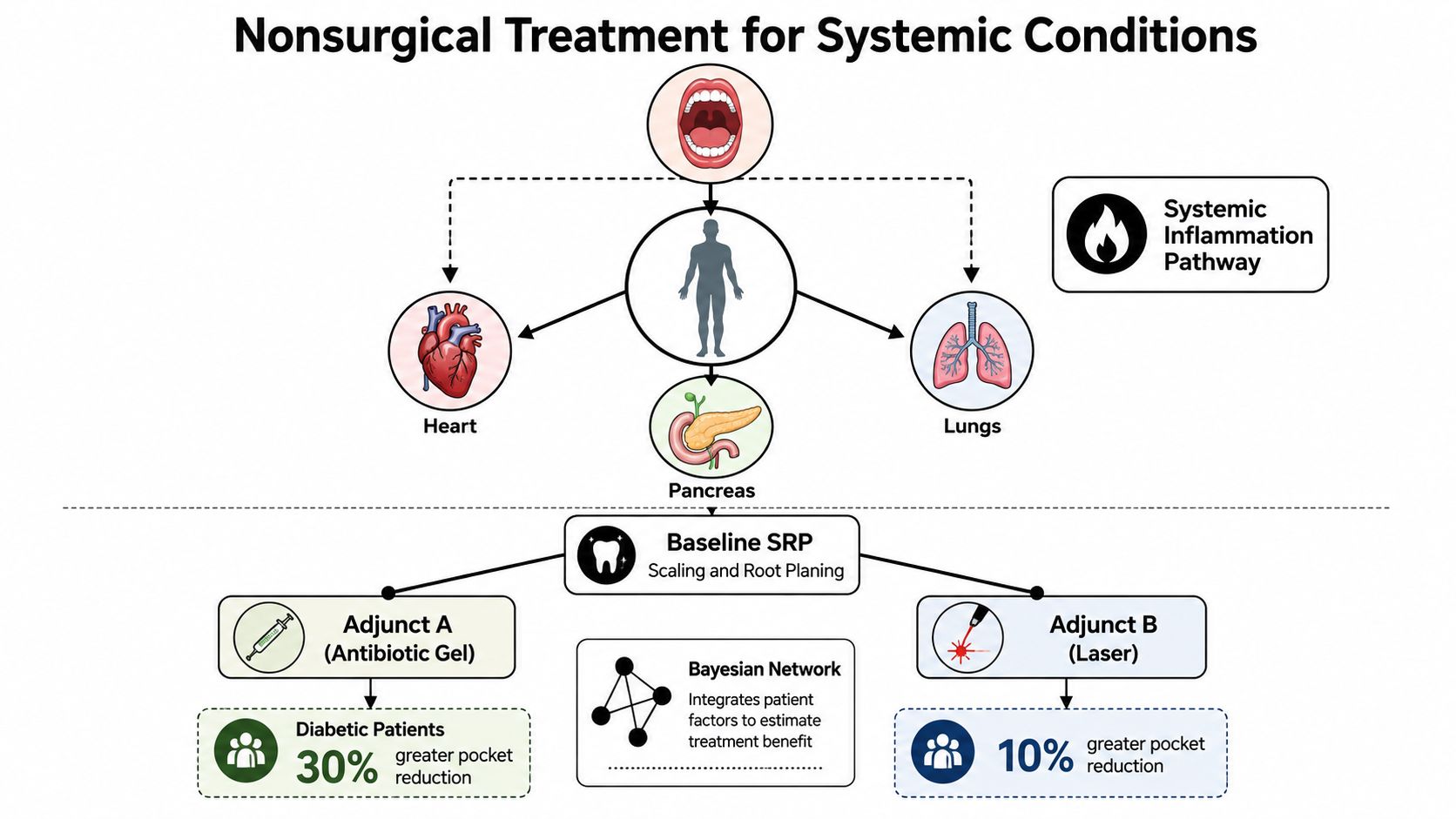
Those rankings guide questions, not automatic prescriptions. A network meta-analysis compares interventions across available evidence, whereas an individual plan must account for allergies, kidney and liver considerations, current medications, infection severity, glucose control, and antibiotic stewardship. The pocket pattern and the patient's wider risk profile determine which option belongs on the decision tree.
A broader systematic review found that nonsurgical periodontal therapy improves probing depth, attachment level, and bleeding in people with concurrent systemic disease. Medical complexity does not make gum treatment futile. It does mean clinicians should avoid promising that “deep cleaning” will automatically improve blood sugar.
For diabetes, separate the goals: treat periodontal inflammation properly, then discuss any possible glycemic effect with the patient's medical team.
A practical plan can begin with baseline periodontal measurements, SRP, home-care coaching, and a planned reassessment. If bleeding or deep sites remain, the next choice should respond to those findings. Sometimes better plaque control is the highest-value step. In other cases, a carefully selected adjunct or closer medical coordination may be reasonable. The recommendation should fit the problem being measured, not a preset technology package.
Maintenance After Nonsurgical Treatment
SRP is the opening repair, not the end of the ownership plan. A useful analogy is vehicle maintenance. You don't wait for the engine to fail before changing the oil, and you shouldn't wait for swelling, pain, or tooth mobility before checking periodontal stability.
Supportive periodontal therapy is scheduled according to risk. Some patients may need visits around three to four months, while others need a different rhythm based on pocketing, bleeding, bone support, plaque control, smoking, diabetes, previous progression, and response to treatment. The interval isn't arbitrary. It gives the clinical team a planned opportunity to detect renewed inflammation before it becomes an emergency.
What happens at a maintenance visit
The hygienist or dentist reviews changes in health history and medications, examines the gums, removes new plaque and calculus, and reinforces techniques for brushing and interdental cleaning. The clinician may remeasure selected pockets or complete a broader periodontal chart when the findings call for it.
Pocket measurements matter because symptoms can be quiet while disease activity returns. A patient may feel fine even when bleeding, swelling, or a deep site has reappeared. The maintenance visit turns that hidden risk into something measurable.
The most useful home routine is the one a patient can repeat. That may include a manual or powered toothbrush, interdental brushes, floss for suitable contacts, and other individualized tools. The clinician should show how to clean around crowns, bridges, implants, orthodontic appliances, or crowded teeth rather than giving a generic instruction sheet.
For a practical overview of ongoing care, see dental periodontal maintenance.
Maintenance protects the result by catching small changes while they're still manageable.
A missed visit doesn't guarantee relapse, and a scheduled visit doesn't guarantee stability. Consistency gives the patient and clinician more chances to identify problems early, adjust home care, and decide whether a localized retreatment or adjunct is warranted.
Common Misconceptions About Nonsurgical Gum Disease Treatment
Myth one, bleeding is normal. A person whose gums bleed every time they floss shouldn't conclude that flossing is causing the problem. The bleeding may reflect inflammation, and the right response is an examination and improved plaque control, not abandoning interdental cleaning.
Myth two, one deep cleaning fixes everything. SRP can remove the deposits that sustain inflammation, but it doesn't erase every risk factor or guarantee that all pockets will respond equally. A patient with a persistent isolated pocket may need reassessment, localized treatment, or a different plan.
Myth three, surgery is inevitable. Periodontitis can become complex, but starting with appropriate nonsurgical care is precisely how clinicians determine which sites improve without surgery. The response to initial treatment helps guide the next decision.
Myth four, lasers replace SRP. A laser or photodynamic protocol may be considered as an adjunct in selected circumstances. It doesn't change the basic need to address calculus and biofilm on affected root surfaces.
Myth five, home care alone reverses established disease. Brushing and interdental cleaning are essential because they control new plaque between visits. They can't reliably remove hardened calculus hidden beneath the gumline, which is why professional assessment and instrumentation remain important.
Gum recession adds another source of confusion. A tooth can look longer after inflammation decreases, or recession can reflect other causes, and treatment depends on the diagnosis. Patients worried about exposed roots should ask about gum recession treatment rather than assuming that every exposed area needs the same procedure.
Choosing the Right Path for Your Situation
Your next step depends on the diagnosis, pocket pattern, systemic health, and treatment priorities, not on the most heavily advertised device.
- Early gingivitis: Focus on professional cleaning, daily plaque disruption, and correcting the habits or local factors that keep gums inflamed.
- Pockets measuring 4 to 5 mm: Ask whether the findings represent inflammation that can respond to thorough SRP and improved home care, then plan a reassessment.
- Localized pockets measuring 6 mm or more that persist after SRP: Discuss whether a local antimicrobial, another targeted adjunct, further instrumentation, or surgical evaluation makes sense for those specific sites.
- Diabetes with periodontitis: Coordinate periodontal and medical care, separating gum outcomes from possible HbA1c effects before selecting an adjunct.
A useful comparison of treatment pathways is this guide to surgical versus nonsurgical periodontal treatments. Before committing to an add-on, ask which pocket or endpoint it targets, what benefit is realistically expected, and how antibiotic stewardship and cost fit your priorities.
Paul L. Gregory, DDS provides periodontal evaluation, scaling and root planing, ARESTIN local antibiotic therapy, and supportive maintenance within a Midtown dental practice. Visit Paul L. Gregory, DDS to request an evaluation and build a nonsurgical gum disease treatment plan based on your pocket measurements, medical history, and goals.