

You're in the chair, bib clipped around your neck, and the hygienist is asking whether anything has changed since your last visit. You may have arrived expecting a quick scrape and polish. Instead, the first part of the dental cleaning process involves questions, examination, measurements, and a decision about what your gums need.
A routine cleaning is preventive care, not a single procedure. The visit may include a medical-history review, an oral examination, X-rays when indicated, periodontal probing, scaling, polishing, fluoride, and advice for your next recall. The important clinical decision often happens before the polishing begins, when the hygienist and dentist determine whether your appointment should remain routine or become periodontal treatment.
What a Routine Dental Cleaning Actually Looks Like
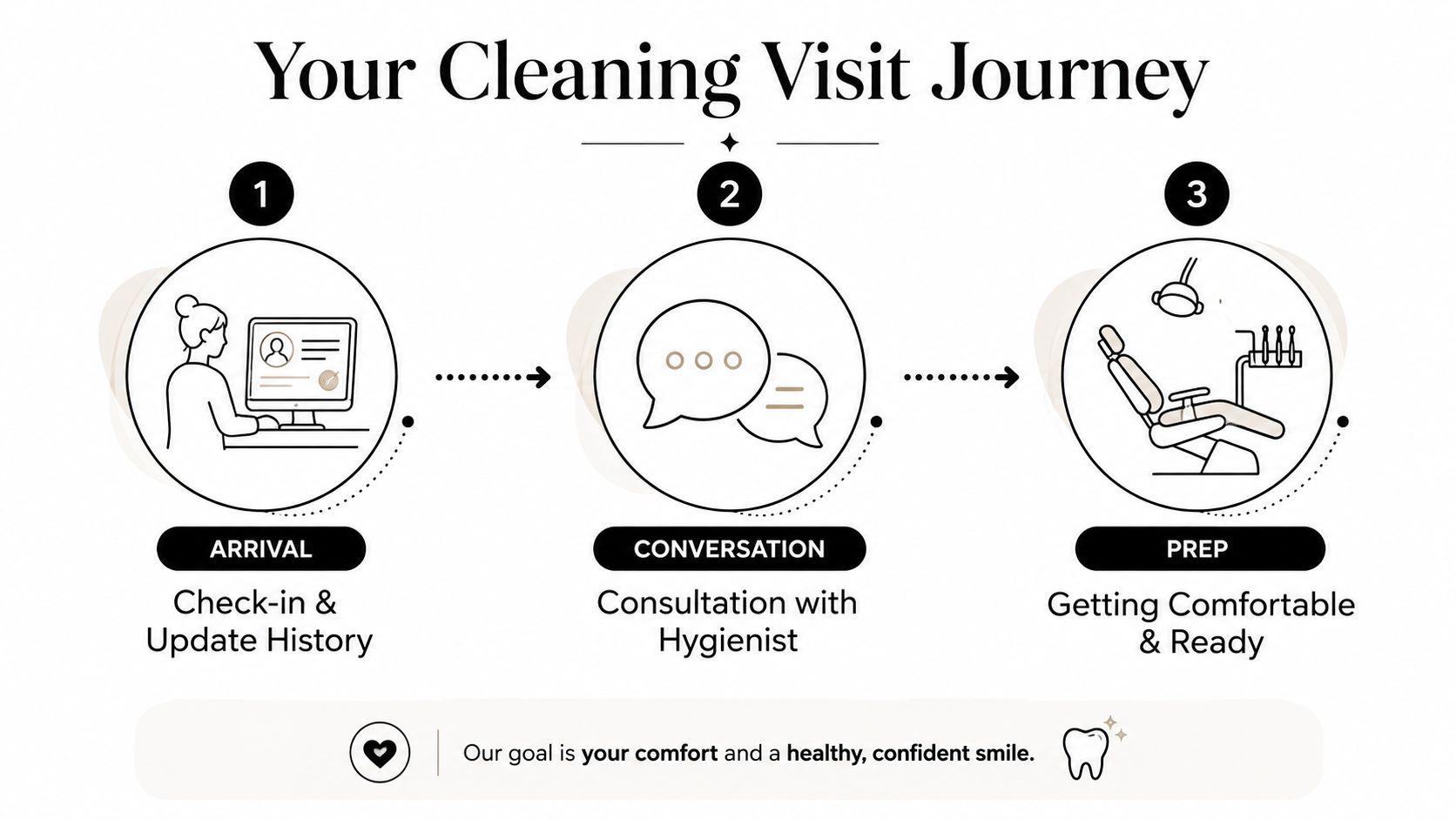
You check in, confirm your contact details, and update the team about medications, allergies, pregnancy, recent illnesses, or changes in your health. That information matters because medical conditions and medications can affect gum bleeding, dry mouth, healing, and sensitivity. The hygienist will usually ask practical questions too, such as whether your gums bleed, whether a tooth feels loose, or whether hot and cold foods have become uncomfortable.
After that short conversation, you sit back while the hygienist looks around your mouth. Before any instrument touches your teeth, they're checking your comfort, reviewing your concerns, and deciding whether today's appointment matches the visit that was scheduled. A patient who booked a “cleaning” may need a different level of care if the team finds inflamed gums, deeper pockets, heavy calculus, or a history of periodontal treatment.
The visit has a sequence
Once the chair reclines, the hygienist may place protective glasses, adjust the overhead light, and explain what they're about to do. You'll feel a mirror, an explorer, and possibly a periodontal probe before you feel a scaler. The process is deliberately staged:
- Assessment: The team reviews your health history and examines your teeth, gums, soft tissues, and existing restorations.
- Decision: The findings help determine whether you need a routine cleaning, periodontal treatment, or supportive maintenance.
- Removal: The hygienist removes plaque and calculus from the areas identified during the assessment.
- Finishing: Polishing, flossing, fluoride, or other preventive measures may follow, depending on your needs.
You can review what a preventive visit may include through this guide to professional dental cleanings and exams. The key point is simple: the cleaning doesn't start with scraping. It starts with deciding what kind of care is safe and appropriate.
Exam, X-Rays, and Probing Before Any Scaling Starts
The assessment tells the hygienist whether they're treating surface buildup or managing signs of gum disease. A visual examination includes the teeth, gum margins, tongue, cheeks, palate, and other oral tissues. The dentist or hygienist may look for decay, broken fillings, recession, swelling, ulcerations, unusual color changes, and signs that need a dentist's attention.
The dentist may also perform an oral cancer screening. This isn't a dramatic event. It usually involves looking closely at the tissues and gently feeling areas around the jaw and neck for abnormalities. If something needs further evaluation, the dentist will explain the finding rather than allowing the hygienist to continue as if the appointment were entirely routine.
What X-rays add
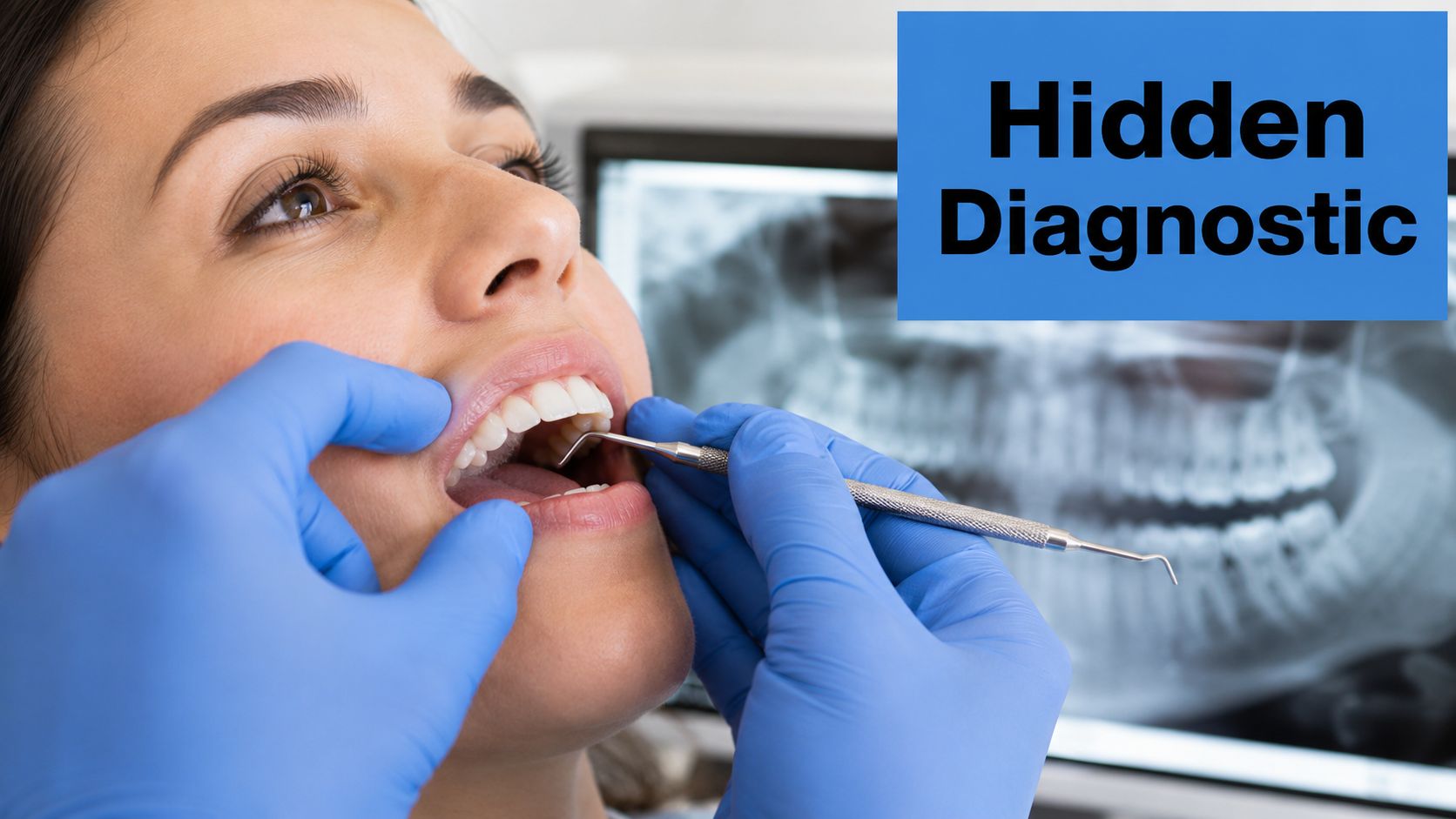
X-rays show structures that aren't visible during a mirror examination. Depending on your history and the dentist's findings, the office may use bite-wing images to assess areas between teeth or broader images to evaluate roots, bone levels, and developing concerns. X-rays aren't automatically required at every cleaning. The appropriate images depend on your symptoms, previous records, examination findings, and clinical judgment.
You can learn more about the role of dental X-rays before your appointment. An image may reveal decay between teeth, changes around a root, or bone loss that changes the treatment plan.
The small measurement with a major consequence
Periodontal probing is the quiet decision point. The hygienist slides a slim, marked probe gently between the tooth and gum and records the depth of the pocket at several sites around each tooth. You may feel pressure, but a healthy measurement shouldn't require force.
Pocket depth is only one part of the diagnosis, but it provides important information. Pocket depths above 3 mm can indicate gum disease, especially when the readings occur with bleeding, inflammation, recession, calculus, or bone loss, as described in Cleveland Clinic's dental check-up guidance. The dentist may also assess bleeding, tooth mobility, gum recession, and radiographic bone levels.
Ask this before scaling begins: “Were my pocket measurements healthy, and what type of cleaning do those findings support?”
That question invites a specific answer. It also helps explain why two people sitting in neighboring chairs may receive different procedures, even when both appointments were booked as cleanings.
Scaling and Root Debridement Explained
Scaling removes plaque and calculus from tooth surfaces. Plaque is a soft biofilm that forms continuously. Calculus, also called tartar, is hardened mineralized deposit that adheres to enamel, restorations, and root surfaces. Brushing and interdental cleaning can disrupt plaque, but they can't reliably brush away calculus once it has hardened.
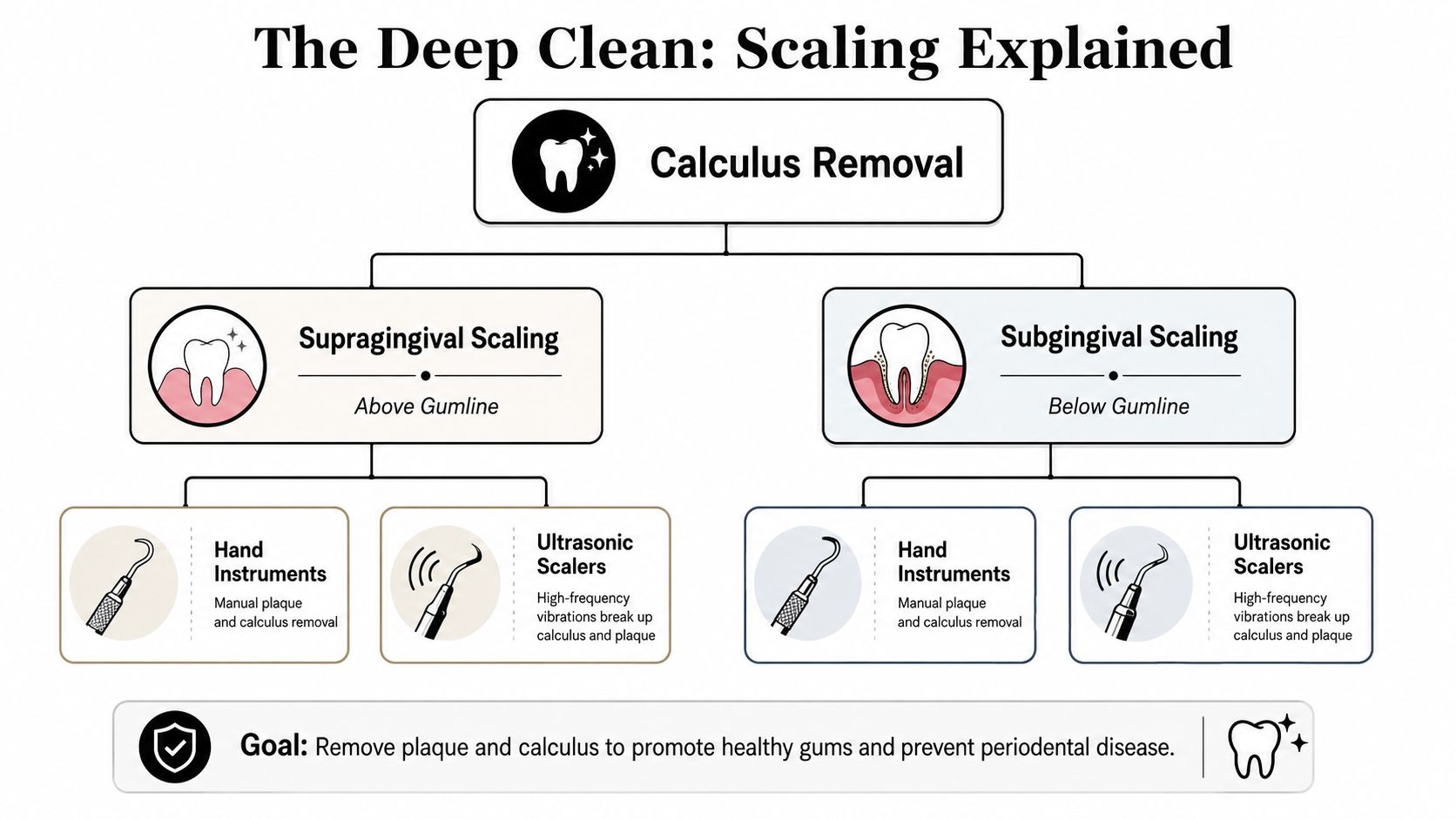
The hygienist may begin with supragingival scaling, which means removing deposits above the gumline. A hand scaler can lift deposits with controlled strokes, while an ultrasonic scaler uses vibration and water irrigation to break up buildup and flush debris from the working area. The ultrasonic tip often creates a buzzing sensation and sprays water, so you'll be given suction and may be asked to signal if you need a pause.
Above and below the gumline
If deposits extend under the gums, the hygienist performs subgingival scaling. The instrument follows the tooth surface beneath the gum margin, where visibility is limited and tissue inflammation can make the area sensitive. Root debridement removes contaminated deposits and disrupts the irritational factors associated with periodontal inflammation. More involved root planing may be part of treatment when the dentist diagnoses periodontal disease.
You may notice pressure, scraping, vibration, water, or brief sensitivity. Inflamed tissues can bleed during treatment. That bleeding doesn't mean the hygienist caused the disease. It often reflects the condition of the gum tissue being cleaned.
Clinical guidance emphasizes scaling both above and below the gumline when indicated, followed by careful polishing. It recommends polishing at no more than 3000 rpm with fine-grit paste to reduce microabrasions and limit the chance of creating a rough surface that holds new plaque. Coarse abrasives and rotary scaling can roughen enamel or restorative surfaces, so technique matters as much as the presence of a polishing cup. See this overview of nonsurgical gum disease treatment for context on how subgingival care fits into periodontal therapy.
The hygienist should tell you what they're finding as they work. If you have sensitivity, don't clench through it. A topical anesthetic, shorter working intervals, altered water temperature, or local anesthetic may make the procedure more manageable when deeper treatment is necessary.
Routine Cleaning vs Deep Cleaning vs Periodontal Maintenance
The word “cleaning” can describe three different types of visits. A routine, or prophylactic, cleaning is usually for gums that are healthy or show limited inflammation, without an established periodontal condition requiring active treatment. Scaling and root planing, commonly called a deep cleaning, removes deposits from below the gumline and cleans affected root surfaces after the dentist diagnoses periodontal disease.
Periodontal maintenance follows a different pattern. It supports patients who have already received periodontal treatment or continue to have a history of gum disease. The hygienist checks the gum tissue, cleans above and below the gumline where needed, and compares today's findings with earlier measurements. For a clearer explanation, see understanding dental periodontal maintenance.
The decision does not depend only on the time since your last appointment. The dentist and hygienist consider pocket depths, bleeding, calculus, recession, bone loss, tooth mobility, past periodontal diagnoses, and how the tissues respond to home care. Those findings are what determine whether the scheduled “cleaning” stays routine or becomes a periodontal visit.
| Cleaning Type | Typical Pocket Depth | Patient Profile | Recall Interval |
|---|---|---|---|
| Routine cleaning | Generally healthy measurements, with no established periodontal condition | Patient receiving preventive care without signs requiring active periodontal treatment | Often six months for healthy adults |
| Deep cleaning, or scaling and root planing | Pockets above 3 mm can indicate disease, particularly alongside bleeding or bone loss | Patient with diagnosed periodontal disease or deposits extending into diseased pockets | Determined by the dentist after active treatment |
| Periodontal maintenance | Previously affected areas require ongoing monitoring and subgingival care | Patient with prior periodontal therapy or continuing periodontal risk | Higher-risk patients often return every 3 to 4 months |
For healthy adults, the six-month benchmark is commonly used. Patients with higher periodontal risk often need shorter maintenance intervals of 3 to 4 months, according to the preventive dentistry review in this clinical evidence summary. These intervals are starting points, not universal prescriptions. Your dentist may adjust them based on disease activity, bone support, oral hygiene, smoking status, medical history, and treatment response.
What to ask at check-in
Ask whether your appointment is planned as a routine cleaning, periodontal maintenance, or an evaluation that could lead to scaling and root planing. If the office recommends deeper treatment, ask which pocket measurements or X-ray findings support it, whether the visit will take one appointment or several, and how the team will reassess your gums afterward. A clear explanation should connect the recommendation to specific findings rather than relying on an appointment label.
Polishing, Fluoride, and Sealants as Final Steps
After scaling, polishing smooths the tooth surfaces and removes some external staining. The hygienist uses a low-speed handpiece, rubber cup, and polishing paste. You may feel a soft rotating brush, steady pressure, and a gritty taste. Fine-grit paste and controlled speed help limit surface wear and microabrasions.
Polishing targets surface stains and remaining deposits, such as discoloration from foods, drinks, or tobacco. It cannot remove every change within the tooth itself. If you have veneers, crowns, bonding, exposed roots, or sensitivity, tell the hygienist before polishing. Those areas may require a different instrument or paste.
Fluoride is a risk-based choice
Fluoride may be offered as a varnish, gel, or another topical treatment. It can help patients with higher cavity risk, exposed roots, dry mouth, orthodontic appliances, or sensitivity. The hygienist should identify the product and explain any eating or drinking instructions. Follow the office's specific directions, because guidance varies by formulation.
If you are unsure whether it fits your preventive plan, review the purpose of dental fluoride treatment. Fluoride supports tooth protection. It is selected according to your enamel condition and cavity risk, not added to make the appointment feel more complete.
Sealants protect vulnerable grooves
Sealants are thin protective coatings placed in deep grooves, usually on chewing surfaces that toothbrush bristles may not reach well. They are often considered for children and teenagers, though adults with susceptible grooves may benefit too. The tooth is cleaned and dried, the surface is prepared, and the material flows into the groove before a curing light hardens it.
The final step is therefore a set of separate decisions. Polishing addresses surface stains, fluoride helps protect against decay and sensitivity, and sealants cover grooves that retain plaque. None replaces brushing or flossing, and none belongs automatically in every cleaning. A hygienist or dentist should explain the finding that supports each recommendation in plain language.
How Modern Tools Are Quietly Changing the Cleaning
Many patients still imagine a cleaning as a metal instrument scraping every tooth while the dentist watches from across the room. That image misses much of the modern workflow. Ultrasonic scalers and piezoelectric tips help clinicians remove deposits efficiently, while hand instruments provide tactile control for areas that need finer, more deliberate work.
The improvement isn't only cosmetic. A cleaner, more controlled working field can support better access to plaque and calculus, reduce unnecessary instrument pressure, and make the appointment more comfortable for some patients. Others may prefer hand instruments if vibration or water spray makes them anxious. The hygienist can adapt the approach rather than treating one tool as suitable for everyone.
What you don't see matters too
Instrument reprocessing has become a major part of contemporary dental care. Clinical and instrumentation literature describes workflows involving ultrasonic devices, washer-disinfectors, packaging systems, and sterilization steps designed to reduce contamination risk. Patients rarely see these stages because they occur outside the operatory, but they're part of the safety system supporting each appointment.
Digital tools also change how the team explains findings. An intraoral camera can display a magnified view of plaque, a fractured filling, recession, or a worn restoration on a screen beside the chair. Digital scanners can create impression-free models when the dentist needs records for diagnosis, restorative planning, or orthodontic evaluation. These tools don't replace probing or clinical judgment, but they can make the findings easier to understand.
A modern cleaning is not just a prettier version of an old scraping procedure. It combines mechanical removal, tissue assessment, patient communication, and controlled infection prevention.
The public often judges a cleaning by the final smooth feeling. The clinical value lies earlier, in the measurements, diagnosis, access, instrument selection, and maintenance plan that determine whether that smooth feeling lasts.
Home Care and Choosing Your Next Recall
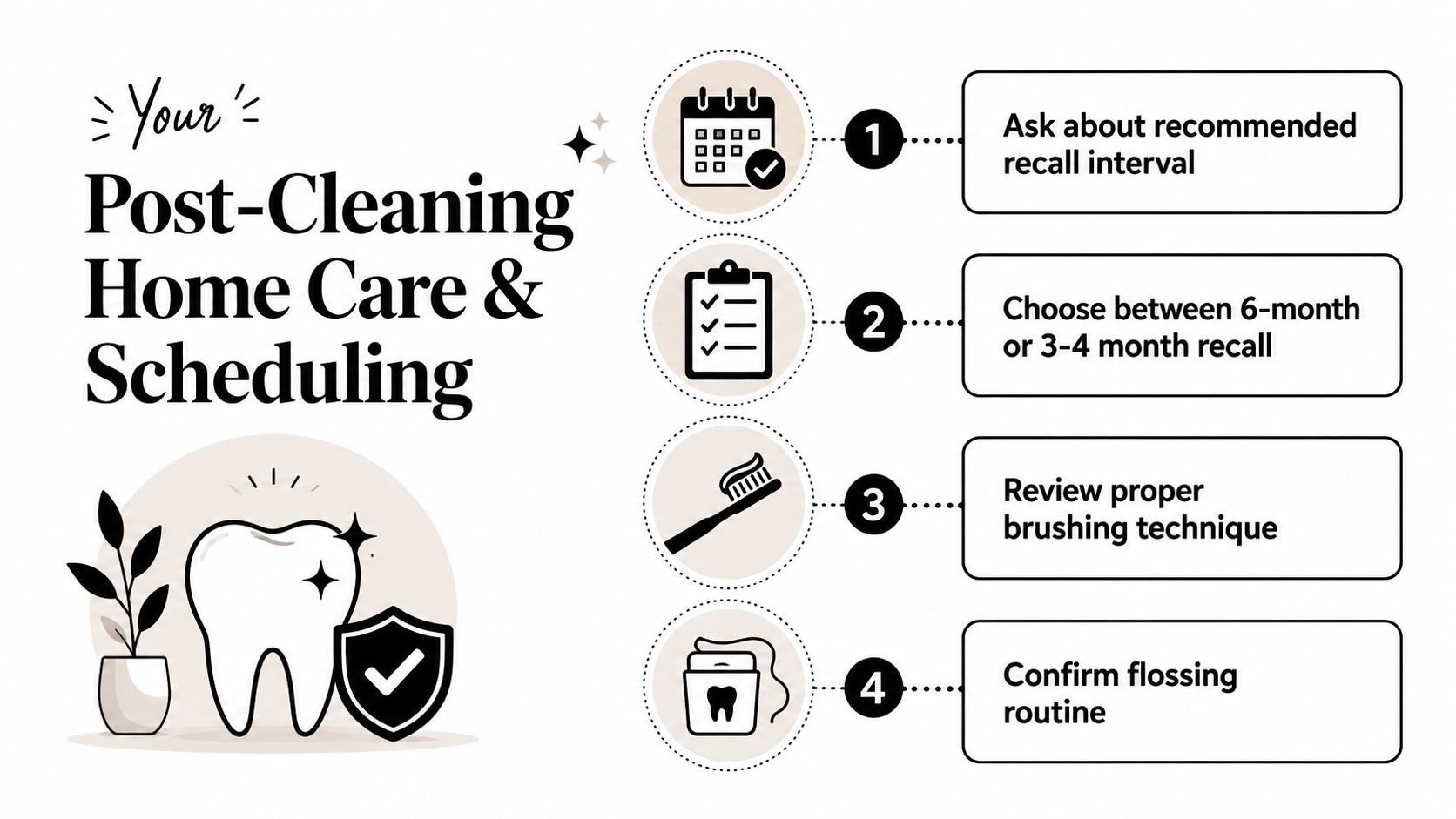
Your next appointment should follow what the team found today. Before you leave, ask for the recommended recall interval, whether your gum measurements were stable, and whether the next visit is routine or periodontal maintenance. If one area needs attention, ask the hygienist to show you the technique. You might need an interdental brush, a different brushing angle, or a specific method for cleaning around a bridge, implant, retainer, or crowded tooth.
Home care works alongside professional cleaning. Preventive visits and regular toothbrushing are associated with lower periodontitis risk, as reported in the review of preventive dentistry evidence. Mechanical plaque control has limits, too. A single toothbrushing exercise produced a moderate average plaque-score reduction, with results varying across published studies. Daily brushing and interdental cleaning therefore support, rather than replace, professional assessment and maintenance. The reasoning behind those findings appears in the clinical evidence on mechanical plaque control.
A simple scheduling rule
Use the findings from today's visit rather than guessing:
- Healthy measurements and stable gums: A six-month preventive interval is the common benchmark for healthy adults.
- Previous periodontal treatment or ongoing gum disease: Ask whether a 3-to-4-month maintenance interval fits your measurements and treatment history.
- New bleeding, swelling, bad breath, recession, or sensitivity: Contact the dental office instead of waiting for the next routine cleaning.
The word “cleaning” can describe different visits. Stable tissues may call for routine prevention. Persistent pockets, bleeding, or a history of periodontal treatment can shift the plan toward periodontal maintenance or deeper treatment. That decision is made from the examination, not from how smooth your teeth feel after polishing.
Long-term maintenance evidence has linked professional cleaning every three months with preservation of pocket depth and attachment levels in periodontal patients. It supports treating maintenance as an ongoing clinical plan rather than an ordinary polish. The historical development of scaling and root planing and scheduled maintenance is discussed in the historical development of scaling and root planing.
Your personal rule: If your gums are healthy and your measurements are stable, follow the preventive interval your dentist recommends. If you've had periodontal disease, let your measurements and treatment history set the schedule.
Quick questions patients hesitate to ask
Can bleeding gums be fixed by a routine cleaning? Inflammation may improve after plaque and calculus removal. Persistent bleeding still needs assessment, because polishing alone may not address its cause.
Why does one tooth feel sensitive afterward? The tooth may have an exposed root surface, inflammation, or deposits that required closer cleaning. Tell the office if sensitivity is severe, prolonged, or worsening.
Can I request a routine cleaning instead of deeper treatment? You can ask. The dentist should explain the pocket readings, bone findings, and diagnosis supporting the recommended procedure.
Paul L. Gregory, DDS offers preventive cleanings and exams, digital X-rays, oral cancer screenings, hygiene guidance, periodontal therapy, and supportive maintenance. Visit Paul L. Gregory, DDS to schedule an evaluation and discuss which dental cleaning process fits your current gum health.