

You've just left a Manhattan dental appointment with a recommendation for scaling and root planing. The hygienist explained that it isn't a routine cleaning, your dentist mentioned periodontal disease, and your benefits summary says “covered” without telling you what you'll pay. That combination leaves many patients staring at their insurance portal in Midtown, Chelsea, or the Upper West Side, wondering whether they need treatment now or a second opinion about the bill.
Dental insurance for periodontal treatment becomes easier to understand when you separate three questions: what the procedure is, what your plan calls it, and which limits apply when the claim is processed. The same treatment can be paid, partially reimbursed, delayed, or denied under different New York plan documents.
Why Periodontal Coverage Feels So Confusing
An analyst near Columbus Circle expects a routine cleaning. Her dentist finds inflammation, bleeding, and periodontal changes, then recommends scaling and root planing. On the train home, she opens her benefits summary and sees separate categories for preventive, basic, and major services. The document never plainly says what her gum treatment will cost.
The confusion comes from a classification problem. Periodontal care follows a different insurance pathway from routine prophylaxis because it treats established disease rather than removing surface buildup. A routine cleaning may appear under preventive services, while scaling and root planing is generally therapeutic. Periodontal maintenance may then be handled as a separate continuing benefit.
Why one treatment can produce different bills
A plan may require a deductible before it contributes to periodontal therapy. Another may apply coinsurance, a frequency limit, or an annual maximum. A third may require records showing that treatment meets its clinical criteria. Two employees can carry coverage from the same insurer and receive different claim results because their employer contracts set different rules.
The same procedure can therefore be paid, partially reimbursed, delayed, or denied. A New York plan document acts like a decoder ring: the procedure code is only the first piece, followed by the plan category, clinical requirements, and remaining benefit balance.
Treatment usually unfolds over time. Active therapy may come first, followed by periodontal maintenance and periodic reassessment. If the patient also needs a crown, implant restoration, or other extensive dental work, those claims may draw from the same annual benefit pool. Patients in Midtown, the West Village, Tribeca, and other neighborhoods can plan more accurately once they know which stage of care their contract is addressing.
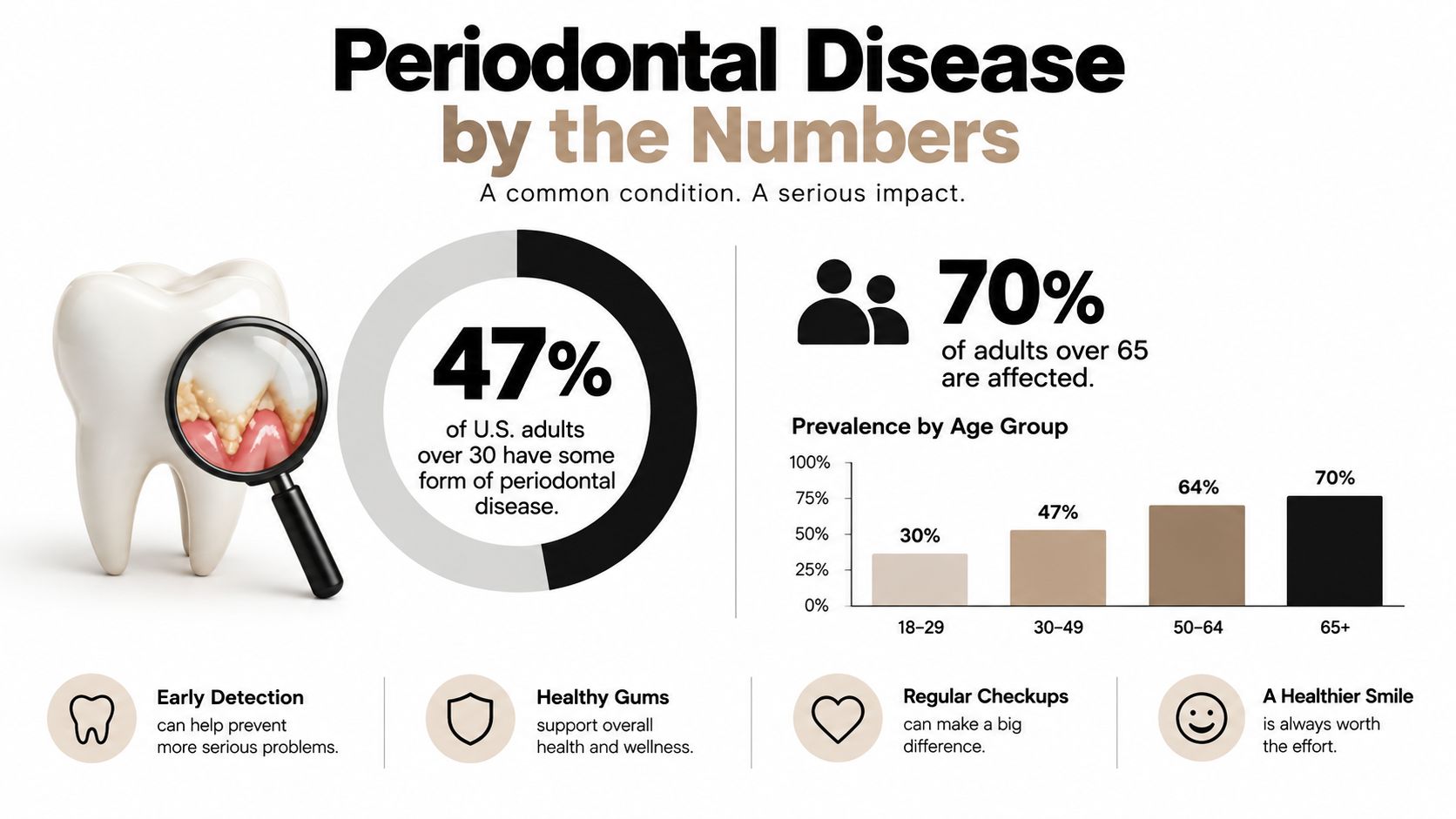
CDC surveillance shows that periodontitis affects a large share of U.S. adults, making coverage questions common rather than unusual.
Start with the plan, not the procedure name
Before scheduling, ask the dental office to verify:
- Procedure category: Is scaling and root planing listed as preventive, basic, or major care?
- Clinical criteria: Does the insurer require full-mouth charting, radiographs, or specific periodontal findings?
- Financial limits: Which deductible, coinsurance, annual maximum, and frequency rules apply?
- Continuing care: Is periodontal maintenance separate from a routine cleaning?
A plain-language guide to dental insurance coverage options can help you compare these plan features. If the estimate still leaves a balance, discuss dental insurance payment plans as part of the broader financial conversation.
Practical rule: A treatment recommendation explains what your mouth needs. A predetermination shows how your contract may respond.
How Common Periodontal Disease Really Is
A patient may feel fine, schedule a routine cleaning, and still have gum disease that needs closer attention. A national analysis of 2009–2012 data estimated that 46% of U.S. adults aged 30 and older, about 64.7 million people, had periodontitis, including 8.9% with severe disease. Those figures help explain why periodontal benefits matter before treatment becomes urgent.
The burden also varies with household income. The same analysis found higher prevalence among adults living below the federal poverty level, reaching approximately 60% among adults below 100% of that level. In New York, from Midtown and the West Village to Tribeca, Lenox Hill, and Hell's Kitchen, the practical issue is often continuity. A patient who delays charting, scaling, or follow-up may face a different insurance decision later.
Coverage access affects attendance
Dental benefits can influence whether patients keep regular appointments. The American Dental Association reported that in 2024, 64% of U.S. adults aged 19–64 had private dental benefits, while 54% of adults aged 65 and older had no dental benefits, excluding Medicare Advantage considerations (ADA coverage and access data). Its data also associated private coverage with more frequent dental visits than no dental insurance.
That pattern helps explain the structure of many plans. A routine examination, active periodontal therapy, and periodontal maintenance are different stages, much like inspecting a building, repairing its foundation, and scheduling later checks. A policy that pays reasonably for examinations may still limit repeated treatment, specialist visits, or maintenance.
WHO estimates that severe periodontal disease affects about 19% of people older than 15 worldwide, representing more than 1 billion cases, and reports that severe cases doubled between 1990 and 2019 (WHO oral health fact sheet). WHO also notes that oral-health prevention and treatment are often excluded from national universal-health-coverage packages.
For plan comparisons, ask one practical question: does the policy support both active treatment and the maintenance that follows it? A claim may be approved for one stage, denied for another, or delayed until the insurer receives charting, radiographs, or other documentation. Reviewing the actual plan document is more useful than relying on a headline percentage.
Before comparing benefits, review what periodontal scaling and root planing involves and how it differs from a standard cleaning.
PPO vs HMO for Periodontal Treatment
PPO and HMO plans can both help with periodontal care, but they organize access differently. The important distinction isn't which plan advertises the higher percentage. It's whether the network rules, referral requirements, and specialist access fit the treatment you may need.
A PPO generally gives you more freedom to choose a licensed dentist or periodontist. You might select a specialist near Central Park South, the Theatre District, or another neighborhood without changing your primary dental office. Staying in network usually matters because the insurer has negotiated the allowable fee. Going out of network can leave you responsible for the difference between the provider's charge and the plan's allowed amount.
An HMO usually uses a more structured network. You may need to select a primary dentist, receive a referral, or obtain authorization before specialist treatment qualifies for the plan's benefits. The lower premium can be attractive when you expect predictable examinations and maintenance, but the structure may feel restrictive if active periodontal therapy requires a particular specialist.
| Plan Feature | PPO | HMO |
|---|---|---|
| Provider choice | Usually broader choice, with different reimbursement rules in and out of network | Usually limited to participating providers |
| Specialist access | Often more direct, though plan rules still apply | May require a referral from the primary dentist |
| Out-of-network care | May receive partial benefits, with possible balance exposure | Often limited or unavailable except under defined circumstances |
| Periodontal treatment | Subject to clinical documentation, deductibles, coinsurance, and limits | Subject to network rules, referrals, authorizations, and contract terms |
| Best fit | Patients who value provider choice or may need multi-phase care | Patients prioritizing structured access and predictable network care |
A practical decision aid
Choose a PPO structure when you already see a periodontist, want flexibility during a move, or expect treatment that could involve multiple specialists. A PPO doesn't guarantee generous reimbursement, but it may simplify provider choice.
An HMO may suit someone whose priority is routine care through one participating office and who is comfortable following referral procedures. It can become less convenient when a patient needs a specialist outside the network or wants treatment quickly.
A lower premium doesn't automatically mean lower total cost. Ask whether scaling and root planing, periodontal maintenance, surgery, and specialist consultations are covered under the same arrangement. Then ask the office to verify the exact plan rather than relying on a general insurer brochure.
Billing Codes and What Insurers Need to See
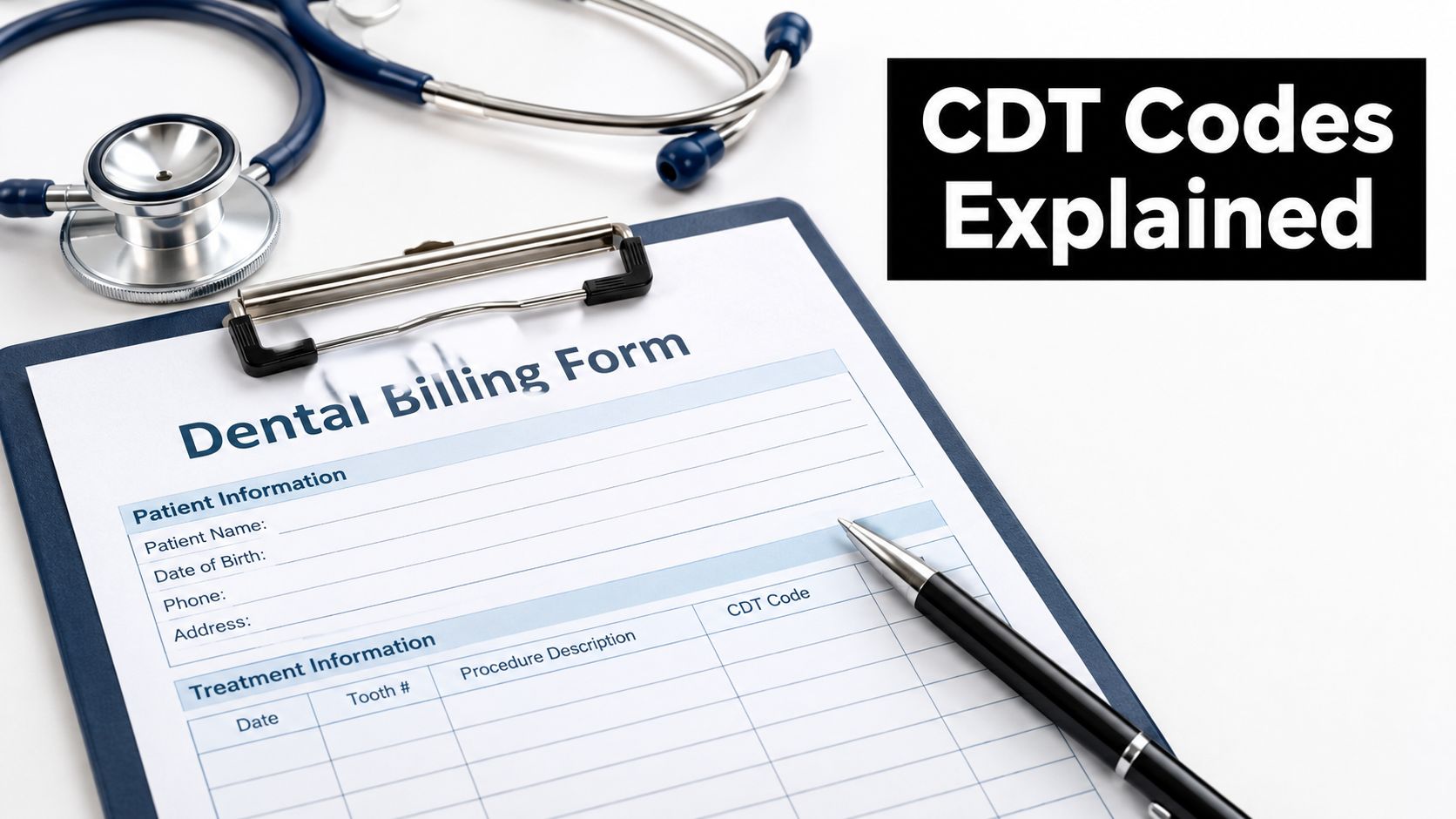
Insurance claims become clearer once you recognize the CDT codes behind the procedure. D4341 generally describes scaling and root planing for four or more qualifying teeth in a quadrant. D4342 generally describes treatment for one to three qualifying teeth in a quadrant. Periodontal maintenance is commonly submitted under D4910, which insurers may treat differently from both routine prophylaxis and active therapy.
The code alone doesn't establish eligibility. Most payers want a documented periodontal diagnosis supported by clinical records. A patient can have deep-looking pockets, but abnormal pocket depth alone may not satisfy the contract.
The records that support a claim
A complete submission may include:
- Periodontal charting: Probing depths across the mouth, with bleeding and other findings recorded.
- Attachment information: Clinical attachment loss, recession, mobility, or furcation involvement where present.
- Radiographs: Images that show alveolar bone loss or other findings supporting the diagnosis.
- Treatment details: The teeth or quadrants treated and the reason the procedure was necessary.
- History: Prior periodontal therapy and the timing of maintenance visits.
Many payer policies use probing depths of at least 4 mm as one threshold, but the full clinical picture matters. If the documentation doesn't support therapeutic treatment, an insurer may deny the claim or reclassify it as prophylaxis. That can leave the patient responsible for the difference between the expected estimate and the processed claim.
ADA guidance notes that scaling and root planing is often limited to once per quadrant during a consecutive 24-month period, although employer contracts can differ (ADA guidance on scaling and root planing claims).
Before scheduling in Midtown, ask the front desk for the proposed CDT codes, a written estimate, and a predetermination when appropriate. Request confirmation of the deductible, coinsurance, annual maximum, frequency limit, and clinical documentation requirements. For an overview of the treatment itself, see the cost of periodontal deep cleaning, while remembering that a general explanation can't replace your plan's written response.
Waiting Periods, Frequency Limits, and Annual Maximums
“Covered” doesn't mean “affordable,” and real New York plan documents make that distinction plain. One 2025 Delta Dental benefit matrix lists scaling and root planing at 90% in year one, declining to 50% in later years, with a frequency limit of once every 24 months. Another 2025 plan lists scaling and root planing as not covered and imposes a six-month waiting period for basic services, potentially waived with proof of prior coverage.
The precise reimbursement depends on the contract, the provider's network status, the deductible, and the remaining annual maximum. An annual maximum is a shared pool, not a periodontal-only account. Claims for crowns, implants, surgery, or other services may draw from the same available benefit.
The clock can matter as much as the percentage
A New York Cigna plan comparison states that basic services may carry a six-month waiting period and major services a 12-month waiting period. The waiting period may be waived with proof of at least 12 months of prior coverage and a gap of no more than 63 days (New York Cigna plan comparison).
That rule matters after a job change. Switching employers can place a patient under a new contract with different waiting-period language, even when the insurer's name looks familiar. Ask whether prior coverage qualifies, what documentation is accepted, and whether the procedure is classified as basic or major.
A plan may also distinguish routine cleaning from periodontal maintenance. One document can pay maintenance only after active therapy, while another can apply a separate calendar limit. Never assume that two cleanings listed in a benefits summary are interchangeable with two periodontal maintenance visits.
Read the Summary of Benefits alongside the detailed limitations and exclusions. Ask the insurer to confirm the date when treatment becomes eligible, the frequency period, and the annual maximum remaining after existing claims. A written predetermination is especially valuable when treatment is urgent or when several procedures may compete for the same benefit.
When Medical Insurance Can Help With Periodontal Care
Patients ask this question in Gramercy Park, Tribeca, and every other neighborhood: can medical insurance pay for gum treatment? Usually, periodontal care is handled through dental benefits, but the boundary isn't absolute. Oral and medical coverage remain structurally separate, even when a patient's oral condition intersects with diabetes, cardiovascular disease, pregnancy-related concerns, or another medical issue.
The distinction is important. Evidence that periodontal treatment may reduce medical costs does not mean a health plan will automatically reimburse scaling and root planing, antibiotics, periodontal surgery, or maintenance.
Ask both insurers before assuming the answer
A patient with diabetes might ask the dental office and medical insurer:
- Medical necessity: Could the medical plan review any part of the care when linked to a documented systemic condition?
- Coordination: Does the plan offer oral-medical case management or coordination of benefits?
- Documentation: Would a physician letter, diagnosis record, radiographs, or treatment narrative be required?
- Coding: Which ICD-10 or CPT information would the medical carrier need, if a medical claim is appropriate?
- Claim route: Should the dental office submit anything, or should the medical provider initiate the request?
A CareQuest Institute review cites a simulation estimating average savings of $5,904 per person for people with diabetes and periodontitis and identifies fragmented payment structures as a barrier to oral-medical integration (review discussed in this gum-disease coverage resource). That figure describes a modeled healthcare-cost association, not a promise of reimbursement for an individual patient.
Patients paying eligible healthcare expenses from an HSA may also want to find HSA investment growth strategies, while keeping investment decisions separate from the insurer's determination of coverage.
The safest approach is to obtain the dental estimate first, then ask whether medical coordination is relevant to your specific diagnosis. You can also review medical necessity and dental coverage when preparing questions for both carriers.
Planning Out-of-Pocket Costs Around the Annual Maximum
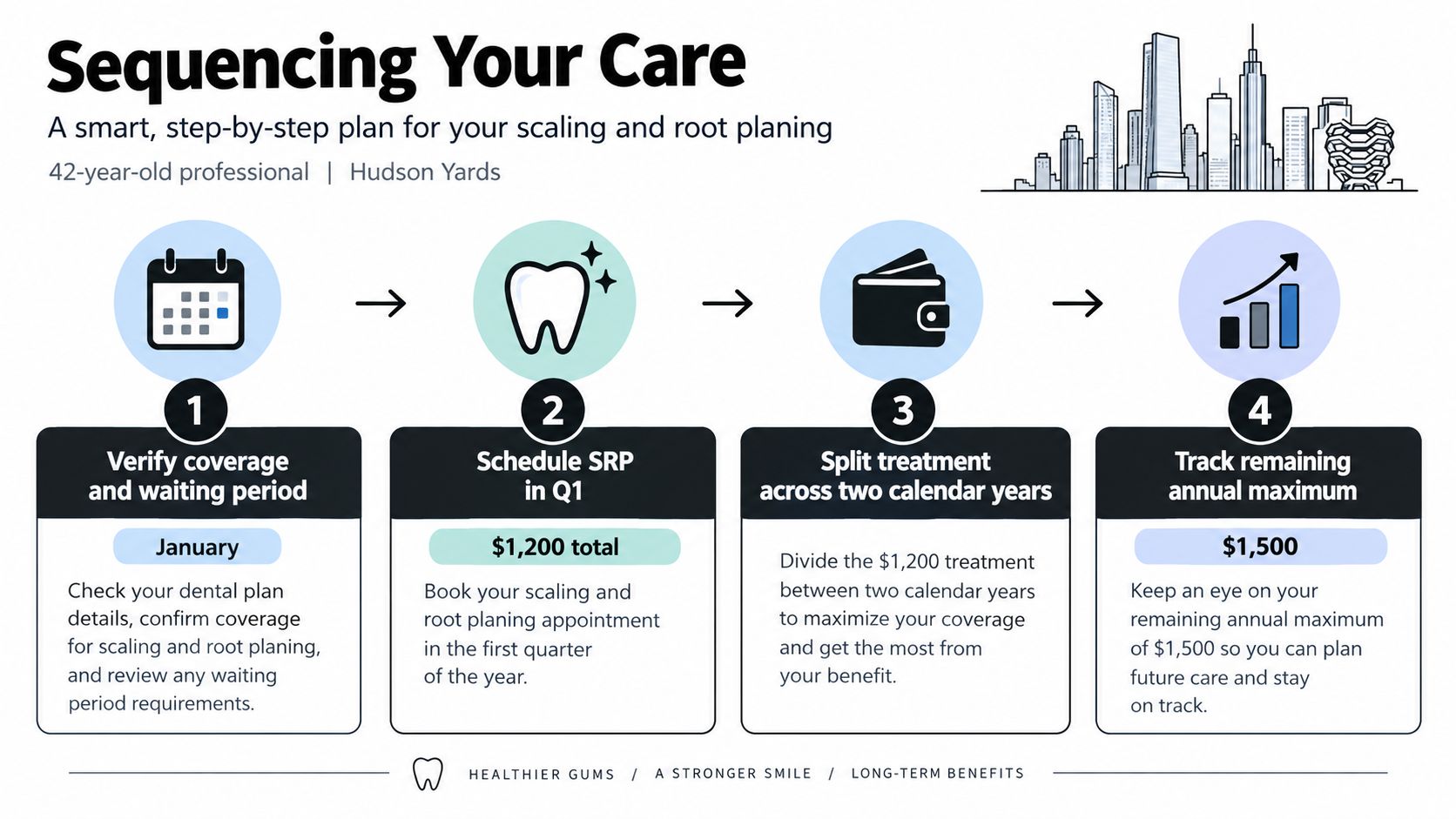
Consider a 42-year-old professional in Hudson Yards who needs scaling and root planing in two quadrants, ongoing periodontal maintenance, and a crown later in the year. The financial problem isn't only the price of the first procedure. Each claim may compete for the same annual maximum, and maintenance may be subject to its own frequency rule.
A practice in Midtown or the Financial District may recommend staging non-urgent work across plan years, but timing must never delay clinically necessary periodontal therapy. The right sequence depends on diagnosis, symptoms, the plan's rules, network status, and the urgency of other treatment.
Build a simple twelve-month worksheet
Write down the following before accepting the estimate:
- Available benefit: Record the annual maximum remaining after claims already processed.
- Patient share: Add the deductible and estimated coinsurance for each quadrant.
- Frequency exposure: Confirm whether the plan limits SRP by quadrant and whether maintenance has a separate rule.
- Competing care: List crowns, implants, surgery, or other planned treatment that may use the same annual maximum.
- Timing options: Ask whether medically appropriate care can be divided across plan years without interrupting treatment.
One New York plan document lists periodontal maintenance at a maximum of two procedures per calendar year, while allowing scaling and root planing once per quadrant every three years (New York Cigna plan comparison). Another plan may use different limits, so don't transfer one contract's rule to another.
In-network treatment can change the patient's cost because the insurer's negotiated fee may differ from the office's usual fee. Compare the network allowance and the benefit estimate, not just the advertised reimbursement percentage.
Your Pre-Appointment Insurance Checklist
Three decisions shape most periodontal billing surprises: which plan structure you have, whether the records support the procedure, and when the claim will use your annual maximum. Confirm those points before sitting in the treatment chair, whether your appointment is in Midtown, the West Village, Chinatown, or the Upper East Side.
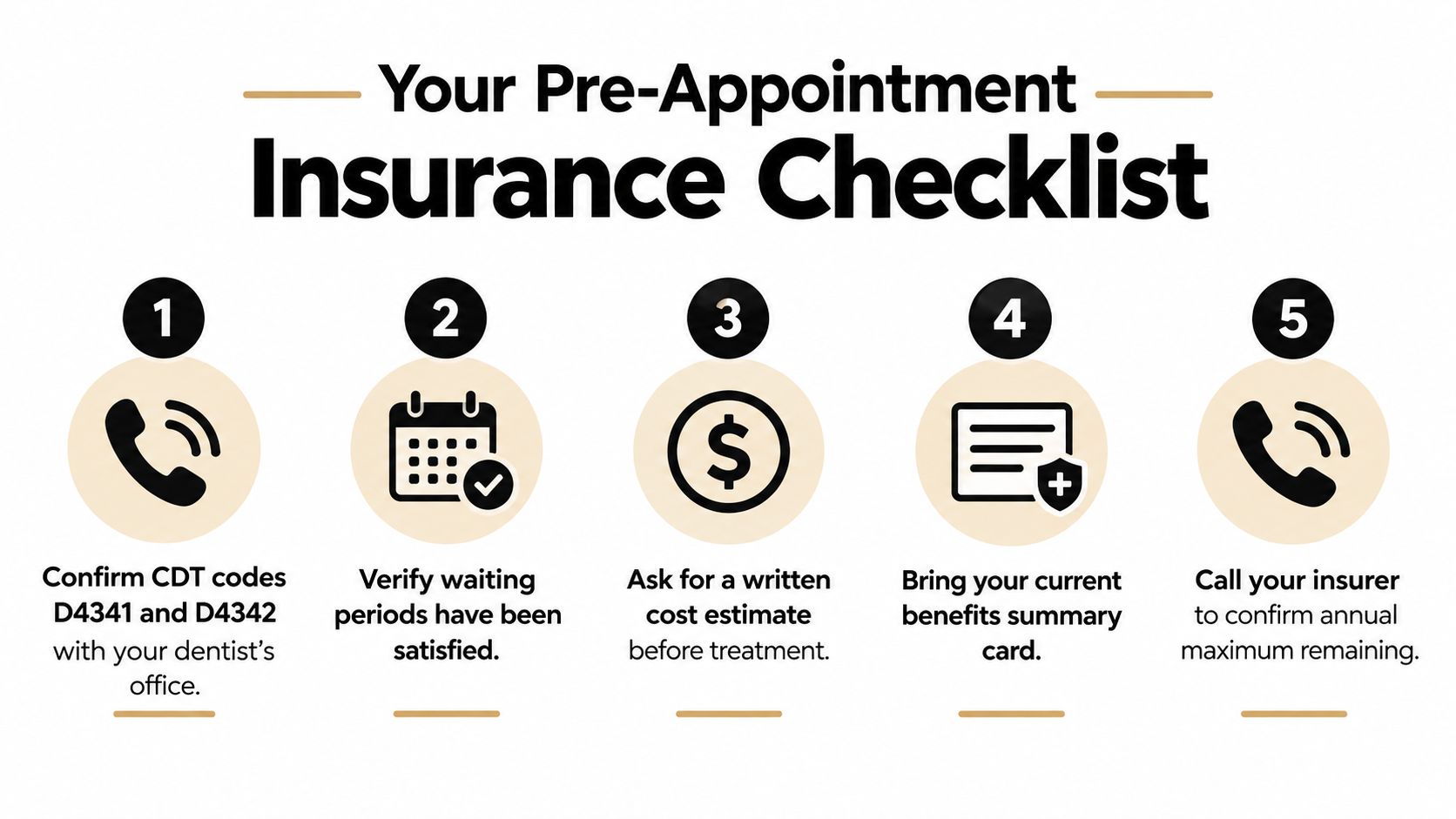
Use this checklist:
- Confirm codes: Ask your dentist's office whether the proposed treatment uses D4341, D4342, D4910, or another CDT code.
- Verify eligibility: Ask when any waiting period ends and whether prior coverage can waive it.
- Request a written estimate: Confirm the deductible, coinsurance, network allowance, expected insurer payment, and patient share.
- Check the clinical criteria: Ask whether full-mouth charting, radiographs, attachment loss, or other documentation must accompany the claim.
- Review remaining benefits: Find out how much of the annual maximum remains and whether other planned treatment will draw from it.
- Separate maintenance: Confirm whether periodontal maintenance is distinct from routine prophylaxis and how often it's payable.
- Ask about medical coordination: If diabetes, cardiovascular disease, pregnancy-related concerns, or another medical condition is relevant, contact both insurers.
A useful phone script sounds like this:
“My dentist is recommending periodontal treatment. Please confirm the coverage and clinical requirements for the proposed CDT code, the waiting period, frequency limit, deductible, coinsurance, annual maximum remaining, and whether a predetermination is available. Does my prior coverage affect eligibility, and is any medical coordination relevant to my diagnosis?”
Bring your current benefits card and summary to the appointment. The office can help submit records and claims, but the insurer makes the final benefit determination. You can also review the dental cleaning process so you understand why a periodontal maintenance visit isn't necessarily processed like a routine cleaning.
Paul L. Gregory, DDS provides periodontal therapy, supportive maintenance, digital diagnostics, and assistance with insurance claims so patients can review treatment and benefit questions in one Midtown office. Visit Paul L. Gregory, DDS to request an appointment and bring your insurance questions to the consultation.