

Without insurance, a standard one-surface filling typically costs $130 to $300, while Manhattan prices often exceed national averages because of higher overhead and separately billed diagnostics. A larger or multi-surface restoration can cost substantially more, depending on the material, tooth, and extent of decay.
You may be calling a dental office with a sore tooth, trying to decide whether to book an appointment or wait another week. The number you hear on the phone may sound simple, but the final bill often includes more than the filling itself. An examination, X-rays, local anesthetic, the number of tooth surfaces involved, and the restorative material can all change what you pay.
For uninsured patients, the useful question isn't only “What is the average cost of a tooth filling without insurance?” It's “What exactly does this office include in its estimate, and what treatment does my tooth need?”
What an Uninsured Filling Costs in Manhattan
A patient with a sore tooth may call a Manhattan dental office expecting one price. The estimate can change substantially once the dentist assesses the tooth. Across the cash market, uninsured fillings range from approximately $75 to $615, while a two-surface composite filling on a back tooth has a national median of about $212, according to Fair Health's cash-price benchmark. These figures provide context, not a guaranteed quote for Midtown, the Upper East Side, the West Village, or another Manhattan neighborhood.
A small cavity may require limited preparation and restoration. Decay extending across the chewing surface and one or both sides requires more material, shaping, and bite adjustment. If the tooth has lost substantial structure, a standard filling may no longer provide enough support, and the dentist may discuss an onlay or crown.
What changes the estimate
The number of surfaces is one of the clearest cost drivers. One surface may involve a limited area on the chewing surface. Two or three surfaces usually mean a larger restoration and more chair time. The restoration's size also affects how much remaining tooth structure must be protected.
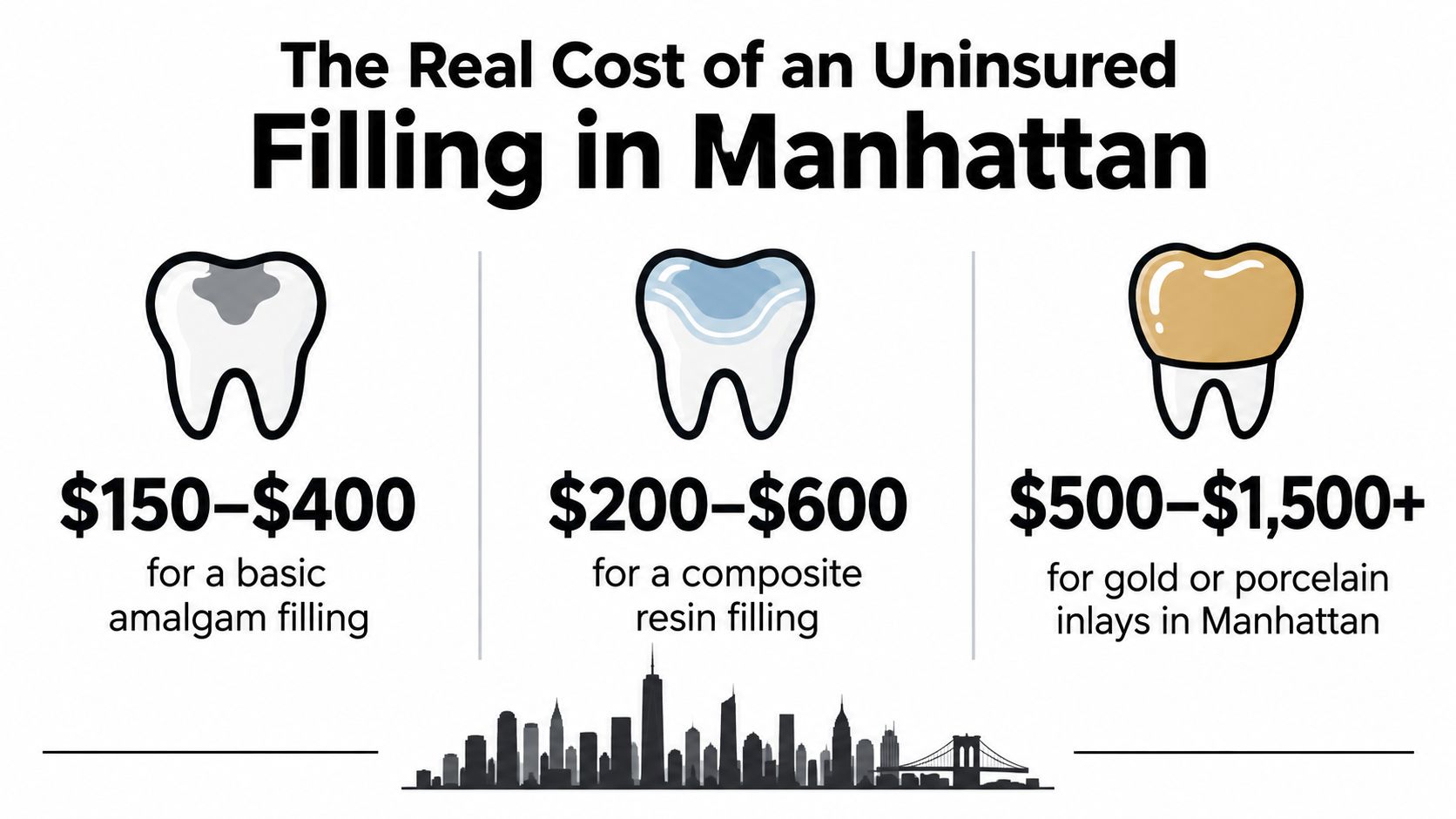
The material changes the fee as well. Historical American Dental Association fee figures cited by Investopedia place average U.S. fees around $146 for an amalgam filling and $174 for a tooth-colored composite filling. These national averages may exclude an examination, imaging, anesthetic, or other office charges.
Diagnostics need their own line items. An X-ray can reveal decay between teeth or show that the cavity is approaching the nerve. Ask whether the examination, X-rays, local anesthetic, restoration, and any buildup are included before authorizing treatment. Significant pain can indicate treatment beyond a filling, so review information about root canal treatment cost without insurance when discussing options.
Practical rule: Request an itemized estimate covering the restoration, examination, X-rays, local anesthetic, and any buildup.
Manhattan commercial rent, staffing, equipment, and other operating expenses can place office fees above national benchmarks. If paying upfront is difficult, you can find affordable dental loans, but compare terms only after receiving a clear diagnosis and written treatment estimate.
Amalgam vs Composite Filling Costs Explained
A patient comparing two cash quotes may see a meaningful difference between amalgam and composite. The material affects appearance, preparation, chair time, and clinical suitability. The lower quote is not automatically the better choice for the tooth.
One-surface amalgam fillings generally cost less than one-surface posterior composites in national cash-price comparisons. Composite requires careful moisture control, tooth conditioning, adhesive, incremental placement, light curing, shaping, and bite adjustment. Those steps can increase the fee, particularly when access is difficult or the restoration covers more than one surface.
| Restoration | Typical national benchmark | Main trade-off |
|---|---|---|
| One-surface amalgam | Lower-cost national option | Durable and silver-colored, with suitability determined by the tooth |
| One-surface posterior composite | Higher than amalgam in many cash quotes | Tooth-colored, but more technique-sensitive |
| Two-surface composite | Higher than a small one-surface restoration | More material, shaping, and appointment time |
An uninsured patient may encounter a broad cash range for a small filling, with larger two-surface composite restorations costing more. MoneyUnder30's discussion of uninsured dental costs describes this wider budgeting challenge. Manhattan offices may quote above national ranges because the final fee can include diagnostic work, local anesthetic, isolation, or additional buildup.
Why cavity size matters
A one-surface cavity is not just a smaller version of a three-surface cavity. As decay spreads, the dentist may need to remove more compromised structure, rebuild more anatomy, shape additional material, and check how the upper and lower teeth meet. Composite is placed and cured in stages, so a larger restoration usually requires more controlled work.
Amalgam can make financial sense when appearance is a lower priority and the tooth is clinically suitable. Moisture control, remaining tooth structure, tooth location, chewing forces, and the dentist's assessment all affect that decision. It is not appropriate for every situation.
Composite suits patients seeking a natural-looking restoration and cases where adhesive bonding allows conservative preparation. Price alone should not determine the material. The restoration must seal the tooth and tolerate normal function.
A Manhattan estimate should state the material, number of surfaces, diagnostic charges, and whether anesthetic or buildup is included. For a practical explanation of how dentists fill cavities, review the treatment steps before comparing quotes. A written, itemized estimate makes differences between Midtown, the Upper East Side, the West Village, and other offices easier to assess.
How Manhattan Neighborhoods Impact Dental Pricing
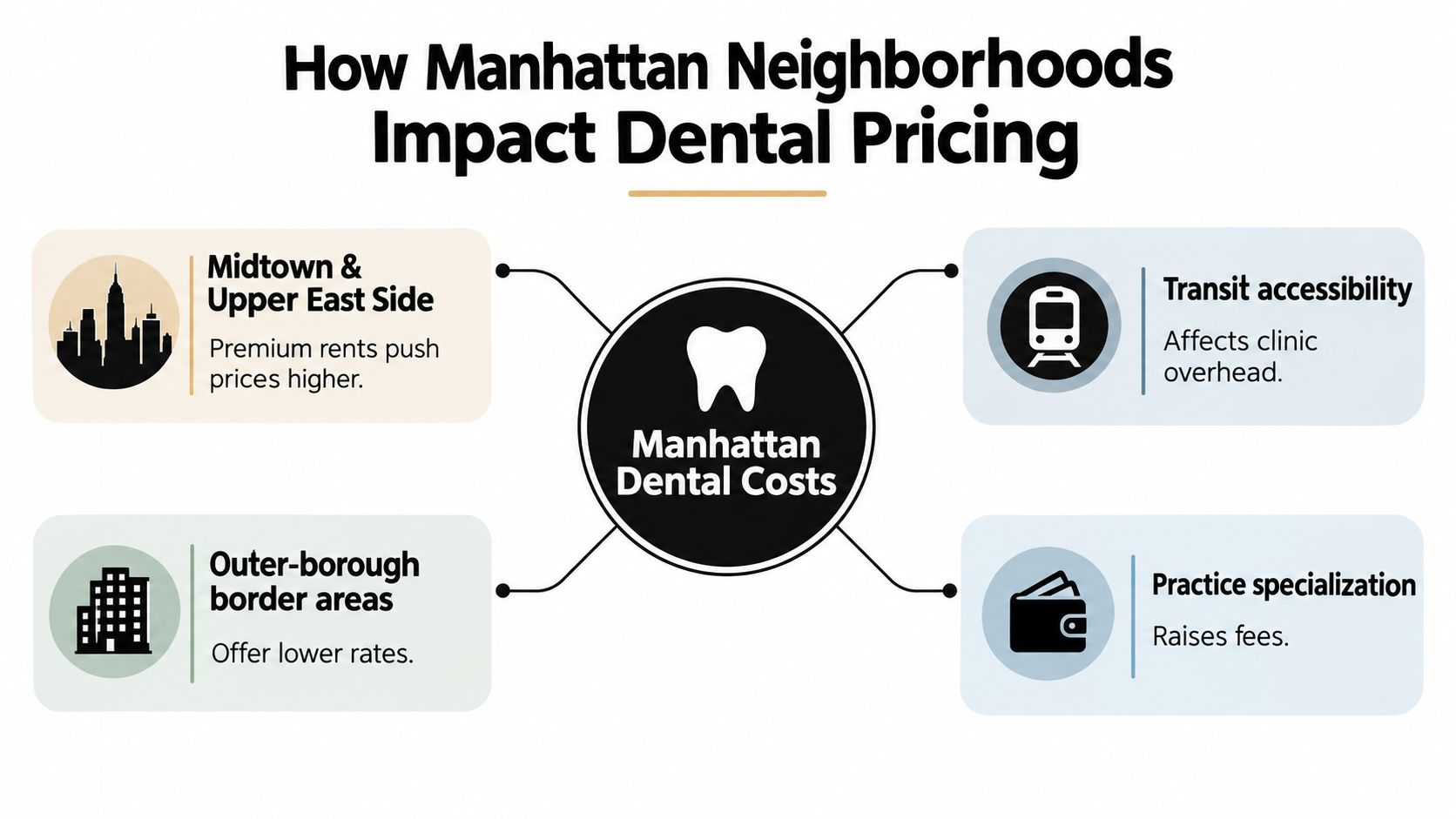
Manhattan isn't one uniform dental market. A practice serving office workers near Midtown may carry a different cost structure from a smaller office in a residential pocket, even when both dentists perform the same filling procedure.
Commercial rent is one factor, but it isn't the only one. Staffing, laboratory services, equipment, technology, appointment availability, and the practice's clinical focus can all affect fees. These costs help explain why a national median is a starting point rather than a local promise.
Neighborhood labels aren't pricing zones
The city divides Manhattan into 12 community districts, but community-district boundaries don't perfectly match the neighborhood names patients use, as shown by the New York City Department of City Planning's community-district maps. That distinction matters when comparing offices in Midtown, Chelsea, the Upper West Side, or the Upper East Side.
Community Board 4 covers an area between 14th and 59th Streets and includes Chelsea and Clinton, commonly called Hell's Kitchen. Its street-by-street boundaries also show why labels such as Midtown West, the Theatre District, Hudson Yards, and Hell's Kitchen can overlap in marketing language without representing the same location.
Downtown geography has its own distinctions. Community Board 2 includes Greenwich Village, SoHo, NoHo, Little Italy, Chinatown, Hudson Square, and the Gansevoort Market, according to its official district profile. Community Board 1 includes Battery Park City, the Civic Center, the Financial District, the Seaport, and Tribeca, as described by Manhattan Community Board 1.
Location insight: A neighborhood name can tell you where the office is, but it can't tell you what the filling includes.
Patients often mention the Upper East Side, Lenox Hill, Turtle Bay, Gramercy Park, the West Village, the East Village, Wall Street, or Tribeca when comparing offices. Those references are useful for finding convenient care, but they aren't official dental fee categories. The exact address, diagnostic policy, material, and surface count matter more than the label alone.
For patients looking around Midtown, the practice's information about a Midtown Manhattan dentist can provide geographic context, but an office should still provide its own self-pay estimate before treatment.
Realistic Scenarios Across Manhattan
Consider a busy professional near Midtown West who has sensitivity in a back tooth. The office may schedule an examination and X-rays before confirming whether the problem is a one-surface cavity. The patient should ask whether those diagnostic services are included in the quoted filling fee or billed separately.
A similar patient near Turtle Bay or the Theatre District may receive a different total estimate from an office with a different fee schedule. That doesn't necessarily mean one dentist is overcharging. The offices may use different materials, include different services, or evaluate restorations under different procedure categories.
The same filling, different visit
A patient near Hell's Kitchen may need a small composite restoration but have an appointment that includes local anesthetic and a bite adjustment. Another patient in Chelsea may be quoted only for the restorative procedure, with the examination and imaging listed separately. Comparing the headline number alone would produce a misleading result.
The Upper West Side, Lenox Hill, and the Upper East Side also contain offices with different practice models. A residential location may feel less commercially intense than Midtown, but the patient still needs to verify the individual office's fees. A quiet street doesn't guarantee a lower price, and a central office doesn't guarantee that every service costs more.
Downtown examples work the same way. An office near SoHo or NoHo may serve patients who want tooth-colored restorations and convenient appointments. A practice near the West Village or East Village may structure its cash fees differently. Near Tribeca or Wall Street, an office may cater heavily to professionals seeking rapid appointments, but convenience and location should remain separate from assumptions about the clinical work.
What to request before treatment
Ask for a written estimate that identifies:
- The tooth and surfaces: Confirm whether the restoration is one-surface, two-surface, or more extensive.
- The material: Check whether the recommendation is amalgam, composite, or another restoration.
- Diagnostics: Ask whether the examination and X-rays are included.
- Anesthesia and follow-up: Confirm whether local anesthetic and any bite adjustment carry separate fees.
- Alternative treatment: Find out whether an onlay, crown, or root canal might be necessary if the tooth is more damaged than expected.
A patient in Hudson Yards may value a quick appointment near work, while someone in Greenwich Village may prioritize a lower cash fee. Neither preference is wrong. The financially sound choice is the one based on a complete estimate and an appropriate restoration, not on a neighborhood stereotype.
Strategies to Reduce Your Out-of-Pocket Expenses
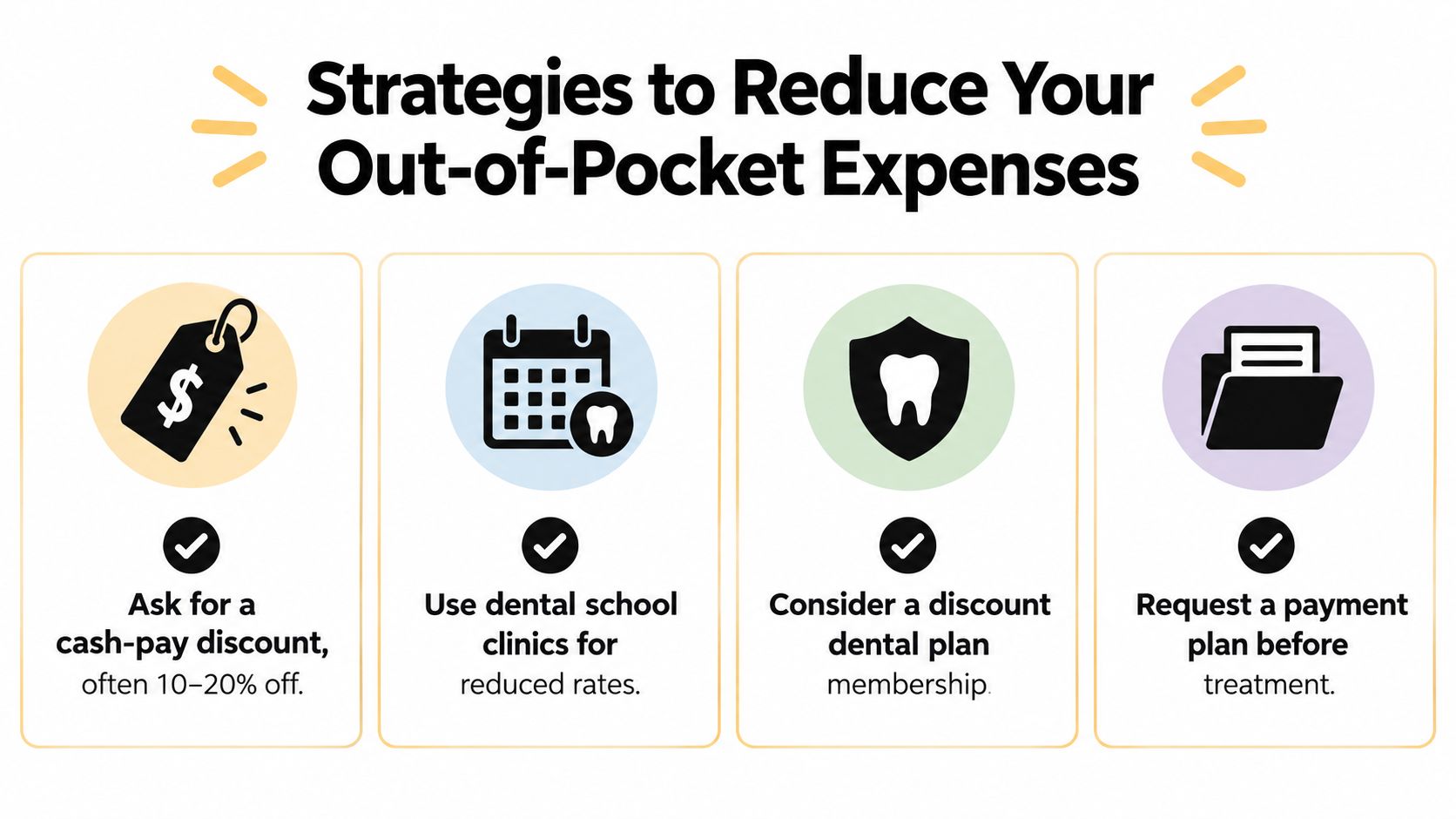
Uninsured patients can reduce the bill, but the most effective approach starts before the dentist begins treatment. Ask the office how it handles cash payments, membership arrangements, phased care, and financing. Don't agree to a price that you haven't seen broken down.
Start with a complete estimate
Call several offices in areas that fit your schedule, such as Greenwich Village, NoHo, Hudson Yards, or Midtown. Give each office the same information and ask for the same categories of fees. A price comparison is useful only when the estimates describe comparable services.
Use these questions:
- What is the fee for the examination and X-rays?
- Is the filling fee based on one surface or multiple surfaces?
- Which material is being recommended, and why?
- Is local anesthetic included?
- Could the tooth need a buildup, onlay, crown, or root canal instead?
- Does the office offer a cash-pay discount or payment arrangement?
A discount can help, but don't choose a material that isn't suitable just because its initial fee is lower. The proper restoration protects the tooth and may reduce the chance of needing more extensive treatment.
Compare payment methods carefully
A dental membership plan may make sense for someone who expects examinations, X-rays, cleanings, or more than one procedure. It may be less useful for a person who needs only one filling, so compare the membership fee, included services, and actual discount before joining.
Payment plans can spread the expense, but read the terms before accepting one. Ask about interest, fees, due dates, and whether the balance must be paid before treatment begins. If you're reviewing your monthly budget, a practical tool such as how FloosYo spots forgotten subscriptions can help identify recurring expenses you no longer use, freeing cash for necessary care.
Dental schools and community clinics may offer reduced rates, but appointment availability and treatment speed can vary. For a time-sensitive cavity, a private office with a clear estimate may be more practical than waiting for a lower-fee appointment.
Ask before booking: “What will I owe at this visit if I need an examination, X-rays, anesthetic, and a one-surface composite filling?”
You can also ask whether treatment can be staged safely. Staging may help with cash flow when several teeth need care, but it isn't appropriate to postpone a tooth that has signs of infection or rapidly worsening symptoms. A dentist should identify which treatment is urgent and which can wait.
For more detail on handling dental expenses, review information about dental insurance and payment plans. The key is to make the financial plan before the procedure, not while you're numb in the chair.
Why Delaying Care Is Riskier Than You Think
A patient may decide to wait because a filling feels expensive. That choice can be understandable, especially when there is no insurance, but it can also allow a manageable cavity to become a larger structural problem.
About 13% of Americans reported not obtaining needed dental care because of cost, according to Becker's Dental coverage of dental-care cost barriers. The same source reports that uninsured adults represented about 24% of the U.S. population in the latest ADA coverage estimates. Financial stress is real, and patients deserve a plan that respects it.

The cheapest immediate choice may cost more later
Decay can extend deeper into the tooth. A larger restoration may eventually require an onlay or crown, and decay involving the pulp may require root canal treatment or extraction. Those treatments involve more clinical steps and generally create a larger financial burden than an early filling.
Don't wait for severe symptoms before seeking an evaluation. Spontaneous pain, swelling, fever, lingering sensitivity, or pain that wakes you should prompt timely dental attention rather than extended price-shopping.
A dentist can sometimes stage care, use a suitable lower-cost material, or arrange payment terms. That conversation is more useful when the tooth is still treatable with a conservative restoration. For maintenance expectations after treatment, see how long tooth fillings last.
Here is a short visual explanation of why evaluation and timely treatment matter:
Paul L. Gregory, DDS provides examinations, digital X-rays, composite and porcelain fillings, crowns, root canal care, and emergency assessment in Midtown Manhattan. If you need a clear uninsured estimate for a suspected cavity, visit Paul L. Gregory, DDS to request an appointment and discuss the treatment and payment options before care begins.