

You may be asking the wrong question. Instead of wondering whether your child is “old enough” for a dentist, ask whether the first tooth has already appeared and whether your family has established a dental home. For most parents, that shift turns an uncertain milestone into a clear next step.
The American Academy of Pediatric Dentistry recommends a first dental examination when the first primary tooth erupts and no later than 12 months of age. The AAPD, American Dental Association, and American Academy of Pediatrics all support a first visit during the first year of life. The practical rule is simple: schedule care within six months of the first tooth, and make sure the visit happens by the first birthday if no concern brings you in sooner. (AAPD guidance on the dental home)
For a New York family, the appointment doesn't need to feel like a major production. The first visit is usually a gentle conversation, a brief look at the mouth, and a chance to build habits before a small concern becomes an urgent one.
Why the First Visit Feels Later Than It Should
Your baby has a new tooth, and you may be wondering, “Are we already late?” Many families hear older advice about waiting until a child is older, so the first tooth can feel like a deadline they have missed. Current professional guidance places the dental home much earlier, reflecting a shift away from the former “wait until age 3” approach. (AAPD's overview of early dental care)
The first tooth is the practical signal to begin, while age one is the latest point to establish ongoing dental care. If your baby's tooth appeared months ago, schedule the visit now, without guilt. An early appointment works like a starting map: it helps your family choose daily habits before a small concern becomes urgent.
Why prevention starts before symptoms
Early dental care focuses on guidance as much as examination. The dentist can discuss feeding patterns, tooth eruption, brushing, fluoride exposure, teething, pacifiers, thumb habits, and injury prevention. AAPD materials emphasize an oral-health risk assessment by six months and a dental home by 12 months, allowing these conversations to begin before decay is visible. (AAPD preventive-care guidance)
Timing matters because routines become harder to change once they are firmly established. A study cited in AAPD materials reported a mean age of referral for a first dental assessment of 2.5 years. (AAPD archived early-childhood oral-health material) By then, families may already be working through bottle, cup, snack, or brushing patterns that affect oral health.
Practical rule: If the first tooth has erupted, call this month. A late start does not mean you have failed, and a problem does not need to appear before an appointment makes sense.
For a New York family, a Midtown family dental practice can provide a familiar setting for children and adults, with continuity as your child grows. The first visit should feel like coaching, not a test your child must pass.
The Age-by-Age Timeline for a Child's Dental Care
My baby already has teeth. Am I late? Usually, there is no reason to panic. The first tooth is a useful prompt to begin care, while the first birthday is the point by which the dental-home visit should happen. Later milestones, such as the arrival of permanent molars, change the advice rather than replace the need for regular prevention.
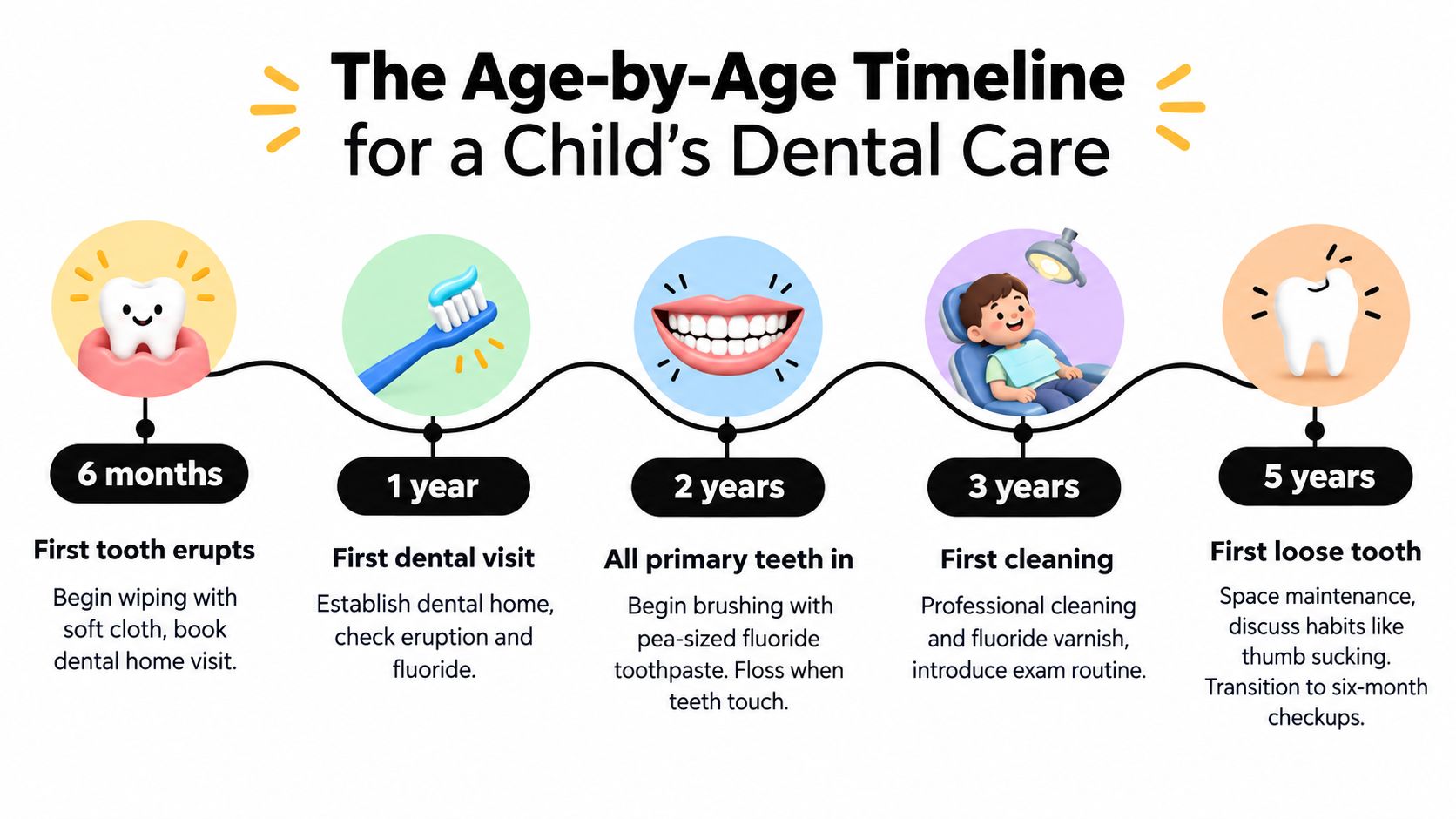
With the first tooth, gently wipe it with a soft cloth or use an appropriately sized toothbrush. Arrange the dental-home visit then, or call promptly if the tooth has already appeared. The AAPD recommends an examination when the first primary tooth erupts and no later than 12 months. (AAPD dental-home recommendation)
At the first birthday, the visit is a planning appointment for the years ahead. Bring the child's usual drinks, snacks, toothpaste, and toothbrush information. The dentist can connect those everyday details with brushing, fluoride exposure, feeding routines, teething, pacifiers, and thumb-sucking.
During the toddler years, more primary teeth create new spaces to monitor. Once teeth touch, ask when to clean between them. Keep brushing a predictable morning and bedtime routine, with the adult completing the cleaning while the child gradually joins in.
Around age three, many children begin to accept the examination routine more readily. The dentist may discuss professional cleaning, fluoride varnish, and ways to build cooperation without transferring responsibility too soon. A short, calm appointment can work like a rehearsal. Each visit gives the child another familiar experience and gives the family clearer instructions for home.
As kindergarten approaches, conversations broaden to mouth injuries, oral habits, spacing, and the permanent teeth developing behind the baby teeth. A loose baby tooth usually calls for a question, not immediate alarm.
Later orthodontic concerns can be reviewed with a family dentist, who may coordinate an evaluation and explain age-appropriate options, including braces for teens. A Midtown family dental practice can keep that record and relationship in one place as your child grows. Keep preventive visits scheduled even when the teeth look healthy.
What Really Happens at the First Dental Visit
Wondering whether your baby is already late for a first dental visit because several teeth have appeared? A toddler's appointment usually feels much simpler than parents expect. The goal is to establish a dental home by age one, build familiarity, and give your family a prevention plan that can continue with the same family dentist in Midtown NYC.
A young child may sit on a parent's lap while the dentist and caregiver use a knee-to-knee position. The dentist supports the child's head while the parent helps provide comfort. This arrangement allows a careful look without asking a toddler to sit alone in an unfamiliar chair.
The dentist examines the erupted teeth, gums, tongue, and bite visually. A child may hold a comfort item, look at a book or tablet, or pause while the dentist explains findings. Crying does not make the visit useless. The team can still gather information, identify concerns, and show the caregiver practical next steps.
A visit built around comfort and information
Cleaning may be brief at this age. A soft brush can be enough when the appointment centers on trust, prevention, and home care. If fluoride varnish suits the child's needs, the dentist applies it and explains how it helps protect the teeth. Families who want a clearer picture of later preventive care can review this dental cleaning process.
Much of the appointment is a conversation with the caregiver. You may discuss brushing frequency, the toothpaste being used, bottle or cup habits, foods offered during the day, and any pacifier or thumb-sucking pattern. The dentist can explain what to expect during teething, which changes deserve a call, and how to respond if a tooth or mouth is injured.
The first appointment gives the dentist time to understand your child and gives you a practical plan for home.
Consider a 14-month-old with several teeth and no visible concerns. The dentist may document eruption, assess risk, answer questions, and arrange preventive follow-up. Another child may need a slower introduction because the office feels overwhelming. Both appointments can succeed. A calm first experience helps the child return to a familiar family dental team as care continues.
Preparing Your Child Without Making It a Big Deal
Preparation works best when it reduces surprise rather than tries to force cooperation. You don't need a long rehearsal or a complicated reward system. A few ordinary conversations during the week can make the office feel less unfamiliar.
Make the language familiar
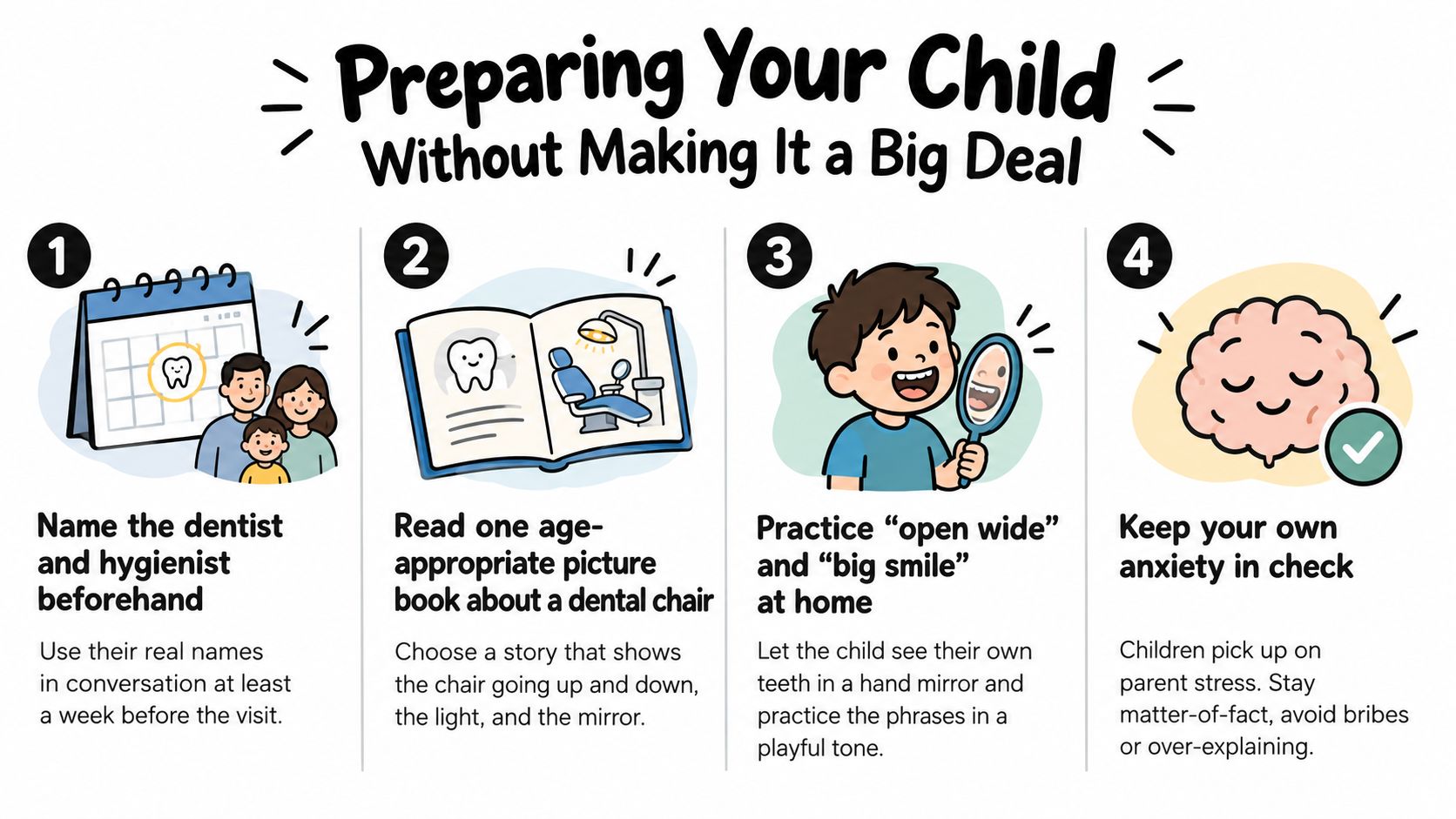
Mention the dentist and hygienist by name in a calm, matter-of-fact way. Read one age-appropriate picture book that shows a dental chair, a light, and a mirror. Keep the story simple. Your child doesn't need a detailed explanation of every instrument.
At home, practice “open wide” and “big smile” with a hand mirror or a small flashlight. Turn it into a game in which your child looks at your teeth too. The point is to make mouth observation ordinary, not to demand a perfect imitation of the office examination.
Choose the appointment thoughtfully
A morning appointment often works well for a toddler who is rested and alert. Avoid scheduling during a predictable nap or meal disruption when possible. Tell the office about sensory sensitivities, separation concerns, communication needs, or a strong gag reflex before you arrive.
Avoid words such as “shot,” “drill,” “hurt,” or “pain” when preparing a child who hasn't asked about them. Warning a child repeatedly can create worry that wasn't there before. You can answer questions truthfully without introducing frightening details that don't apply to a preventive visit.
A small, non-food activity after the appointment can mark the occasion. A walk to a Midtown playground can be a celebration, not payment for sitting still. Your tone matters more than elaborate preparation. Children notice whether the adults in the waiting room sound relaxed and confident.
Sealants and Fluoride Milestones by Age
Fluoride and sealants both help prevent decay, but they serve different purposes. Fluoride is an ongoing exposure and treatment conversation, while sealants are placed on particular tooth surfaces when the dentist identifies a useful opportunity.
The first dental visit is the right time to review fluoride exposure and brushing. The dentist may consider the child's age, erupted teeth, toothpaste use, drinking water, and individual caries risk. AAPD guidance describes the first examination as a risk assessment that includes fluoride review and preventive instruction, with follow-up visits every six months or as indicated by risk. (AAPD preventive guidelines)
Two preventive tools, different decisions
Fluoride varnish is brushed onto tooth surfaces in a thin layer. Sealants fill the grooves of molars, where food and plaque can collect. The dentist decides whether either option is appropriate based on the teeth present and the child's risk, rather than applying the same plan to every child.
| Age range | Fluoride plan | Sealant plan |
|---|---|---|
| First tooth to age one | Review toothpaste, water, feeding patterns, and fluoride exposure with the dentist. | Usually no permanent-molar sealant decision yet. |
| Toddler years | Continue daily brushing and discuss professional fluoride according to risk. | Consider only if a dentist identifies a vulnerable primary-tooth surface. |
| Preschool years | Reassess exposure and home-care consistency at preventive visits. | Evaluate deep grooves and any developing risk areas. |
| Early school years | Keep fluoride guidance aligned with the child's changing dentition. | Assess newly erupted permanent molars for sealant suitability. |
A sealant appointment is usually brief and noninvasive. The tooth is cleaned and kept dry, the material is placed into the grooves, and a curing light hardens it. It doesn't replace brushing or professional examinations, and the dentist checks it over time.
Families can read more about the purpose and process of dental fluoride treatment before discussing a plan with their child's dentist. The useful question isn't “Does every child need this?” It's “Which preventive step fits these teeth and this child's risk today?”
How Often Should Kids Go Back to the Dentist
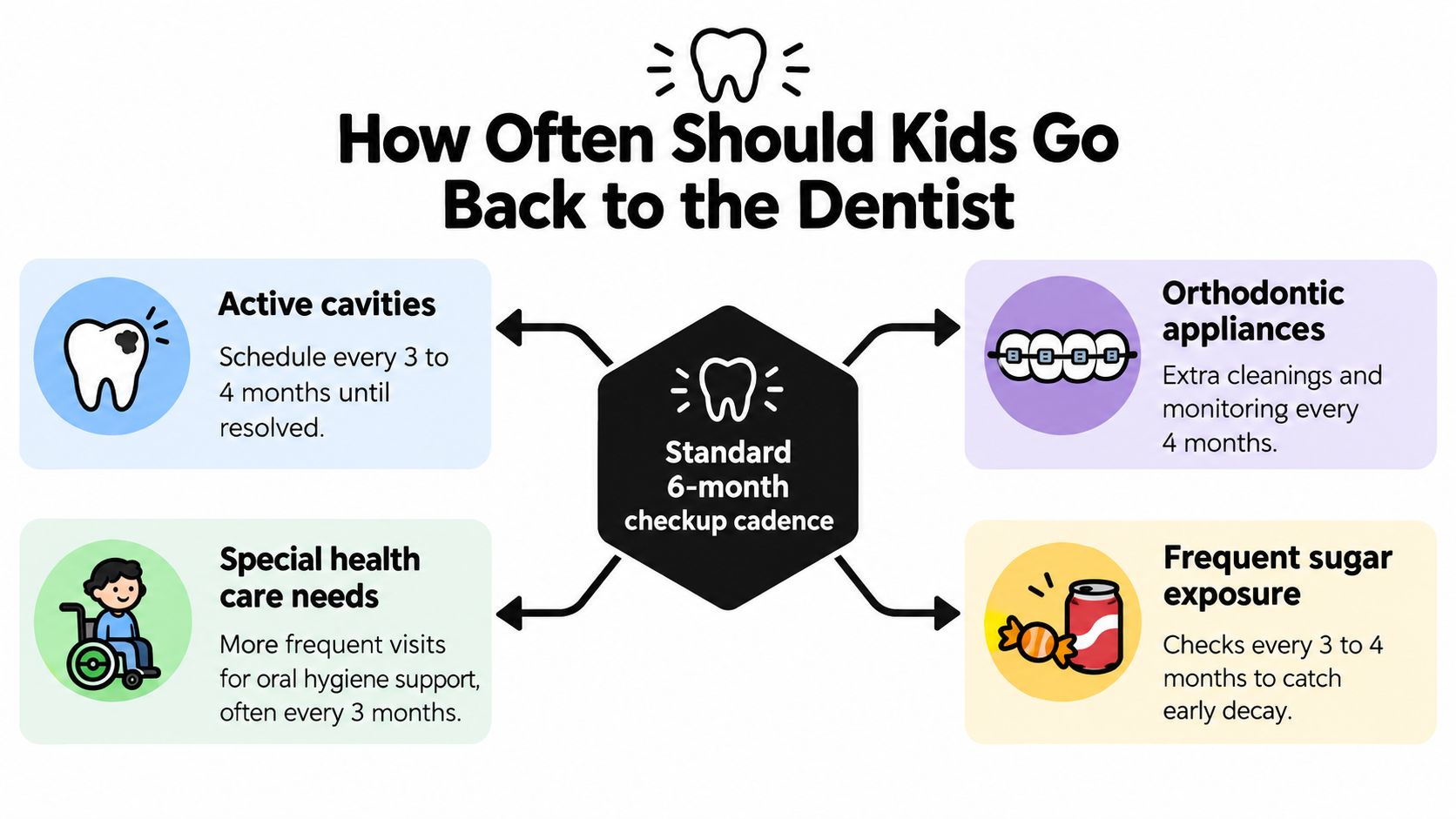
How often should a child return after the first visit? The AAPD supports preventive examinations every six months or sooner when a child's risk indicates it. (AAPD guidance on preventive intervals) This schedule gives the dentist regular opportunities to monitor eruption, reinforce home care, and adjust prevention as the mouth changes.
A child with consistent brushing, low apparent risk, and no active disease may follow the standard recall plan. A child with active cavities, frequent sugar exposure, orthodontic appliances, special health care needs, or decay developing between visits may need earlier reviews. The dentist should explain the reason for the schedule so the family understands what the timing is meant to monitor.
A simple rescheduling rule
If the last visit was reassuring and home care remains consistent, keep the planned six-month return. If the dentist identified increased risk or a new lesion, ask whether the next review should happen earlier. A school calendar or convenient vacation week should not determine the clinical interval.
New York families often balance school, commuting, travel, and seasonal illness. Rescheduling a missed appointment is reasonable. The problem is allowing one postponed visit to become a long gap in care. Call the office, explain what happened, and ask for the next clinically appropriate date.
Regular visits work like maintenance checks. Each appointment gives the dentist a chance to spot a small change before it becomes a larger treatment problem and to coach the family while routines are still forming.
This video offers another parent-friendly way to visualize regular preventive visits:
Choosing a Family Dental Home in Midtown NYC
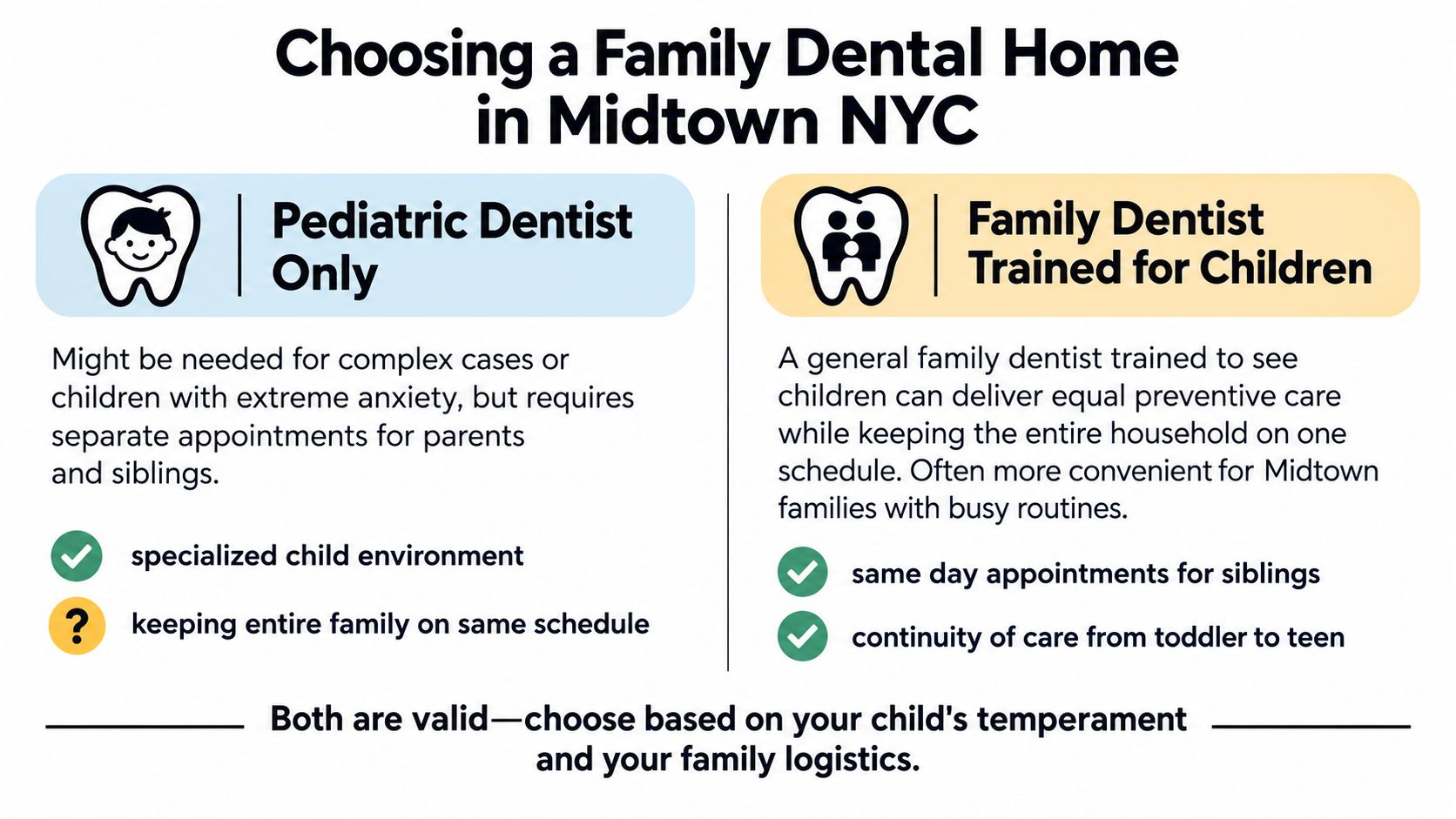
A pediatric specialist isn't automatically required for every toddler. A general family dentist who is trained and experienced in seeing children can provide preventive care while keeping parents, siblings, and children in one practice. The American Dental Association's parent guidance also encourages families to ask about the dentist's preferred age for young patients, which recognizes that office experience and local practice patterns vary. (Canadian Dental Association guidance on a child's first visit)
For a Midtown family, continuity can solve a practical problem. One office can maintain the child's history, help the team remember sensory triggers, and let siblings attend care without creating separate systems. A familiar hygienist or front-desk team can matter when a toddler is unsure about the chair.
What to look for in an office
Ask direct questions before booking:
- Young-child experience: Does the practice accept children around the age-one milestone and adapt examinations for toddlers?
- Family scheduling: Can siblings or caregivers coordinate appointments without multiple office locations?
- Communication: Will the dentist explain feeding, fluoride, brushing, eruption, and habits in language you can use at home?
- Access: Is the office convenient to your commute, school route, or subway line?
- Flexibility: Does the practice offer appointment times that fit working parents and caregivers?
- Referral planning: Can the team coordinate specialist care if a complex need or significant anxiety appears?
A pediatric-only office may be a strong fit for a child who needs specialized behavioral support, extensive treatment, or care beyond a general practice's scope. A family office may be more practical for a child who needs routine prevention and a household that values continuity.
The right choice is less about a label and more about whether the team can meet your child where they are. Families comparing options can review this guide to finding a Midtown Manhattan dentist and then ask the office how it handles first visits for young children.
Your First-Visit Checklist and What to Do Next
The answer to when should a child first see a dentist is now actionable: book when the first tooth erupts, and don't go beyond the first birthday. Expect prevention and coaching rather than a filling. Keep follow-up care on the dentist's recommended interval, commonly every six months, and discuss fluoride or sealants as the child's teeth and risk profile change.
Use this checklist before the appointment
- Schedule promptly. If a tooth has already erupted, contact the office and ask for the next available age-appropriate visit.
- Bring useful details. Have your insurance card, pediatrician's name, current medications, and a short description of feeding, bottle, cup, and brushing habits.
- Practice the position. Try a brief knee-to-knee lap examination at home. Let your child sit with you while you look gently at the teeth.
- Pack comfort items. Bring a familiar toy or blanket. A backup snack can help if the appointment overlaps with a normal eating routine.
- Arrive early. Give your family time to check in, use the restroom, and let your child observe the room without rushing.
Before leaving the office, confirm whether the practice is in-network or can explain how insurance claims are handled. Save the emergency number in your phone, especially if your child is active or has recently begun walking. Then place the recommended return visit on a shared family calendar while the plan is still fresh.
The first dental appointment doesn't need to produce a perfect “clean bill of health.” Its real value is a relationship that helps your child receive calm, timely care and helps you know what to do between visits.
Paul L. Gregory, DDS provides age-appropriate pediatric preventive care, including examinations, fluoride, sealants, and growth and development monitoring, within a Midtown family practice. Visit Paul L. Gregory, DDS to ask about establishing your child's dental home and coordinating care for the whole family.