

You've just left the dental chair, your mouth still numb, a folded piece of gauze between your teeth, and a calendar full of meetings waiting for you. The next few hours can feel surprisingly uncertain. Is the blood normal? When should you remove the gauze? Can you drink coffee, brush your teeth, or answer work calls?
Good tooth extraction aftercare instructions aren't about following every traditional restriction without question. They're about protecting the blood clot, controlling bleeding, keeping discomfort manageable, and recognizing when recovery isn't following the expected course. The clot is the central priority during the early window, while several other recommendations can be adjusted according to your dentist's specific instructions and the complexity of the extraction.
The First 24 Hours After Your Extraction
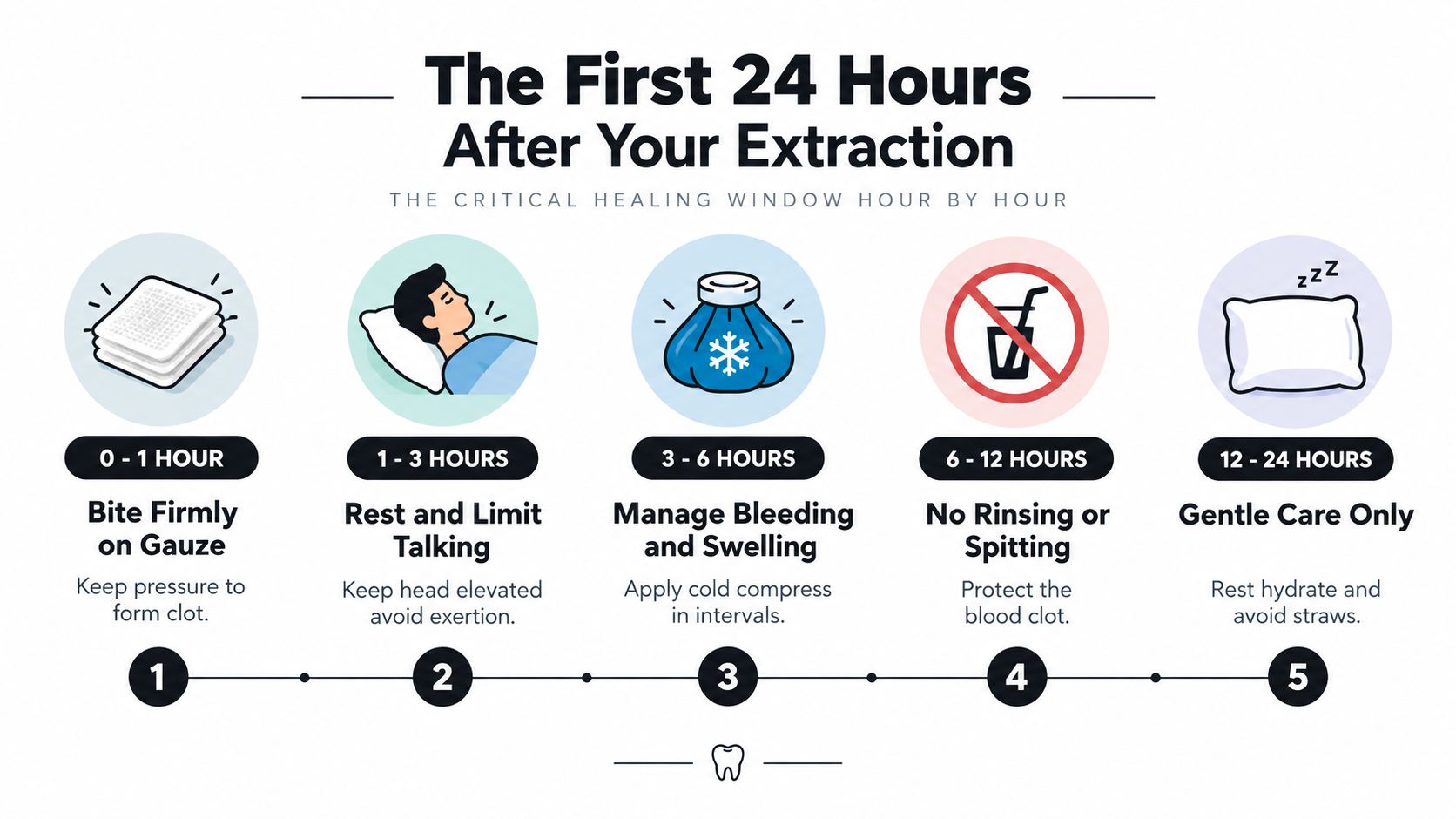
The first day begins before you reach home. Keep the gauze placed by your dentist over the socket and bite with firm, steady pressure. Many hospital and oral-surgery instructions recommend maintaining pressure for about 20 to 30 minutes, then repeating the cycle if oozing continues. A small amount of blood-tinged saliva can be normal during the first 24 hours, and bleeding often settles within a few hours. Hospital post-operative extraction instructions explain the importance of consistent pressure and protecting the clot.
Avoid talking, chewing on the gauze, or lifting it repeatedly to inspect the socket. Frequent changes can interrupt the pressure needed for clot formation. If bleeding restarts after you've removed the initial gauze, place fresh gauze directly over the site and apply pressure again. Use gauze only while active bleeding requires it, and don't sleep with gauze in your mouth.
Protect the clot while you rest
Your job during the first hours is simple: keep pressure on the site, rest, and leave the socket alone. Sit upright or recline with your head raised rather than lying completely flat. Avoid strenuous activity, bending, smoking, vaping, straws, forceful spitting, and vigorous rinsing. Suction and pressure changes can loosen the clot and restart bleeding.
Drink water slowly from a cup once your dentist says it's appropriate, but don't swish it around the mouth. Choose cool or lukewarm fluids and soft foods. If your extraction was complex, or if you're still bleeding despite repeated firm pressure, contact your dental office for individualized advice. Patients who need urgent help can review guidance about emergency tooth extraction near Manhattan.
Practical rule: The clot matters more than keeping the socket perfectly clean during the first day. Protect it first, then restart gentle hygiene after the initial healing window.
Managing Pain and Swelling Effectively
As the numbness fades, soreness is expected. Take the pain medication recommended or prescribed by your dentist according to the label and your clinician's instructions. If you've been told to use an over-the-counter option such as ibuprofen or acetaminophen, check that it's suitable for your health history and don't exceed the labeled dose. Taking approved medication before discomfort becomes intense can make the transition from numbness more comfortable.
Use a cold pack against the outside of your cheek during the early swelling phase. Wrap the pack in a thin cloth, apply it for short intervals, then remove it to let the skin recover. Don't place ice directly on your skin, and don't press hard over the extraction area. Resting with your head raised can also make throbbing and facial pressure easier to tolerate.
A practical comfort checklist
- Pain relief: Follow the exact medication plan from your dentist, including any prescription directions.
- Cold therapy: Use a wrapped ice pack intermittently rather than leaving it against your cheek continuously.
- Jaw stiffness: Choose foods that require little chewing and avoid forcing your mouth open.
- Ear or temple discomfort: Pain can sometimes feel as though it's coming from nearby areas because the jaw, teeth, and facial nerves share closely connected pathways. Report pain that becomes severe or progressively worse instead of easing.
- Hydration: Sip water from a cup, and avoid straws while the clot is vulnerable.
The following video offers a visual review of common post-extraction care steps. It shouldn't replace instructions from the clinician who performed your extraction.
If your pain medication isn't controlling the discomfort, don't add products or combine medicines without checking first. Call the dental office, particularly if pain intensifies after initially improving.
Preventing Dry Socket and Other Complications
Dry socket occurs when the protective clot is lost or fails to remain stable in the extraction socket. The exposed area can become intensely painful and may heal more slowly. The risk isn't identical for every extraction. A systematic review reported dry socket in about 1.7% of non-surgical extractions compared with 15% after surgical extractions, while later studies have described ranges of 1% to 5% for routine extractions and up to 30% for surgically removed third molars. The review of dry socket evidence puts those figures in context.
That difference matters when deciding which advice deserves strict attention. A short, straightforward extraction and surgical wisdom-tooth removal aren't the same procedure, so your dentist may give different restrictions.
Evidence-critical rules
The behaviors most directly connected to clot disruption are the ones involving suction, force, or chemical irritation:
- Don't smoke or vape: Inhalation creates suction, while tobacco and vaping exposure can interfere with healing.
- Don't use straws: The suction can pull against the clot.
- Don't spit forcefully: Spitting creates pressure that may disturb the socket.
- Don't rinse vigorously: Swishing can physically move the clot before it stabilizes.
- Don't touch the site: Fingers and persistent tongue contact can irritate tissue and introduce contamination.
These restrictions deserve priority during the first day, and smoking or vaping restrictions may extend longer according to your clinic's protocol. Some patient instructions specify avoiding smoking or vaping for at least 72 hours, while recommendations for soft foods and rinsing can vary. The practical distinction is clear: clot protection is evidence-critical; every additional precaution should be interpreted alongside your dentist's directions.
A patient preparing for wisdom-tooth surgery can also review when wisdom teeth should be removed because the surgical complexity affects the aftercare conversation.
Eating and Oral Hygiene During Recovery
Food should be soft enough that you can swallow it without vigorous chewing. Yogurt, applesauce, mashed potatoes, scrambled eggs, oatmeal, smooth soups, and lukewarm broth are practical choices. Avoid placing food directly over the socket, and chew on the opposite side when you begin adding foods that require more effort.
The first day is about avoiding disturbance. Don't use a straw, don't probe the socket for trapped food, and don't rinse forcefully after eating. Small particles and sharp textures can irritate the area, but aggressive attempts to remove them can cause more harm than gentle, limited cleaning.
Restarting hygiene carefully
After 24 hours, begin gentle warm salt-water rinses, particularly after meals. Evidence-based NHS-style guidance recommends rinsing about 3 to 4 times daily while brushing the rest of the mouth normally and taking care around the socket. Dental extraction aftercare guidance supports this gradual return to cleanliness.
Tilt your head so the rinse reaches the area without forceful swishing. Let the liquid fall from your mouth rather than spitting aggressively. Continue brushing the teeth away from the socket, using a soft toothbrush and controlled movements. As tenderness decreases, clean closer to the neighboring teeth without scrubbing directly into the healing opening.
Choosing food that supports a working day
For a busy schedule, prepare soft foods before the extraction rather than relying on whatever is available between meetings. Smooth yogurt, eggs, oatmeal, mashed vegetables, and pasta can provide more substance than a diet limited to liquids. Keep beverages at a comfortable temperature and drink from a cup.
If you're also planning restorative treatment, careful recovery habits matter before moving toward procedures such as tooth crown aftercare. Your dentist can tell you when the extraction site is ready for the next stage.
Recognizing Normal Healing Versus Warning Signs
A healing socket can look unpleasant without being dangerous. Mild oozing, blood-tinged saliva, tenderness, and localized swelling can occur after extraction. The more useful question is whether symptoms are gradually settling and whether the bleeding responds to steady pressure.
| Usually expected | Call your dentist |
|---|---|
| Mild oozing that responds to firm gauze pressure | Bleeding that continues despite repeated, sustained pressure |
| Soreness that remains manageable with the recommended plan | Severe pain that isn't controlled or begins worsening after initial improvement |
| Swelling and jaw stiffness that gradually ease | Increasing swelling, pus, or a fever |
| Sensitivity around the socket | Foul taste or odor combined with increasing pain |
| Temporary difficulty chewing near the site | Trouble swallowing or breathing, seek urgent medical care |
The Dental Health extraction guidance emphasizes the first-day priorities, including firm pressure when bleeding continues and avoiding rinsing, spitting, suction, and smoking. If you accidentally rinse once or briefly touch the area, don't panic. Stop the behavior, return to gentle care, and watch the trend in your symptoms.
When pain changes character
Dry socket often becomes a concern when pain is not following the expected downward pattern. Deep, radiating pain, a bad taste, or an unpleasant odor deserves a call, especially when symptoms appear after the initial soreness seemed manageable. Don't try to diagnose the socket by probing it or searching for visible bone.
Fever, pus, rapidly increasing facial swelling, or difficulty swallowing can indicate a more serious problem. Breathing difficulty is urgent and requires immediate medical attention. For concerns involving an impacted tooth, signs of an infected impacted wisdom tooth can help you identify symptoms that shouldn't wait for a routine appointment.
Your Recovery Timeline and Follow-Up Care
Recovery doesn't happen at one uniform speed. The socket needs early clot protection, then gradual tissue repair, while soreness and swelling should move toward improvement rather than intensify. Simple extractions and surgical procedures can require different activity, diet, and follow-up instructions, so the operating dentist's plan takes priority.
During the initial day, focus on pressure, rest, head elevation, and avoiding suction or forceful rinsing. After that window, gentle oral hygiene becomes appropriate, with soft foods continuing as needed. Resume work and exercise according to how you feel and the instructions provided for your procedure. If your job involves extended speaking, physical exertion, or travel, ask about those demands before leaving the office.
A useful test: If each day feels slightly easier, your recovery is generally moving in the right direction. If pain, swelling, odor, or bleeding is escalating, contact the dental team rather than waiting it out.
Follow-up may be arranged to inspect the socket, assess healing, address persistent symptoms, or discuss replacement options. If the missing tooth will eventually be replaced, the dental implant healing process is a separate planning conversation that begins only after your dentist confirms the site is suitable.
Many aftercare pages list rules without distinguishing essential clot protection from traditional precautions. Neutral patient guidance supports a more useful approach: avoid smoking, vaping, straws, spitting, and forceful rinsing, while returning cautiously to brushing and gentle rinsing after the first day. A patient-focused aftercare overview reflects that distinction.
Paul L. Gregory, DDS provides routine and surgical extractions, wisdom-tooth care, emergency assessment, and follow-up guidance for patients who need clear next steps after a procedure. Visit Paul L. Gregory, DDS to request an appointment or discuss bleeding, pain, swelling, or other concerns during recovery.