


You're trying to fit a root canal between work meetings, a commute, and everything waiting at home. Your tooth hurts, the appointment is on your calendar, and you're wondering whether to skip breakfast, take something for pain, or arrange a ride.
Knowing how to prepare for a root canal starts with decisions that are easy to overlook: medication timing, whether sedation requires an escort, and who will complete the permanent restoration. Settle those before treatment day, and you'll have fewer last-minute questions when you arrive.
Preparation Timeline From Booking to Appointment
Preparation timeline before a root canal
| When | What to Do | Why It Matters |
|---|---|---|
| At booking | Ask whether treatment is one visit or staged | Staged plans change time off work and crown scheduling |
| One week before | Request your current medication list from your pharmacy | Accurate lists help prevent unsafe drug combinations |
| Day before | Arrange transport and a companion if sedation is prescribed | Sedatives affect driving and judgment |
| Morning of | Eat a normal meal and brush as usual, unless instructed otherwise | Hunger makes a long visit harder to sit through |
| Right after | Follow the numbness and temporary filling instructions | Chewing on the treated tooth early can crack it |
At booking and before treatment
Ask whether your appointment is for evaluation, treatment, or both. A diagnosis comes before a promise about saving the tooth, and the clinician needs to assess whether there's enough sound tooth structure for a lasting restoration.
Clarify whether treatment is expected to finish in a single visit or require staged appointments. Then ask who will place the permanent crown or other restoration, and how that appointment will be coordinated. If you're arranging benefits or budgeting, review our guide to root canal cost with insurance and request an explanation of which treatment stages your estimate includes.
Gather recent dental records and your referring dentist's name. Requesting your pharmacy list ahead of time gives you a chance to add medicines purchased elsewhere, including over-the-counter products that won't appear in that record.
The day before and afterward
Confirm the transportation plan before any prescribed sedative is taken. Your companion should know the office location, pickup arrangements, and whether they need to remain available during treatment.
Leave room in your schedule for the clinician's discharge instructions rather than assuming you can go directly into a demanding meeting. Ask what work activities are appropriate for your particular treatment and anesthesia plan.
Planning priority: Treat the final restoration as part of the appointment plan, not an errand to remember after the tooth stops hurting.
Before you leave the office, make sure you understand your temporary-filling restrictions, medication directions, and whom to contact with concerns. Keep the instructions available the following day so you aren't relying on memory.
This week's practical task is straightforward: book the evaluation and send your medication list ahead of time. That lets the clinician review information before you're sitting in the chair.
Health History and Medications to Disclose
Your dentist can only plan from the information you share. A medicine you take occasionally, an old anesthetic reaction, or a recent change in your health may matter even if it seems unrelated to your tooth.
The American Association of Endodontists' office-visit guidance recommends bringing prescription and over-the-counter medication information, relevant medical history, previous dental problems, and your referring dentist's contact details. Include each drug's name, dose, usual schedule, and last dose, rather than relying on descriptions such as a small white tablet.
What belongs on your list
Conditions and medications to report before treatment
| Condition or Medication | Why the Dentist Needs It | What to Tell the Office |
|---|---|---|
| Blood thinners or anticoagulants | Affects bleeding during and after treatment | Name, dose and when you last took it |
| Diabetes | Affects healing and infection response | Type, recent blood sugar control and medications |
| Pregnancy | Affects X-ray and medication choices | Confirmed or possible pregnancy |
| Immune suppression | Changes infection risk and treatment planning | Diagnosis and immunosuppressive drugs |
| Drug or local anesthetic allergy | Helps prevent a repeat reaction | The exact reaction and when it happened |
| Prior antibiotic reaction | Guides any antibiotic the dentist considers | Drug name and type of reaction |
| Recent pain medication | Can change symptoms and anesthesia planning | Drug, dose and time taken in the past 8 hours |
| Kidney disease | Affects drug dosing | Stage and current treatment |
Timing deserves particular attention. A 2024 clinical-trial summary in the South African Dental Journal reported that 13 of 167 screened patients were excluded because they had taken pain medication within the previous 8 hours. That was a study eligibility rule, not an instruction to withhold your own pain relief, but it illustrates why the exact time matters.
Describe the tooth, not just the pain score
Write down when symptoms began and what triggers them. For example, explain whether cold causes a brief sting, heat causes lingering pain, or biting makes the tooth feel tender.
Mention swelling, drainage, trauma, a loose filling, or previous treatment on that tooth. The clinician will review your symptoms, examine the affected and neighboring teeth, and use appropriate imaging to help distinguish pulp problems from other causes of pain.
Don't change prescribed medicines to make your list look simpler or your symptoms easier to evaluate. Keep the same updated list on paper and on your phone, and send corrections if anything changes before your appointment.
Eating, Brushing and Calming Nerves Before You Arrive
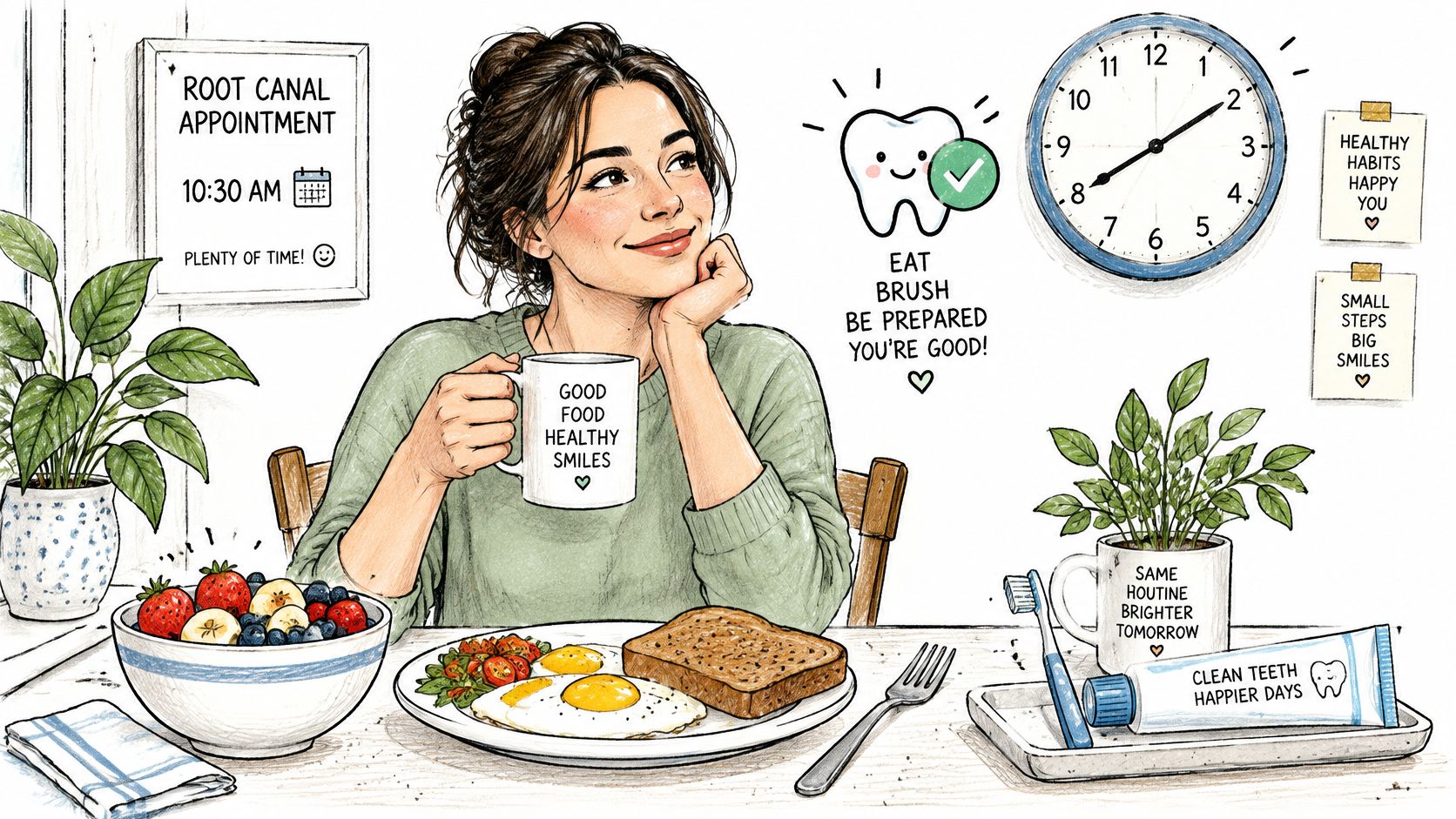
You can usually eat normally before a root canal, and many endodontists allow eating until approximately 1 hour before the appointment, according to the American Association of Endodontists' root canal explanation; specific sedation or medical instructions take priority.
Choose a familiar, balanced meal that feels comfortable, such as eggs with toast or yogurt with oats. If chewing hurts, choose a softer option rather than skipping food altogether, and avoid a meal so heavy that reclining afterward feels unpleasant.
A calm morning can look much like an ordinary one.
Keep your normal routine simple
Brush and floss gently as usual. You don't need to scrub a painful tooth aggressively or start an unfamiliar oral-care routine immediately before treatment.
Keep caffeine moderate, particularly if coffee tends to make you jittery. A large coffee in place of breakfast isn't a useful preparation strategy when you're already anxious.
Understanding what will happen can also help. A 2024 Springer-published study of 177 patients planned for root canal treatment found that educated patients had significantly lower overall anxiety before treatment. That doesn't mean information removes everyone's fear, but asking for clear explanations is a practical comfort measure.
Make a comfort plan without self-medicating
Before treatment starts, tell the team what worries you most. Fear of an injection, concern about pain, and discomfort with not knowing what's happening call for different conversations.
- Agree on a pause signal. Raising a hand lets you communicate without trying to speak around instruments.
- Ask for explanations. Say whether you prefer a description before each stage or fewer details.
- Use a familiar calming routine. Practice slow breathing before leaving home, or bring something comfortable to hold.
For more ways to prepare, our dental anxiety management guide can help you identify what to discuss with the team. If a familiar shower routine helps you unwind, Cleverfy Beauty's resource on essential oil steam for daily relaxation offers optional self-care context, not a treatment for dental anxiety or a substitute for prescribed care.
Arrive ready to tell the team how you feel, not ready to hide your nerves.
If you're hungry, follow your eating instructions rather than fasting unnecessarily. If you feel shaky or overwhelmed, say so at check-in so the team can plan the start of the visit around your needs.
Infection, Antibiotics and When to Call Urgently
Should you get antibiotics before a root canal? An infected or inflamed tooth doesn't automatically require them.
The American Dental Association's antibiotic stewardship guidance advises against adjunctive antibiotics for most immunocompetent adults receiving definitive treatment for irreversible pulpitis, symptomatic apical periodontitis, or a localized acute apical abscess. In plain language, treatment of the tooth usually matters more than adding an antibiotic prescription.
Root canal treatment, removal of the pulp, or drainage addresses the dental source. Antibiotics may be appropriate when infection causes systemic symptoms, such as fever or feeling unwell, or in selected situations when prompt definitive care isn't available.
Match the response to the symptoms
Symptoms that change the treatment plan
| Symptom | What It May Suggest | What to Do |
|---|---|---|
| Localized toothache with heat or bite sensitivity | Irreversible pulpitis or apical periodontitis | Book prompt assessment and root canal treatment if indicated; antibiotics are not usually needed |
| Localized gum or face swelling without fever | Localized abscess | Call the dental office the same day for drainage and treatment assessment |
| Fever or feeling unwell | Infection may be spreading beyond the tooth | Seek urgent care now; antibiotics may be needed |
| Swelling spreading toward the neck or under the eye | Spreading infection | Go to emergency care immediately |
| Difficulty swallowing or breathing | Airway risk | Call emergency services at once |
These symptoms help determine urgency; they don't establish a diagnosis by themselves. Tell the office when symptoms started, whether swelling is growing, and whether you have a fever, rather than saying you need a root canal.
Don't let a prescription delay treatment
Don't self-start leftover antibiotics or take someone else's prescription. Even if symptoms improve, the source inside the tooth may remain untreated, so improvement isn't permission to cancel the dental evaluation.
Disclose immune disorders, pregnancy, kidney disease, medication allergies, and previous antibiotic reactions when you call. Those details can change the clinician's assessment and prescribing decisions.
Our guide to dental abscess symptoms and treatment provides further context for recognizing a possible abscess. For a different concern, the Pain and Sleep Therapy Center's discussion of jaw pain after dental work can help you frame questions about jaw discomfort, but don't attribute fever or spreading swelling to routine jaw soreness.
At our Midtown office at 57 W 57th St, we offer short-notice visits and make every effort to schedule dental emergencies as quickly as possible. Call when symptoms escalate rather than waiting for a routine opening; breathing or swallowing difficulty requires emergency services instead of an office callback.
Escort, Sedation and Booking Your Visit
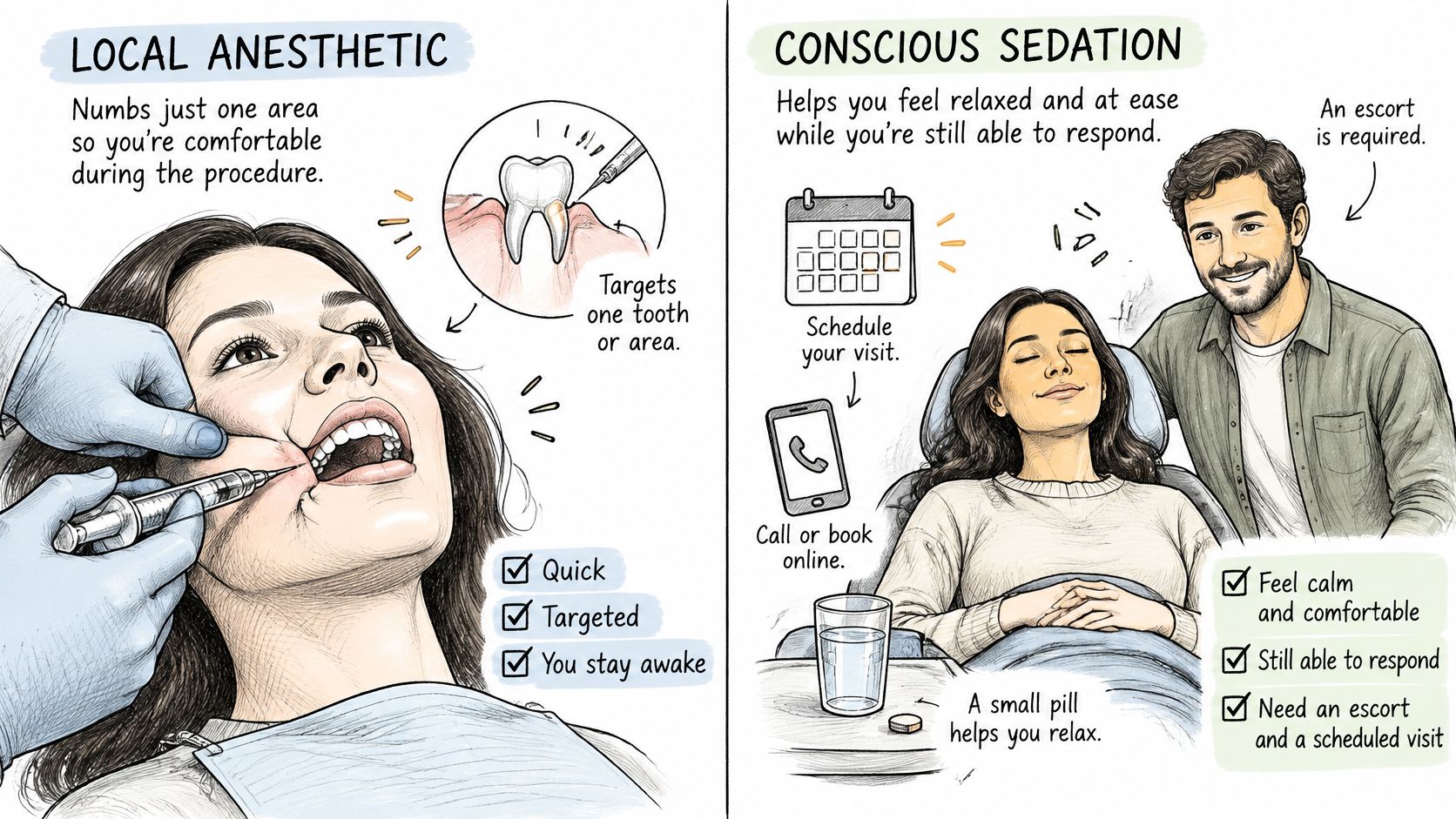
Local anesthetic and conscious sedation aren't the same thing. Local anesthetic numbs the treatment area; sedation changes your level of relaxation or awareness and may add restrictions on what you can safely do afterward.
The American Association of Endodontists' guidance on medically compromised patients discusses physical effects of anxiety, including increased blood pressure, sweating, and fainting, as well as medication-related sedation risks. Oral sedatives such as diazepam, alprazolam, or lorazepam require escort arrangements, and combinations with other medicines that affect the central nervous system can cause excessive sedation.
This distinction helps explain why transportation needs should be settled before treatment day.
Confirm what is appropriate and available
Ask whether local anesthetic alone is appropriate, or whether an option such as nitrous oxide or an oral anxiety medicine should be considered. Don't assume every sedation option is available or suitable for your health history.
Never increase a prescribed sedative yourself, borrow an anxiety pill, or skip your usual prescribed medicine without advice from the responsible clinician. A medication review is especially important if you take sleep, psychiatric, anxiety, or pain medicines.
Escort rule: Don't assume traveling alone in a taxi or rideshare meets the requirements for a responsible companion. Confirm the arrangement before taking the sedative.
Ask specifically whether you may drive, work, exercise, or care for children afterward. Keep the rest of your day flexible, and arrange backup for school pickup if your instructions restrict those responsibilities.
Plan the Manhattan trip and the restoration
For patients traveling from Midtown, Hell's Kitchen, the Theatre District, the Upper East Side, Lennox Hill, or Turtle Bay, plan your route to our office at 57 W 57th St. Allow for traffic, transit disruptions, and your companion's schedule rather than assuming proximity guarantees a quick trip.
Patients coming from the Upper West Side, Chelsea, Gramercy Park, Hudson Yards, West Village, Greenwich Village, NoHo, East Village, SoHo, Tribeca, Chinatown, or Wall Street should also build in comfortable travel time. Sedation makes a rushed, solo commute a poor plan regardless of neighborhood.
Before choosing a date, settle the expected treatment stages, escort requirements, and permanent-restoration arrangements. Our guide to finding a root canal specialist near you offers context for discussing where your care should take place.
Our services include root canal treatment, teeth whitening, veneers, and Invisalign. On our website's reviews page, Paul describes his experience: “The root canal was completely painless The team used modern technology and explained everything clearly.” That's an individual account, not a guarantee; tell us your concerns so we can discuss your own plan.
How a Root Canal Unfolds, Step by Step
You arrive, review your symptoms and health history, and discuss the tooth's diagnosis and restoration options. Before beginning, the clinician may need to assess cracks or remove decay and defective filling material to determine whether the tooth can be predictably restored.
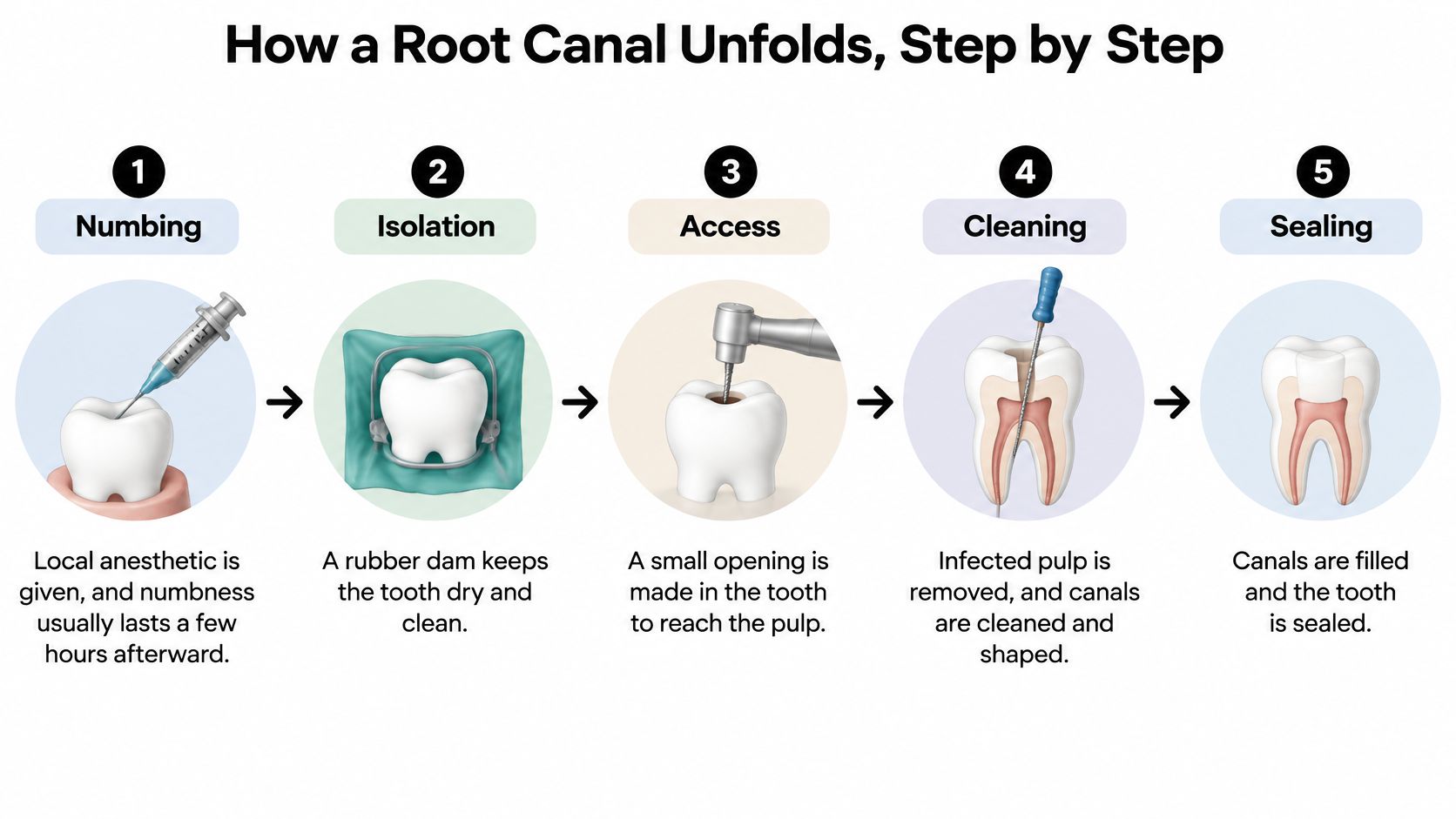
The procedure follows a sequence of numbing, isolation, cleaning, and sealing, summarized below.
What happens in the chair
The NHS explanation of root canal treatment describes treatment under local anesthetic, removal of infected pulp, cleaning and filling the canals, and restoration afterward. You may notice pressure or vibration, but sharp pain is a reason to signal the clinician, not something you should endure.
- Numbing. Local anesthetic is given, and the clinician checks comfort before proceeding. Avoid chewing while the area remains numb afterward.
- Isolation. A rubber dam separates the tooth from the rest of your mouth and helps keep saliva out of the treatment area.
- Access. An opening through the top of the tooth lets the clinician reach the pulp chamber.
- Cleaning and shaping. The pulp is removed, canal lengths are determined, and small instruments shape the spaces.
- Irrigation and drying. Disinfecting solution helps clean the canal system before it is dried.
- Filling and sealing. The prepared canals are filled and sealed.
- Restoration. A temporary filling may protect the opening while the permanent crown or other appropriate restoration is arranged.
During procedures, Dr. Gregory and Linda explain what they're doing and why. Ask for clarification whenever a sound, sensation, or instruction concerns you.
For scheduling context, review how long a root canal takes, then confirm the time reserved for your particular tooth. This video provides another way to become familiar with treatment before your visit.
What success numbers actually mean
A 2022 systematic review of primary root canal treatment found weighted pooled success of 92.6% under loose criteria, with a 95% confidence interval of 90.5%–94.8%, and 82.0% under stricter clinical and radiographic criteria, with a 95% confidence interval of 79.3%–84.8%.
Those aren't competing promises about your tooth. They show how the definition of success changes the reported result; your prognosis also depends on diagnosis, tooth condition, treatment quality, restoration, and follow-up.
Follow temporary-restoration instructions and avoid heavy chewing on the treated tooth until it's definitively restored. Report a broken or lost temporary filling, and keep the recommended follow-up appointments even when the tooth feels comfortable.
Paul L. Gregory, DDS offers root canal evaluation and treatment, emergency assessment, and restorative care to help plan both the procedure and the tooth's protection afterward. Visit Paul L. Gregory, DDS to arrange an appointment, and send your medication list ahead of time so we can discuss comfort, transportation, and restoration planning before you arrive.