

A sip of coffee tastes faintly metallic, so you check the mirror before heading to work. Your gums look a little red, perhaps, but your calendar is packed, and there's no toothache. It's easy to decide you'll deal with it later.
Bleeding gums deserve attention even when they don't hurt. Gum disease can develop gradually, and a proper evaluation can distinguish temporary inflammation from damage to the tissues and bone that support your teeth. A dentist for gum disease can explain what the findings mean, what treatment is appropriate, and how to fit care into a busy or anxious patient's life.
Why a Midtown Patient Should Care About Gum Disease Today
The small signs are easy to dismiss: blood on a toothbrush, tenderness when you floss, or breath that doesn't feel fresh after brushing. But gum disease isn't a hygiene problem, and waiting for pain or a loose tooth before asking about it can mean missing a chance to address it earlier.
A U.S. Centers for Disease Control and Prevention analysis of survey data from 2009–2010 estimated that 47.2% of adults aged 30 and older had periodontitis, approximately 65 million people. A later analysis covering 2009–2014 estimated 42.2% of dentate adults in that age group had the disease. Those estimates used different examination methods and case definitions, so the difference doesn't mean gum disease became rare. The CDC's analysis of periodontal disease in U.S. adults helps explain why a dentist may recommend evaluating gum health even when the symptoms seem minor.
There's a practical Midtown lesson here: don't wait for pain to make the decision for you. Bleeding, pockets around teeth, recession, and bone loss can develop slowly. A busy workday may make a dental visit feel inconvenient, but a focused evaluation can clarify whether you need routine preventive care, periodontal treatment, or a referral.
Care doesn't have to begin with an assumption that something severe is wrong. It starts with a conversation and an examination. You'll want to know what the signs mean, how a dentist tells gingivitis from periodontitis, what treatment involves, and how maintenance fits into real life. The right plan should answer those questions without rushing you into a procedure you don't understand.
Gingivitis vs Periodontitis in Plain Language
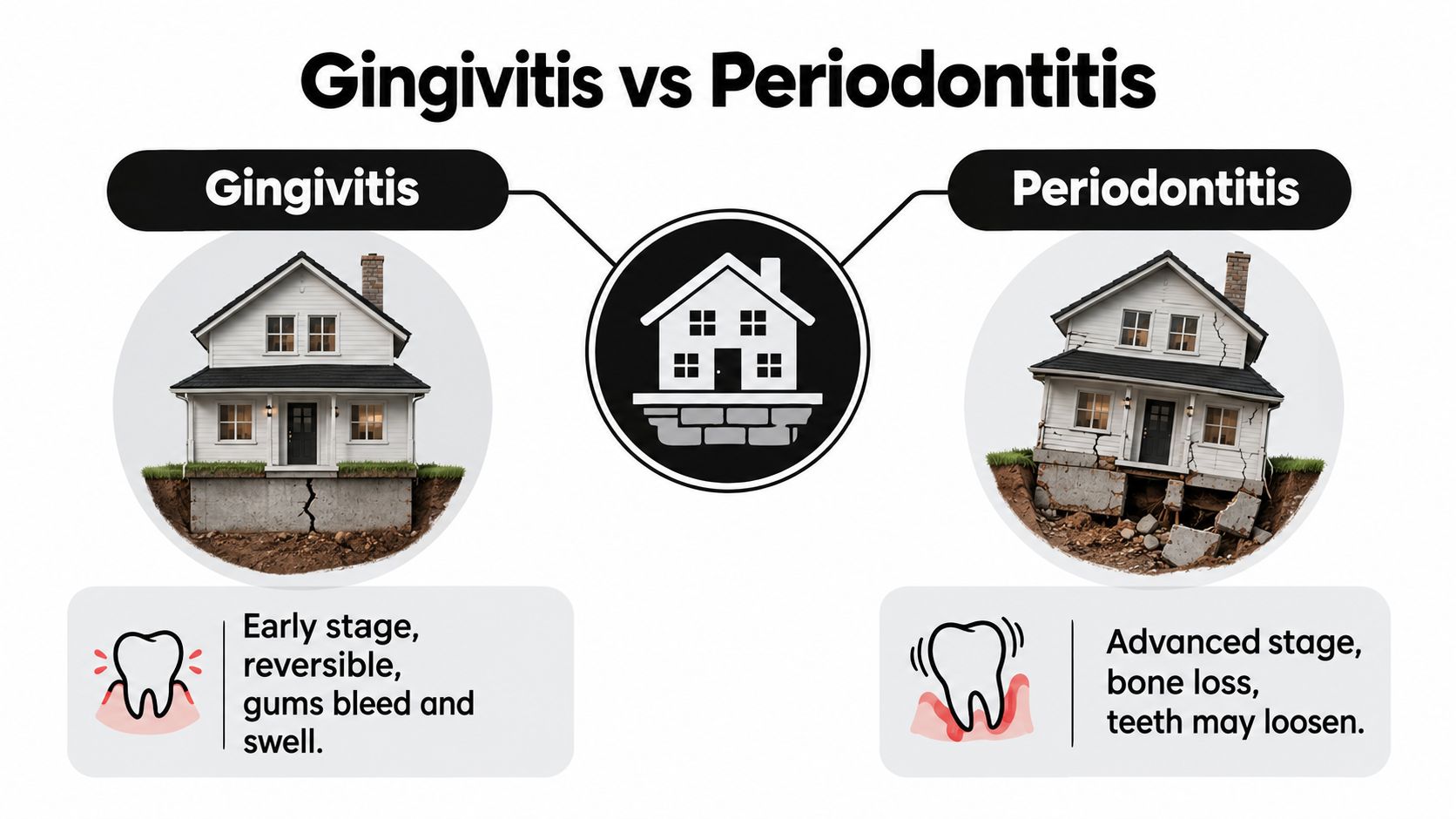
Think of a tooth as a house. The gum tissue is like the ground around it, while the bone and connective tissue underneath serve as the foundation that helps hold it in place.
Gingivitis is inflammation in the gums around the teeth. Gums may look red, feel tender, or bleed during brushing and flossing. At this stage, the supporting bone and attachment haven't been lost to periodontal disease, so the problem is generally reversible with effective plaque control and appropriate professional care.
Periodontitis is different: inflammation has damaged the structures that support the teeth. The foundation analogy helps here. A house can have irritated or messy landscaping without a damaged foundation, but once the foundation is affected, surface cleanup alone won't repair the underlying problem. Periodontitis can involve loss of attachment and bone, and teeth may become mobile as support decreases.
What the dentist checks
Bleeding matters, but it doesn't tell the whole story. A dentist evaluates inflammation and uses periodontal probing to assess the spaces between teeth and gums. They may also check clinical attachment levels, tooth mobility, and radiographs for bone changes. These findings help distinguish gum inflammation without supporting-tissue loss from periodontitis involving destructive inflammation. NIDCR's overview of periodontal disease in adults describes the importance of assessing the supporting tissues, not just looking at whether gums bleed.
Persistent bleeding, deep pockets, recession, pus, drifting teeth, bad breath, or discomfort when chewing are reasons to arrange an examination. A patient might feel fine while a clinician finds changes that merit attention, which is why symptoms alone aren't a reliable way to decide what treatment is needed.
If you want another plain-language explanation to help prepare for that conversation, All Stars Dental explains gum health by comparing gingivitis with periodontitis.
Treatment Options Walked Through in Realistic Order
A treatment plan usually begins with the basics: control plaque at home and remove bacterial deposits professionally. Scaling and root planing is the initial nonsurgical treatment of choice for established periodontitis, as described in the ADA's guidance on periodontitis. The clinician removes biofilm and calculus above and below the gumline and cleans the root surfaces. Your part is consistent daily plaque control, because professional treatment can't replace what happens between appointments.
Deep cleaning may be scheduled across multiple visits if treating all affected surfaces in one session isn't practical or predictable. The early response is generally assessed after about four weeks, when the tissues have had time to respond. For a closer look at the procedure and what it involves, see this explanation of periodontal scaling and root planing.
| Treatment | What It Does | When It Is Used | Typical Timing |
|---|---|---|---|
| Scaling and root planing | Removes deposits from tooth surfaces, including below the gumline | Initial nonsurgical care for established periodontitis | Often planned over multiple visits, with early response assessed after about four weeks |
| Locally applied antimicrobial | Delivers medication to selected periodontal pockets | Considered for specific sites as part of an individualized plan | Timing depends on the clinician's assessment |
| Systemic antibiotics | Treats infection throughout the body | Not routine for periodontitis; reserved for selected circumstances after medical assessment | Depends on the reason for prescribing |
| Osseous or other periodontal surgery | Provides access to root surfaces and can address pockets that remain difficult to clean | Considered when nonsurgical care doesn't resolve persistent pockets or anatomy limits cleaning | Planned after reassessment |
| Supportive periodontal maintenance | Monitors and helps manage periodontal health after active care | Ongoing care for a history of periodontitis | Interval tailored to risk |
Where medication and surgery fit
Patients often ask, “Do I need antibiotics, or is deep cleaning enough?” Usually, treatment begins with instrumentation and reassessment rather than routine systemic antibiotics. A 2025 Scottish primary-care guideline advises against routine systemic antibiotics for periodontitis; medication decisions depend on clinical circumstances. Local delivery to a selected pocket isn't the same as taking an oral antibiotic, and neither should be treated as an automatic add-on.
For moderate-to-severe disease, the ADA notes that sub-antimicrobial-dose doxycycline may be considered alongside treatment after medical assessment and prescribing judgment. If deep pockets persist or their shape makes home cleaning ineffective, a dentist may discuss surgical access, including osseous surgery. A plan should explain what each step aims to achieve, what will be reassessed, and why escalation is being considered.
Some patients also want to understand how gum care relates to future restorative or implant planning. This overview of cosmetic and implant treatments offers background on those broader categories, but your own dentist should connect any proposed treatment to your examination findings.
Choosing Between a General Dentist and a Periodontist
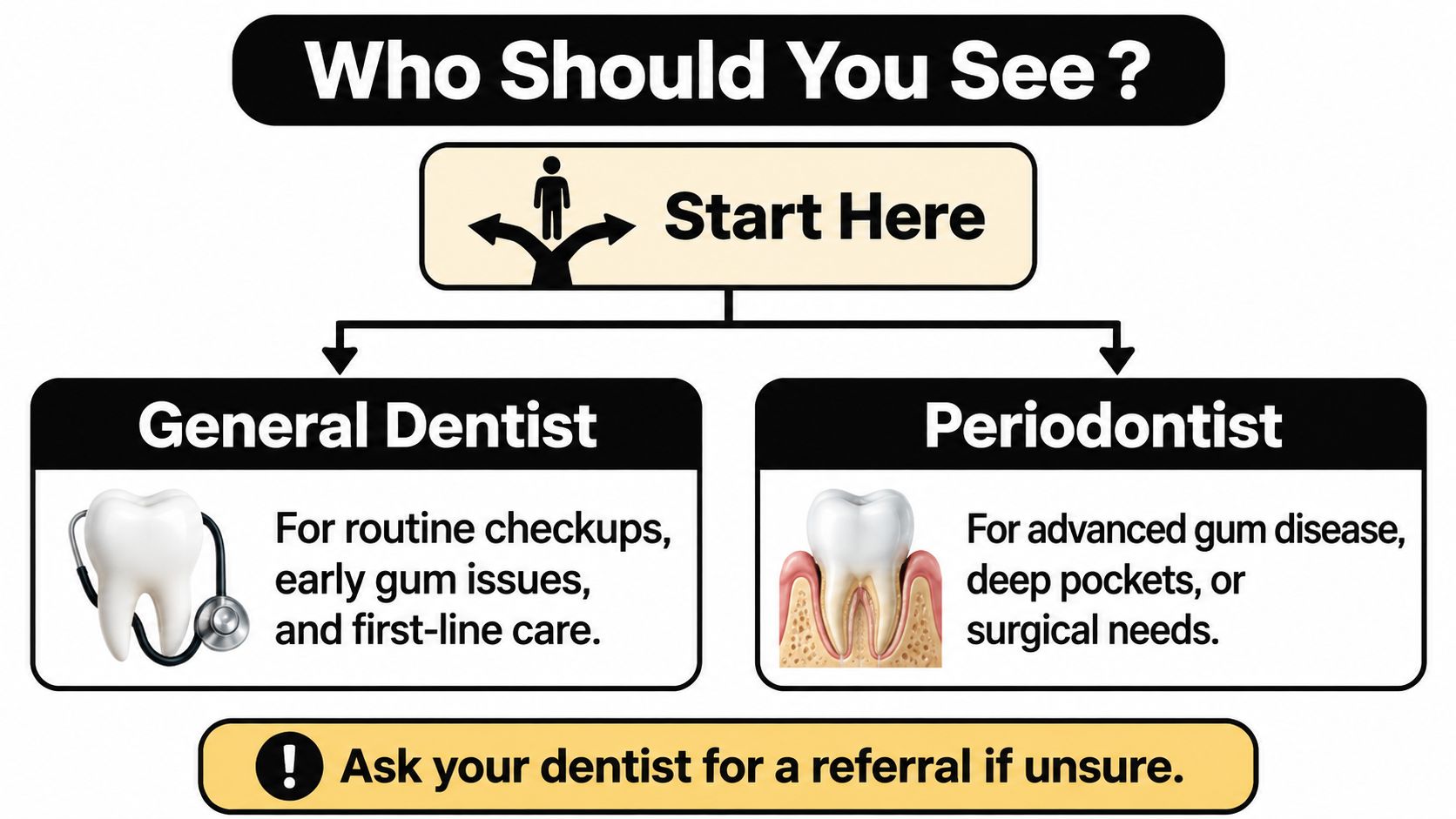
For many people, a general dentist is the right place to start. Your dentist can review your history, assess gum health, provide preventive care, discuss initial treatment, and monitor how your gums respond. Starting with someone who already knows your dental history can make it easier to understand how gum findings fit with fillings, crowns, or other care.
A periodontist specializes in the tissues that support teeth and dental implants. A referral may make sense if the examination shows advanced disease, deep pockets, rapid progression, a need for periodontal surgery, or an unsatisfactory response to initial therapy. Referral isn't a sign that your general dentist has stopped being involved. Your dentist and the specialist can coordinate care, share findings, and agree on who will handle maintenance.
A practical way to decide
Ask what the examination found, which parts of care the dentist can provide, and what findings would prompt a specialist consultation. If the plan includes surgery or you're unsure how extensive the disease is, it's reasonable to ask whether a periodontist should review the case. You don't have to decide based on the title of the provider alone.
Continuity matters, especially for families and patients with busy schedules. A referral can add expertise while your general dentist continues to oversee routine care and help keep your records and treatment decisions connected. The aim isn't to choose one kind of dentist forever; it's to have the right clinician involved for the care you need.
What Happens at the First Gum Disease Visit
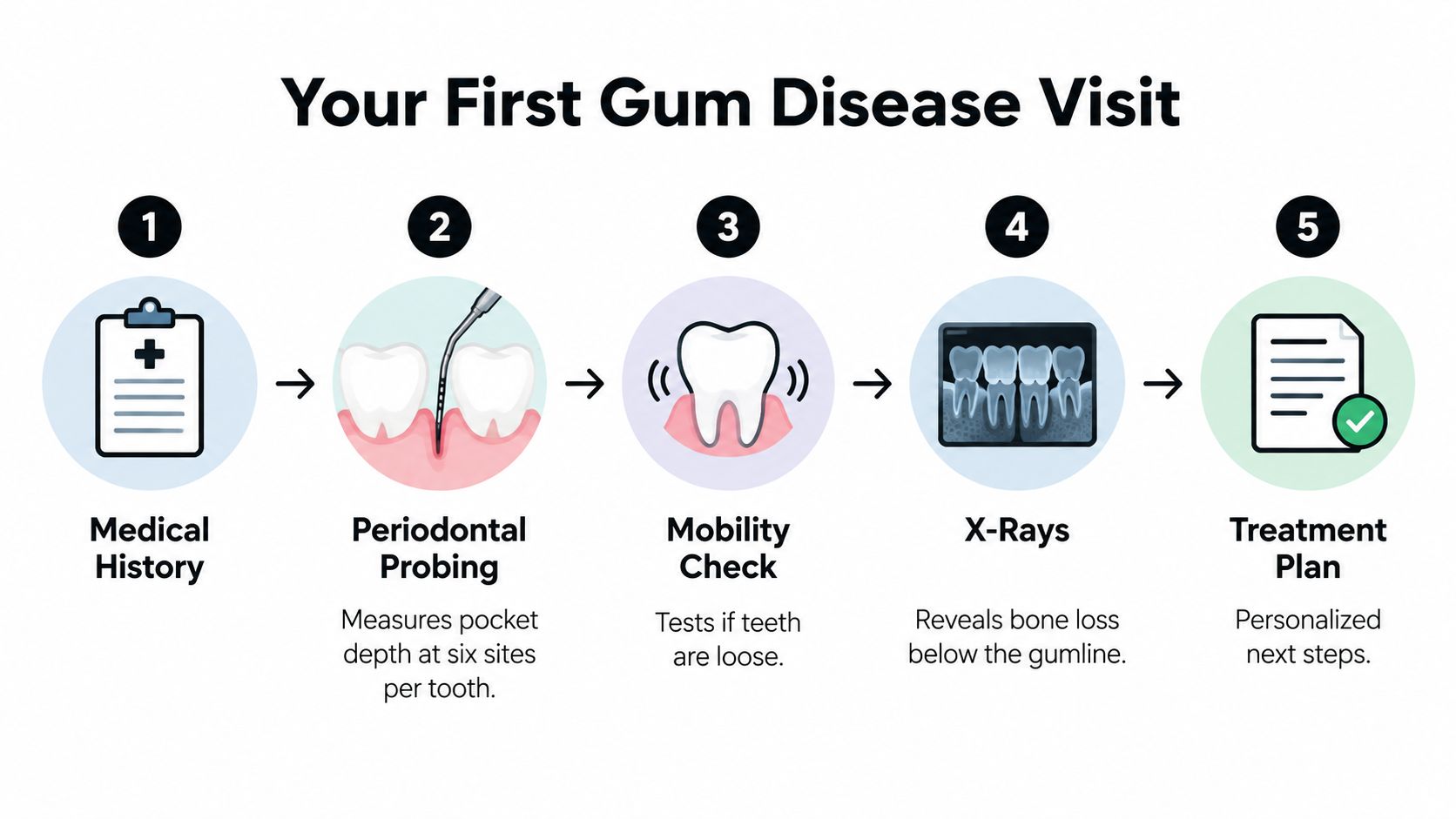
Your first visit should turn vague worry into specific findings. The dentist or hygienist will ask about your health, medications, smoking, diabetes, prior dental treatment, and what you've noticed at home. That context matters because bleeding gums can't be interpreted in isolation.
Next comes periodontal probing. A small measuring instrument is used to assess the space between the gum and tooth. Measurements are taken around each tooth to show where pockets are present and whether the findings are consistent across the mouth. The clinician may also evaluate recession and clinical attachment levels, which help describe how much supporting tissue is attached to the tooth.
From measurements to a plan
The dentist may check whether teeth move and take radiographs to assess bone levels beneath the gumline. Digital images and an intraoral camera can help show areas of concern on a screen, so you can see what the clinician is describing rather than having to imagine it.
A periodontal assessment considers bleeding and inflammation alongside probing, attachment, mobility, and radiographic bone loss. That combination helps the dentist distinguish gingivitis from periodontitis and decide whether preventive care, active treatment, or specialist input is appropriate. A visit may take longer than a routine cleaning because diagnosis and treatment planning require more than polishing teeth.
Before you leave, ask for a clear explanation of your diagnosis, the sequence of recommended care, and what the dentist will use to judge progress. You can also ask which steps are urgent, which can be scheduled over time, and what your home-care priorities should be. For a general overview of what a broader examination can include, see these full mouth evaluation details. If you're arranging routine preventive care alongside the assessment, this guide to dental cleanings and exams can help you understand how those visits differ.
The visit should leave you with more than a procedure name. You should understand what was found and why the next step fits your needs.
How a Midtown Office Eases Anxiety and Tight Schedules
A care plan only works if you can follow it. For a busy patient, that means appointment timing and travel matter. For someone who feels anxious in the dental chair, it means having the procedure explained, being able to ask for a pause, and knowing what sensations to expect.
At a centrally located practice, a short-notice appointment can make it easier to address a concern before it becomes more disruptive. Flexible Wednesday and Friday appointments, a calm setting, and gentle techniques can help make periodontal care feel more manageable. If you're unsure whether an in-person appointment is the right first step, a teledentistry consultation may help you discuss what you're experiencing and what to schedule next.

Make the logistics part of the conversation
Before booking, tell the office if you feel nervous, have a tight workday, or need help understanding insurance. Ask what can be handled in one visit and whether the treatment plan is expected to require follow-up appointments. Clear communication about coverage, fees, and scheduling helps you make decisions without having to guess.
A family dental home can also reduce the hassle of explaining your history again when different family members need care. Paul L. Gregory, DDS is a Midtown practice offering periodontal therapy, including scaling and root planing, ARESTIN, osseous surgery, and supportive maintenance, alongside care for children and adults. To prepare for a conversation about fear or discomfort, review these approaches to dental anxiety management.
The practical question isn't whether you're perfectly calm or have an empty calendar. It's whether the office can explain the care, help you plan appointments, and respond respectfully to your concerns. Tell the team what would make the visit easier before treatment begins.
Maintenance and Home Care as the Real Long Game
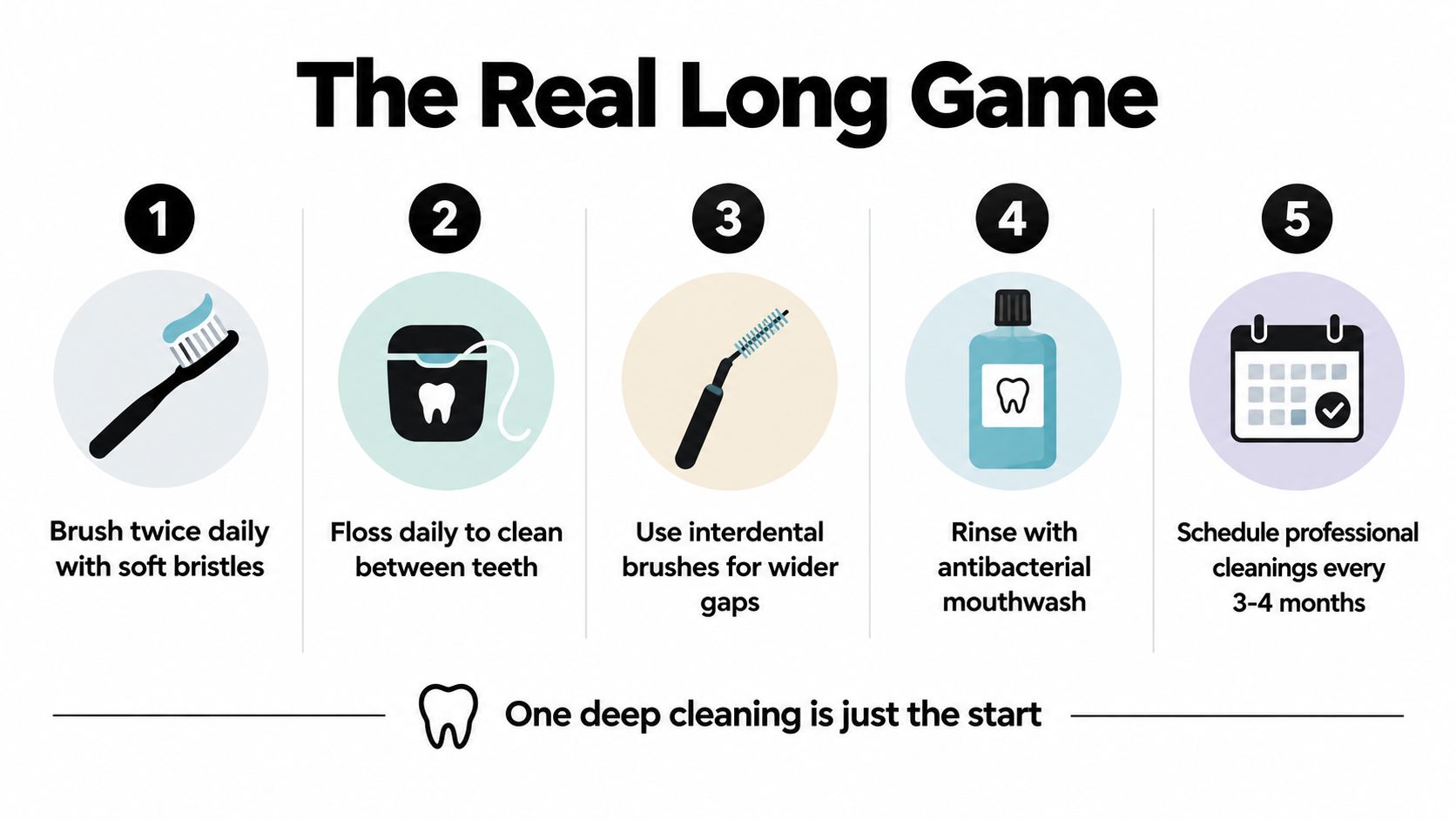
A deep cleaning isn't a permanent cure that makes future care unnecessary. It's an important step in treating active disease, but periodontal health needs follow-up. The maintenance schedule depends on your risk and your response to treatment. Supportive periodontal care may be recommended every 3 to 12 months, rather than automatically following a twice-yearly schedule, as summarized in the CDC's gum-disease facts.
Long-term maintenance helps the dental team check for returning inflammation, pockets, or changes in gum position. It also gives you a chance to adjust your home routine as your mouth changes. An interval that fits one patient may not suit another, so ask what the recommended schedule is based on.
Keep an eye on changes between visits
Brush with a soft-bristled toothbrush and clean between your teeth with floss or an interdental brush suited to the spaces. If you smoke, discuss cessation support with your clinician. If you have diabetes, include it in the conversation about periodontal health and follow your medical team's advice for managing it.
Bleeding that persists, worsening recession, bad breath that doesn't improve, pus, or increasing tooth mobility should prompt a dental check rather than guesswork. Don't try to diagnose relapse from a single symptom. A dentist can compare your current findings with previous measurements and decide whether your plan needs adjustment.
For a history of periodontitis, maintenance is part of treatment, not an optional extra. This overview of dental periodontal maintenance can help you prepare questions about follow-up visits and ongoing care.
A Practical Checklist and Where to Start in Midtown
A few notes can make a gum evaluation more useful. Before your appointment, write down what you have noticed, such as bleeding, soreness, recession, bad breath, pus, changes in tooth position, or discomfort while chewing. Include relevant medical conditions, medications, smoking history, and prior periodontal treatment. Note when symptoms occur, too. That gives the dentist a clearer starting point than trying to recall everything in the chair.
At the visit, ask:
- What did the examination show? Ask how probing, gum inflammation, and any X-rays support the diagnosis.
- What is the first step? Clarify whether the recommendation is home-care changes, scaling and root planing, medication, or specialist input.
- How will progress be checked? Ask when the dentist plans to reassess and which findings could change the plan.
- What will follow-up involve? Confirm the maintenance recommendation, appointment timing, insurance, and expected costs before treatment begins.
Insurance can affect how you plan care. This guide to dental insurance for periodontal treatment can help you prepare questions about benefits and claims.
Paul L. Gregory, DDS is located at 57 W 57th St, near Central Park South and Columbus Circle, and is accessible from Midtown West, Midtown East, and nearby neighborhoods. NYC's community-district map shows administrative districts, which do not always match neighborhood boundaries.
If you are unsure whether your symptoms merit an appointment, describe what you have noticed and ask for an evaluation. If your gums bleed or you have been told you may need periodontal treatment, contact Paul L. Gregory, DDS to arrange an evaluation and discuss a care plan that fits your needs. The Midtown practice offers periodontal assessment, treatment, and maintenance, with scheduling and insurance questions addressed before you proceed.