

You're rushing between a Midtown office, a subway platform, and dinner reservations when a familiar crown suddenly feels different. Perhaps your bite seems uneven, cold water reaches the tooth, or a hard bite leaves you wondering whether the restoration has finally reached the end of its service life. The practical answer to how long dental crowns last isn't one universal number. It depends on the crown material, the tooth beneath it, your bite, grinding or clenching, and how consistently you maintain the gumline.
Clinical evidence shows that crowns can remain useful for years and sometimes well beyond 15 years, but “crown survival” can mean different things. A restoration may need replacement while the natural tooth remains healthy, or the tooth itself may eventually be lost. Understanding that distinction helps you make a better material choice and respond early when something changes.
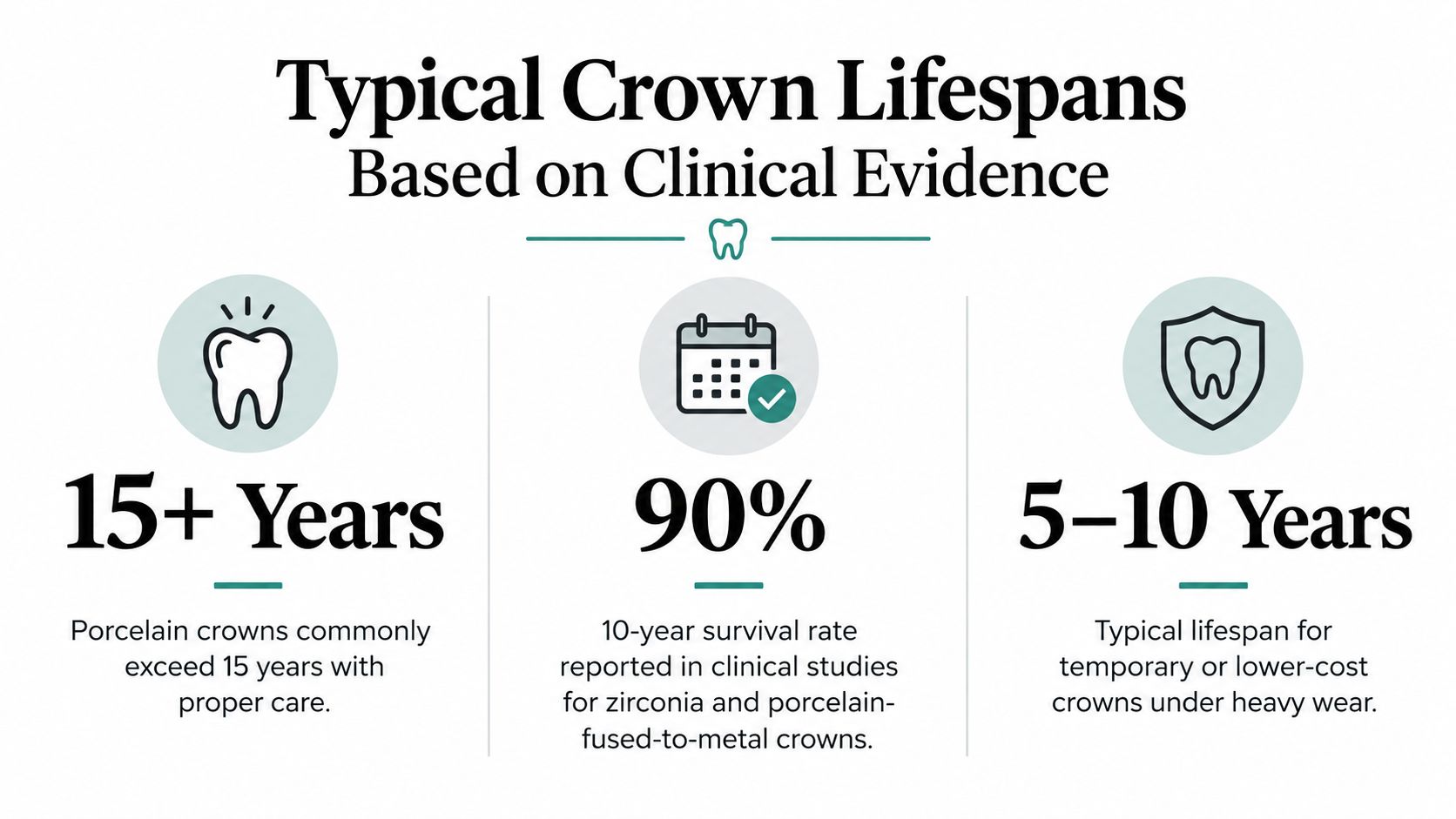
Typical Crown Lifespans Based on Clinical Evidence
A Midtown patient might notice a small chip during a morning coffee and assume the entire tooth is failing. That isn't necessarily what's happening. A crown can develop wear or require replacement while the supporting tooth remains present and treatable.
A major evidence synthesis covering restoration longevity in England and Wales found that crowns had 77% survival at five years, 63% at 10 years, and 53% at 15 years when the endpoint was the next intervention, such as crown repair or replacement. The same analysis found that 92% of crowned teeth survived at five years, 85% at 10 years, and 77% at 15 years when the endpoint was extraction. The difference matters. The first set measures the restoration, while the second measures whether the tooth was lost. You can review the methodology in this evidence synthesis on restoration longevity.
Why the endpoint changes the answer
A retrospective study of tooth-supported single crowns reported cumulative survival of 89.9% at five years, 80.9% at 10 years, 70.5% at 15 years, and 61.8% at 20 years. Japanese public-health data for metal crowns showed a similar pattern, with 92.5% survival at five years, 80.8% at 10 years, 70.5% at 15 years, and 54.0% at 20 years. These findings support a gradual decline rather than a sudden expiration date. The study is available in this clinical review of single-crown survival.
Practical rule: Think of a crown as a long-term restoration that needs monitoring, not as a permanent part with a fixed replacement date.
For a busy New Yorker, the useful takeaway is simple. A crown may serve well for roughly a decade or considerably longer, but its actual durability depends on what stresses it experiences and whether problems around the margins are found early. A crown consultation can help connect those expectations to your tooth's location, condition, and appearance goals. See this overview of crowns for teeth for additional treatment context.
Comparing Crown Materials for Durability and Appearance
Material choice becomes more important when you compare a back molar with a front tooth visible across a conference table. A crown that works beautifully on a molar may be an unnecessary aesthetic compromise on an upper front tooth, while a highly cosmetic ceramic option may need more careful bite planning when you clench or grind.
Evidence identifies differences among materials, although no option is ideal for every patient. One 10-year General Dental Services cohort found that full-coverage all-metal crowns outlasted metal-ceramic and all-ceramic crowns, while the broader evidence also points to the importance of tooth vitality, margin design, and bite forces. The review of factors associated with crown failure provides that clinical context.
| Material | Durability | Best For |
|---|---|---|
| All-metal | Strong resistance to fracture and wear, with evidence of longer survival than some ceramic alternatives in a 10-year cohort | Back teeth where strength and conservative tooth preparation matter more than visible appearance |
| Porcelain-fused-to-metal | A metal substructure supports the crown, but the porcelain layer can chip under heavy loading | Patients seeking a balance of appearance and strength, especially when a metal base is clinically useful |
| All-ceramic | Natural-looking, but performance varies by ceramic type and exposure to bite stress | Visible teeth where translucency and shade integration are major priorities |
| Zirconia | High-strength ceramic option, though current sources provide mixed longevity estimates rather than one universal figure | Molars or visible teeth when the dentist needs ceramic aesthetics with substantial strength |
Front teeth and back teeth need different compromises
Front crowns sit in the smile line, so color, translucency, contour, and the appearance of the gum edge can dominate the decision. Back teeth absorb repeated chewing forces, and a patient who clenches during a stressful commute or late work session may need a material chosen primarily for load management.
Porcelain and other ceramics can produce an attractive result, but heavy parafunctional forces raise the risk of chipping. Gold and other metal-based restorations can be exceptionally durable, though their metallic appearance makes them less appealing for visible teeth. Zirconia may offer a middle path, but the right design still depends on the tooth, the bite, and the dentist's restorative plan.
Read this focused comparison of zirconia crowns versus porcelain-fused-to-metal crowns before treating material choice as a simple cosmetic preference.
Key Factors That Shorten or Extend Crown Life
Age alone doesn't determine whether a crown succeeds. The evidence points instead to biomechanical and restorative conditions, including bruxism, poor occlusal adjustment, anterior placement, non-vital abutment teeth, and margin design. A crown placed on a heavily loaded tooth with an unstable bite faces a different environment from one on a protected tooth with healthy surrounding tissues.
Bruxism is especially relevant for Manhattan professionals who carry stress into sleep. Repeated clenching and grinding can chip porcelain, fatigue ceramic surfaces, and transmit force to the tooth underneath. A night guard may reduce exposure to those forces, but it should be selected and adjusted by a dentist rather than purchased as a generic solution without an occlusal assessment.
What you can influence
- Bite forces: A poorly adjusted bite can concentrate pressure on one area. Tell your dentist if the crown feels high, catches first, or makes chewing feel unfamiliar.
- Grinding and clenching: These habits can damage ceramic and strain the supporting tooth. A professionally evaluated night guard may be appropriate.
- Margin care: Plaque around the crown edge can contribute to gum inflammation and decay in the natural tooth beside or beneath the restoration.
- Daily habits: Ice, hard objects, and using teeth as tools create avoidable impact. Skip the shortcut of opening packaging with your front teeth.
- Tooth condition: Root-filled or otherwise non-vital abutment teeth can have shorter survival than vital teeth, so the underlying tooth deserves its own monitoring plan.
Routine hygiene cannot correct an unsuitable crown design or an imbalanced bite, but it can help preserve the tissues around a well-planned restoration. Promptly reporting a new bite sensation often gives your dentist more options than waiting for a fracture or complete loosening.
Signs Your Dental Crown May Need Replacement
A crown doesn't always announce failure with dramatic pain. Sometimes the first clue is a subtle change that appears while you're chewing a bagel before work or drinking an iced coffee. Treat a new sensation as information, not as something to ignore.
Check the way the crown feels
Notice whether the crowned tooth is newly sensitive, painful when biting, or uncomfortable when you release a bite. Sensitivity can come from several causes, including decay, gum changes, a crack, or irritation of the tooth's pulp. Your dentist needs to examine the tooth before deciding whether the crown itself needs replacement.
A crown that moves, rocks, or feels as though it catches on sticky food needs prompt assessment. Don't try to cement it back yourself. A temporary repair may protect the tooth briefly, but the dentist must determine whether the crown, cement, tooth structure, or surrounding tissues caused the problem.
Look for changes around the edges
Visible chips, cracks, open margins, food trapping, gum irritation, or a new dark edge can signal wear, recession, or a fit problem. Not every cosmetic change requires immediate replacement, but it deserves evaluation, particularly on a front tooth where a small chip may alter your smile or bite.
Call sooner rather than later if you experience:
- Movement: The crown shifts during chewing or flossing.
- Pain: The tooth hurts with pressure, temperature, or spontaneous episodes.
- Surface damage: You see a fracture, chip, or rough area that catches your tongue.
- Margin changes: Food repeatedly packs around the edge or the gum becomes persistently irritated.
- Bite changes: The crown feels taller, contacts first, or affects neighboring teeth.
A loose or displaced restoration can expose the tooth to further damage. This guide on what to do when a tooth crown falls off explains why timely contact matters, especially when your schedule makes postponement tempting.
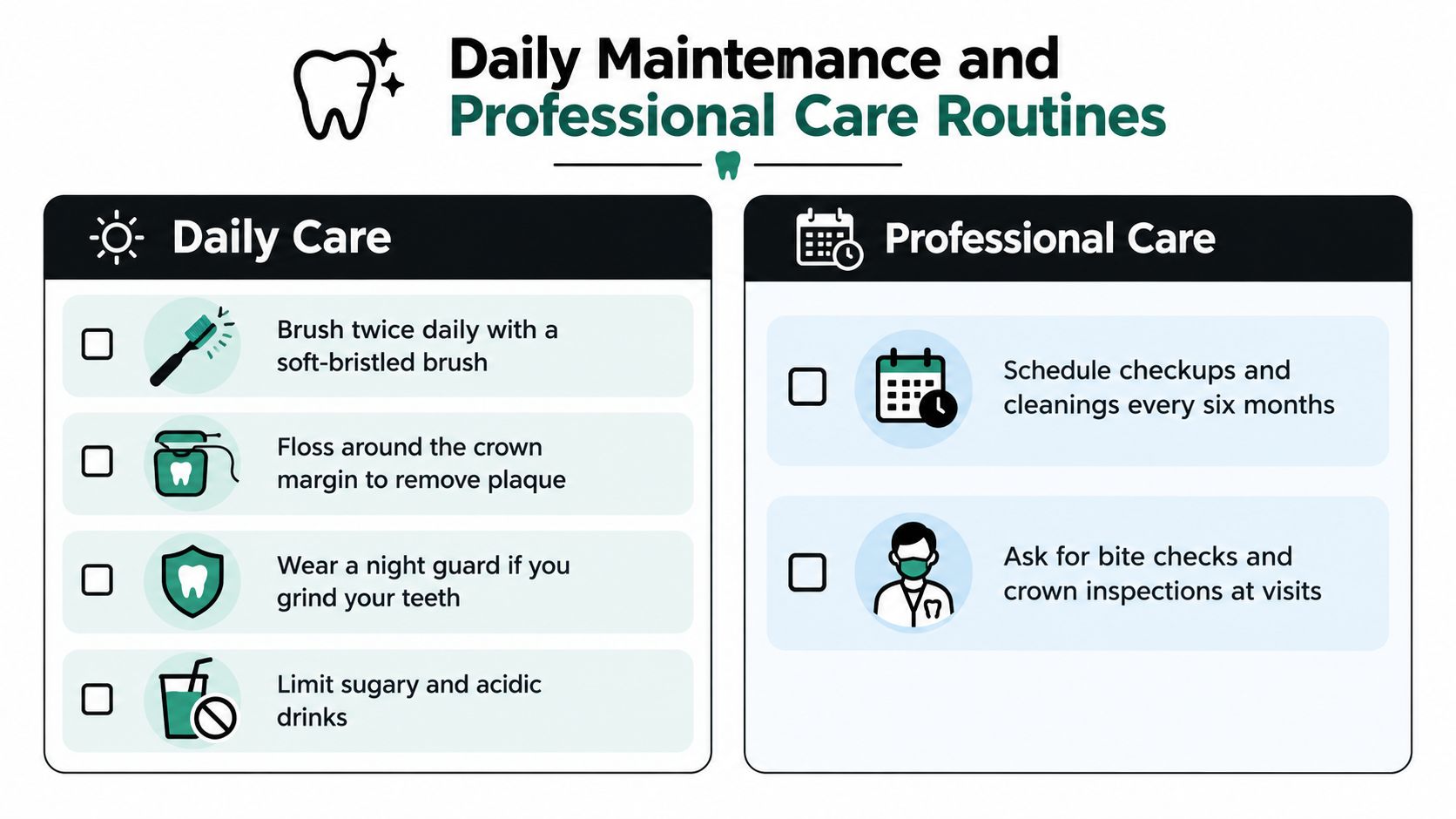
Daily Maintenance and Professional Care Routines
Crown care is less complicated than many patients expect. You're caring for two things at once, the restoration and the natural tooth sealed beneath or beside it. The crown itself may resist wear, but plaque can still collect at the margin, and the underlying tooth can still develop decay.
A practical routine starts with a soft-bristled toothbrush and careful cleaning along the gumline. Floss should pass around the crown's contact areas without snapping aggressively into the gums. If a bridge, implant restoration, or unusual contour makes cleaning difficult, ask your dental team to demonstrate a suitable floss threader, interdental brush, or water flosser technique.
A routine that fits a Midtown calendar
- Morning: Brush with fluoride toothpaste, paying attention to the gumline rather than scrubbing only the visible crown surface.
- After meals: Rinse with water when brushing isn't practical, especially after sweet or acidic drinks.
- Evening: Floss around the restoration and brush before bed. This is also the point to use a prescribed night guard if you grind.
- At visits: Ask for a crown-margin inspection, bite check, and professional cleaning. Your dentist can use intraoral imaging or digital X-rays when the clinical situation calls for a closer look.
Crowns aren't immune to decay because the natural tooth remains part of the restoration system. Professional cleanings also help identify gum inflammation, worn surfaces, and changes in the bite before a small concern becomes an urgent appointment.
Keep the aftercare instructions for your specific restoration available, especially during the first days after placement. This guide to tooth crown after-care can help you organize questions for your next visit.
Crown Longevity for Busy Manhattan Patients
A demanding schedule can turn preventive care into a series of postponed reminders. One missed cleaning rarely explains a crown problem by itself, but repeated delays can allow a rough margin, bite change, or early decay to remain unnoticed. Stress can also increase clenching, particularly for people who spend long days moving between Midtown offices, airports, and late-night deadlines.

The most efficient approach is continuity. Keep your crown history with one dental office when possible, schedule preventive care before your calendar fills, and report bite changes while they're still minor. A centrally located practice with digital diagnostics, crown inspections, night-guard services, and short-notice emergency assessment can reduce the disruption when a restoration suddenly feels unstable.
A crown lasts longer when maintenance is built into your routine, not left to the week when something breaks.
Ask practical questions before treatment. Which material suits the tooth's position? Does your bite show signs of clenching? How will the dentist check the margin and contact points? What should you do if the temporary crown loosens during a work trip? Clear answers help you protect both your restoration and your time.
For patients who want one office to coordinate preventive, restorative, cosmetic, and urgent care, Paul L. Gregory, DDS provides crown consultation and treatment planning alongside services such as custom night guards, digital diagnostics, and emergency stabilization.
Here's a short visual explanation to keep in mind when planning care:
Frequently Asked Questions About Crown Lifespan
Do crowns have to be replaced at a certain age?
No. A calendar date doesn't determine replacement. Your dentist evaluates the crown's fit, margins, surface condition, bite, and the health of the supporting tooth. A crown that remains stable and clean may not need replacement just because it has reached a particular age.
Can good care extend crown longevity?
Good hygiene, sensible eating habits, bite monitoring, and professional reviews can help a crown reach its potential. Care protects the margin and the natural tooth, while a night guard may be useful when grinding contributes to excessive force. It can't correct a fractured crown or decay that already exists.
Does a root-filled tooth change the outlook?
It can. Evidence identifies shorter survival for root-filled teeth than for vital teeth in some clinical data, so the supporting tooth deserves careful evaluation rather than treating the crown as the only concern. Your dentist may consider the remaining tooth structure, the seal, and the load placed on it.
Should I choose a different material because I grind?
Possibly, but material alone doesn't solve bruxism. The dentist should assess your bite, tooth location, available space, and cosmetic priorities before recommending metal, porcelain-fused-to-metal, zirconia, or another ceramic. Heavy loading can make porcelain more vulnerable to chipping, while all-metal restorations may offer strength at the expense of visible appearance.
Does insurance affect when I replace a crown?
Coverage depends on your plan, clinical documentation, replacement rules, and the reason for treatment. Ask for a written estimate before scheduling, and review this explanation of insurance coverage for dental crowns with your dental office and insurer.
Schedule a crown evaluation with Paul L. Gregory, DDS to review your restoration's fit, bite, condition, and material options. The Midtown practice can help you plan preventive monitoring, night-guard care, or timely treatment if your crown feels loose, chipped, painful, or overdue for assessment.