

You're leaving the office with a tiny titanium implant in place, a calendar full of meetings, and one big question that's already running in the back of your mind, what is the next week going to feel like? Patients want a straight answer because they're trying to plan work, meals, and speaking commitments around recovery. The honest answer is that the dental implants healing process runs on two clocks at once, the gums can settle down in days, while the bone underneath keeps working for months.
What to Expect After Dental Implant Surgery
The first surprise for many patients is that the mouth often feels better before the implant is fully ready to do its job. Recovery can feel quick on the surface, especially once the early swelling starts to settle and daily routines become easier to manage. A patient-reported recovery study found that people generally expected recovery within 4 days, swelling and severe discomfort usually resolved by about 5 days, and analgesic use averaged 2.5 days (PMC study). That helps explain why the first part of the healing period can seem shorter than expected, especially for someone heading back to desk work soon after surgery.
A Manhattan professional may leave the office thinking, “I can handle this,” and that is often true for the early, visible part of healing. The gums begin to close, tenderness fades, and the mouth starts to feel more familiar again. The implant itself is still closer to a foundation than a finished structure, though, because the bone around it needs time to adapt before it can support the final restoration with confidence.
If you are comparing treatment paths or planning ahead, a detailed consultation can turn a vague recovery window into a real calendar. A visit like the one offered through Paul L. Gregory, DDS can lay out the surgical steps and the follow-up schedule in plain terms. That helps you know when the first check is due, when soft foods still make sense, and when the next stage can reasonably begin.
Practical rule: feeling better is a sign that the soft tissue is calming down, not proof that the implant is ready for full chewing force.
That distinction matters for busy patients. You may be able to answer emails, attend meetings, and speak normally sooner than expected, while the bone is still remodeling underneath the surface. The early days are about protection, not testing the implant.
The Two Tracks of Implant Healing Explained
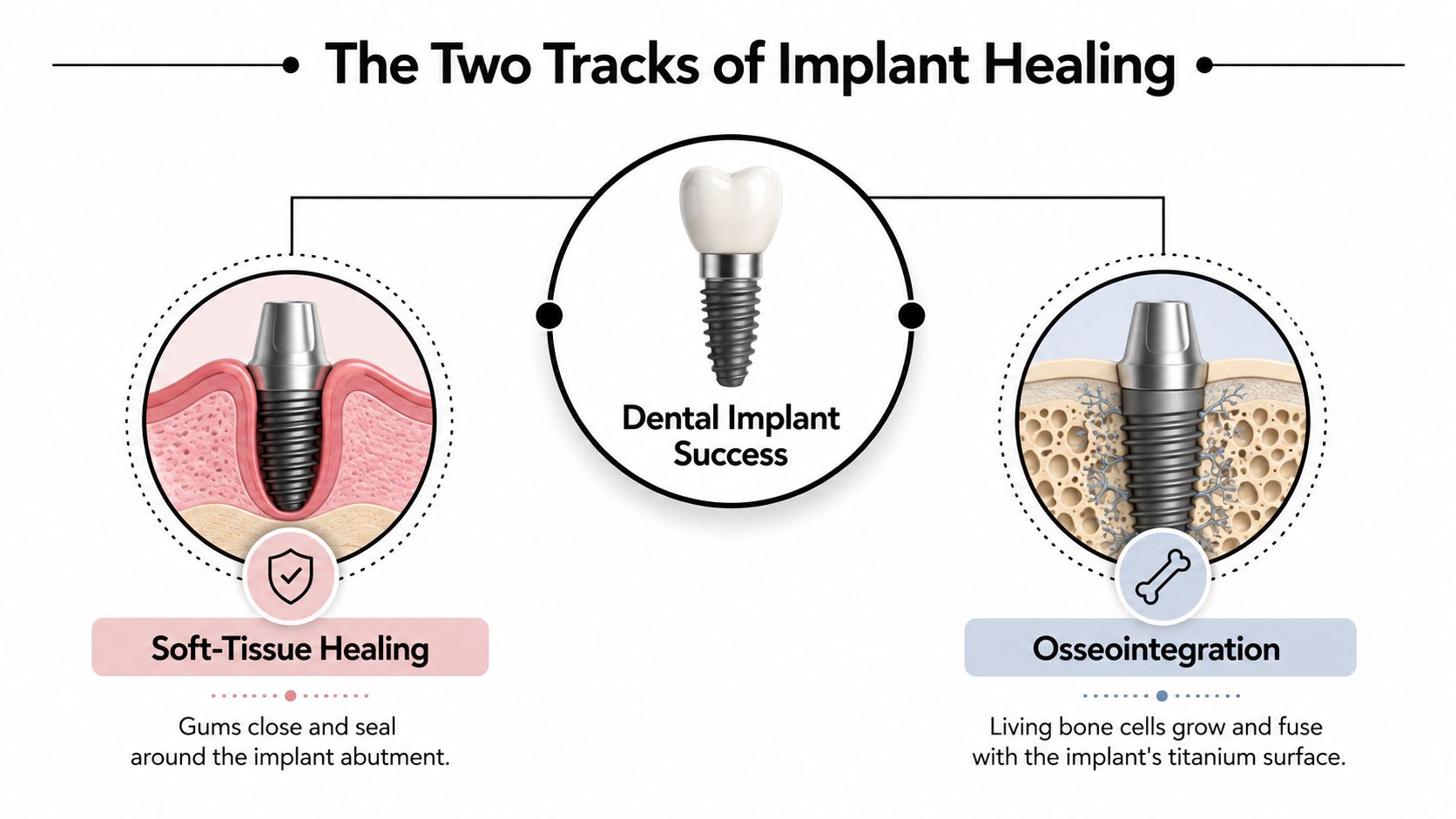
A common point of confusion after implant surgery is that the mouth can feel better long before the implant is ready to carry full chewing force. The gum line may calm down quickly, while the bone is still doing slower structural work beneath the surface. Dental implant healing has two parallel tracks, and the gap between them is what often surprises patients.
Soft tissue heals first
The gums are the first visible layer to settle. Soft-tissue contact with the implant or abutment surface is typically established within 1 to 2 weeks, and early bone formation can be seen as early as 4 days after placement (Wiley review). In everyday terms, the surface can look calmer and feel less tender fairly quickly, even though the deeper healing process is still underway.
For a broader look at how gum health affects surgical recovery, see surgical versus non-surgical periodontal treatments. The soft tissue acts like the first seal on a container, it helps protect what is happening underneath.
This is also why the first 7 to 14 days deserve extra care. The clot and early healing scaffold are still fragile. Hard chewing, aggressive rinsing, smoking, or early loading can disturb that stability and slow the shift toward stronger bone support.
Bone integration takes over after that
The second track is osseointegration, the process where living bone grows around and fuses with the titanium implant. That is what gives the implant its long-term strength. It usually takes about 3 to 6 months, and one clinical study reported a mean healing time before functional loading of 3.38 ± 2.48 months (PMC study). In plain language, the implant can feel quiet and stable long before it is ready for full function.
That is the main idea to keep in mind, the gums and the bone do not finish on the same schedule. A person can feel back to normal while the implant is still being biologically accepted by the jaw.
Dental Implants Healing Process Timeline
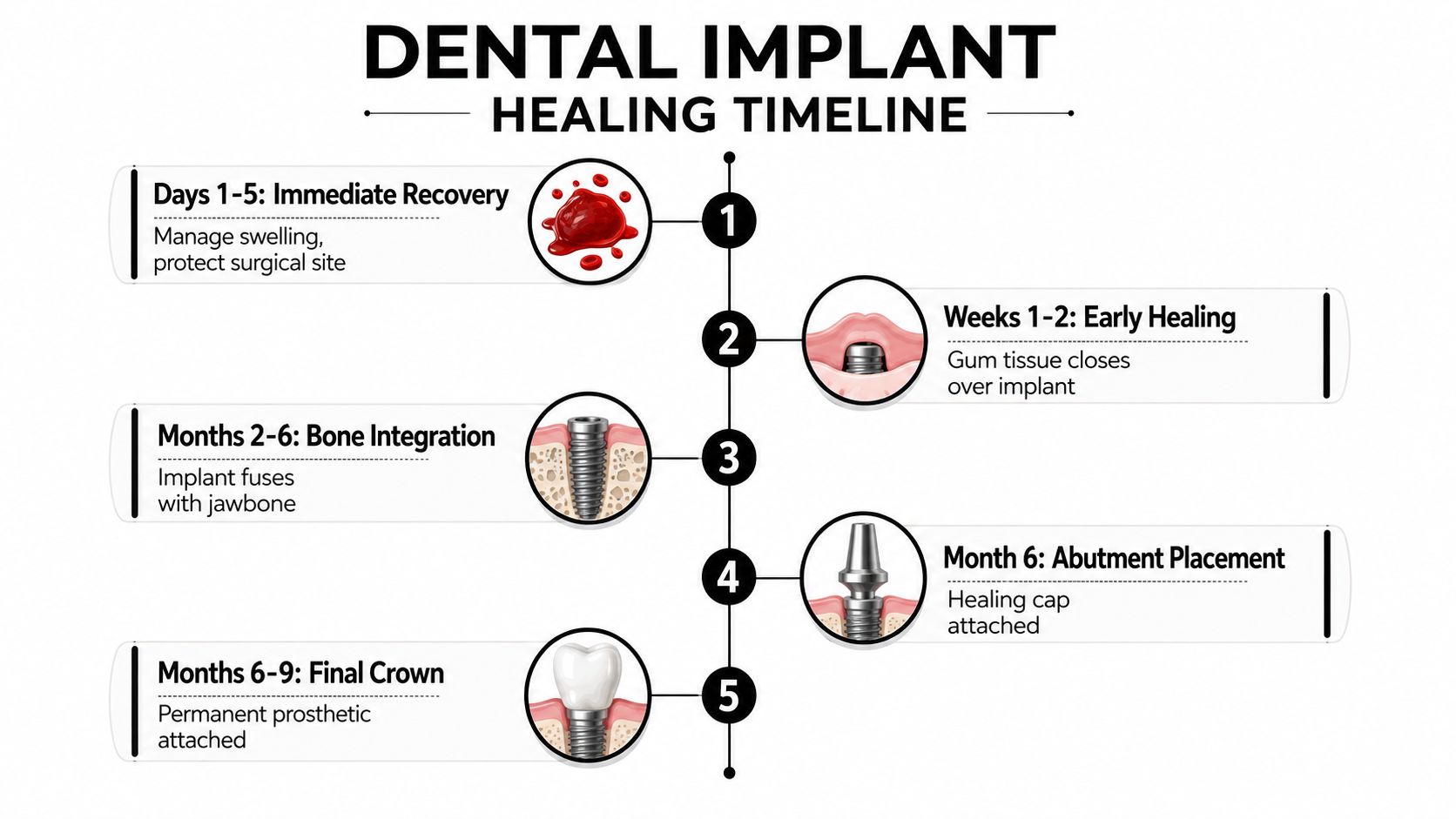
A dental implant recovery can feel simple on the surface and still be busy underneath. A few days of soreness may fade quickly, while the jawbone keeps working for months, much like a construction site that looks quiet after cleanup but is still finishing the structure below ground. That gap between what you feel and what is happening is why the timeline matters.
Days 1 to 5
This is when swelling, tenderness, and a softer diet usually show up first. In the recovery study cited earlier, swelling and severe discomfort generally resolved by about 5 days, and patients were expected to recover within 4 days. That does not mean the implant is finished, it means the most noticeable symptoms are settling.
For a busy professional, these days are often about protecting the area and keeping it still. Soft foods, shorter meals, and a lighter schedule usually make sense. You may be back to normal routines in some ways, but the surgical site is still in its most delicate phase.
Weeks 1 to 2
By the end of the first two weeks, the gums are usually sealing more securely around the implant area. The soft tissue acts like a protective gasket, helping guard the bone beneath it from repeated irritation. That is why brushing needs to stay gentle and why chewing directly on the site is still off the table.
If you are comparing your experience to what is happening under the gums, this is the part that surprises many patients. The outside can look calmer before the deeper healing is complete.
Months 1 to 3
Recovery can be misleading here. The mouth may feel much better, yet the bone is still changing shape and strength below the surface. The woven-to-lamellar bone transition continues for 1 to 3 months, which is part of why the implant still needs protection even after visible healing has slowed down (Wiley review).
A common question is whether feeling normal means everything is ready. It does not. This phase is more like drywall going up inside a room, the space looks finished from a distance, but the structure is still being refined.
Months 3 to 6
This is the main osseointegration window, the period when the implant and the surrounding bone are building long-term stability together. A large clinical dataset of 158,824 implants found an overall survival rate of 97.79% and a total failure rate of 2.21% (PMC study). That is reassuring, and it also explains why the early healing period gets so much attention. The same study reported that 1.56% of failures happened during osseointegration before prosthetic reconstruction and 1.59% occurred within the first year (PMC study).
The practical takeaway is straightforward. The implant may already feel stable, but biological acceptance by the jaw is still completing in the background.
Final restoration
Once the implant is stable, the crown or bridge can be attached. At that point, the replacement tooth starts doing the visible work, but it only gets there because the hidden healing had time to finish first.
For readers trying to separate ordinary soreness from a problem that deserves a call, a good starting point is this implant pain overview. It helps put early discomfort in context without making the recovery feel more alarming than it is.
Normal Healing Signs Versus Warning Signs
A lot of post-op stress comes from not knowing what's ordinary. Some discomfort is expected, and some changes deserve a call. The easiest way to stay calm is to compare the two side by side and judge the pattern, not just the fact that something feels different. If you've already reviewed pain expectations, the guidance in this implant pain overview can help put early soreness into context.
Normal Healing vs Warning Signs
| Normal Healing Signs | Warning Signs to Report |
|---|---|
| Mild to moderate swelling that improves over the first few days | Swelling that gets worse after day 4 |
| Soreness that slowly eases with time | Pain that persists or escalates |
| Minor bleeding that stops early | Ongoing bleeding or fresh bleeding that keeps returning |
| Slight bruising near the jaw or cheek | Pus, foul taste, or signs of infection |
| The area feels tender but gradually calmer | Implant mobility or a loose component |
| Eating feels awkward at first, then gets easier | Numbness that doesn't resolve |
If the trend is improving, that usually fits healing. If the trend is getting louder, tighter, or more painful after the first few days, it needs a professional look.
The point isn't to become your own diagnostician. The point is to notice direction. Swelling that starts to settle is expected. Swelling that keeps building is not something to ignore. The same goes for pain. Mild soreness can be part of recovery, but pain that intensifies after an initial improvement deserves attention.
The early healing window is when problems can be spotted before they become bigger. The more predictable your recovery looks from day to day, the easier it is to stay on track. If anything feels off, the safest move is to contact your dentist instead of waiting and hoping it turns around on its own.
Aftercare Tips for Each Healing Phase
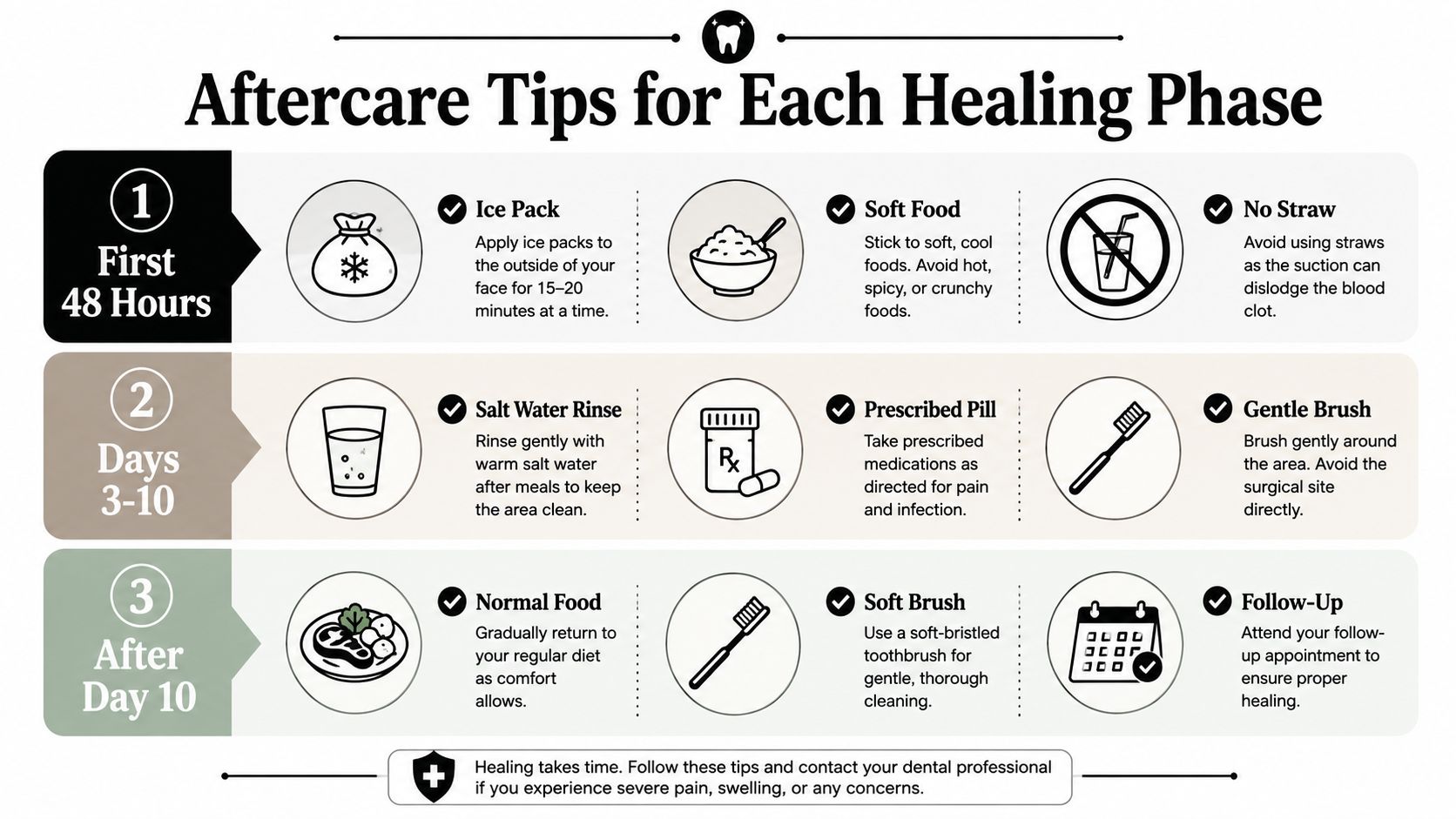
Good aftercare is really about protecting the biology that you can't see. The implant doesn't benefit from heroic effort, it benefits from calm, consistent habits. If your care plan includes hygiene follow-up, this implant cleaning guide is a practical companion for the recovery period.
First 48 hours
The first two days are about minimizing disturbance. Ice, rest, and soft foods help control the early inflammatory phase. Avoid straws and vigorous rinsing because suction and force can disturb the clot that's anchoring the healing site.
Keep the surgical side quiet. The less you irritate it early on, the smoother the next week usually feels.
Days 3 to 10
This is when routine starts to come back, but cautiously. Gentle saltwater rinses can help keep the area clean, and brushing should stay careful around the surgical site. Smoking and hard foods are still poor choices because the tissue is still sealing and the implant is still biologically immature.
The reason matters here. You're not just avoiding discomfort, you're protecting the scaffold that lets tissue and bone organize properly.
After day 10 and through integration
Once the gums are calmer, the focus shifts to consistency. Excellent oral hygiene, follow-up visits, and patience with chewing are the priorities. Premature loading is the big mistake to avoid, because the implant may feel stable long before the bone has completed its work.
A few practical habits help a lot:
- Keep appointments: Your dentist checks whether the site is healing on schedule and whether the implant is staying stable.
- Brush carefully: Clean the surrounding teeth and tissues without traumatizing the surgical area.
- Eat with restraint: Reintroduce firmer foods only when your dentist says the site can handle the pressure.
- Skip nicotine: Smoking slows the healing environment that the bone needs to integrate.
- Use follow-up guidance: Each implant case is slightly different, especially if bone grafting or additional procedures were part of treatment.
The simplest rule is this, protect the site until your dentist confirms that the bone has done its job.
Common Misconceptions About Implant Recovery
A lot of implant anxiety comes from bad assumptions, not bad healing. A patient may feel one thing in the first few days and read another thing on the aftercare sheet, then wonder which one deserves more weight. Both matter, but they describe different parts of the same recovery. A site that looks nearly normal on the surface can still be working underneath, and a sore week does not automatically mean the implant is in trouble.
Myths that cause confusion
| Myth | Fact |
|---|---|
| Pain-free means healed | The gums can feel calm while the bone is still integrating beneath the surface |
| All implants heal on the same schedule | Healing varies by site, biology, and treatment complexity |
| Minor discomfort weeks later means failure | Some lingering awareness can still fit a normal recovery pattern if the trend is improving |
| Healing takes only a couple of weeks | Full osseointegration usually takes 3 to 6 months |
| Long-term success is rare | Large clinical reviews show high survival overall |
The biggest misunderstanding is treating recovery as one event instead of two. Soft tissue gives you feedback quickly. Bone provides the answer later. That is why a person can feel “done” long before the implant is ready for the final crown.
The early weeks also need a practical mindset. If you want the recovery plan to feel less vague, a visit like the one described in these implant consultation questions can help you understand what your dentist will monitor and why the follow-up schedule matters.
It also helps to keep failure in perspective. Large clinical reviews show that implant survival is high overall, while the early healing phase is the period that deserves the closest attention. That does not make implant treatment fragile. It means the first stretch of healing needs careful checks and good home care.
A calm, monitored recovery is usually the right goal. The mouth can look settled while the deeper work is still going on beneath the gums.
Planning Your Implant Journey with Confidence
The most useful mindset is patience with a plan. Soft-tissue recovery happens in days, osseointegration happens over months, and both are part of the same successful outcome. If you keep those two timelines separate in your mind, the process becomes much easier to manage, especially when work, travel, and speaking demands are all competing for attention.
For patients who like to prepare ahead, it helps to ask the right questions before treatment. A visit like the one outlined in these implant consultation questions can make the recovery plan feel far less vague. You'll know what to expect, when to come back, and which changes are normal versus worth reporting.
The best implant outcomes usually come from steady follow-up, good home care, and realistic expectations about timing. The gums may look recovered quickly, but the bone needs its own quiet window to do the deeper work. That's not a delay, it's the process that makes the result durable.
If you're considering implants in Manhattan, Paul L. Gregory, DDS offers consultation, treatment planning, follow-up healing checks, and implant care shaped around busy schedules. Visit Paul L. Gregory, DDS to start a conversation about your healing timeline, your next steps, and the kind of support that keeps implant treatment predictable.