

You're in a Manhattan apartment, it's late, and one side of your face has started throbbing. Maybe a filling came out over dinner. Maybe your child knocked out a tooth at practice. Maybe the swelling you ignored all day is now moving into your cheek. You need a decision, not a search result: dentist, emergency room, or teledentistry?
Start with the symptom that worries you most. Tooth-specific pain, a broken restoration, or a loose crown usually belongs with an emergency dentist. Trouble breathing, spreading facial swelling, uncontrolled bleeding, or severe trauma belongs in a hospital emergency room. If you're unsure and can safely speak and breathe, teledentistry can help sort the options and direct you to in-person care.
The need is widespread. Tooth disorders caused about 1.944 million emergency department visits annually in the United States during 2020–2022, equal to 59.4 visits per 10,000 people and about 1.4% of all ED visits, according to the CDC National Center for Health Statistics. In New York City, the right first step can spare you a long hospital wait while getting the tooth treated instead of merely quieting the pain.
Three Doors You Can Walk Through for Emergency Dental Care
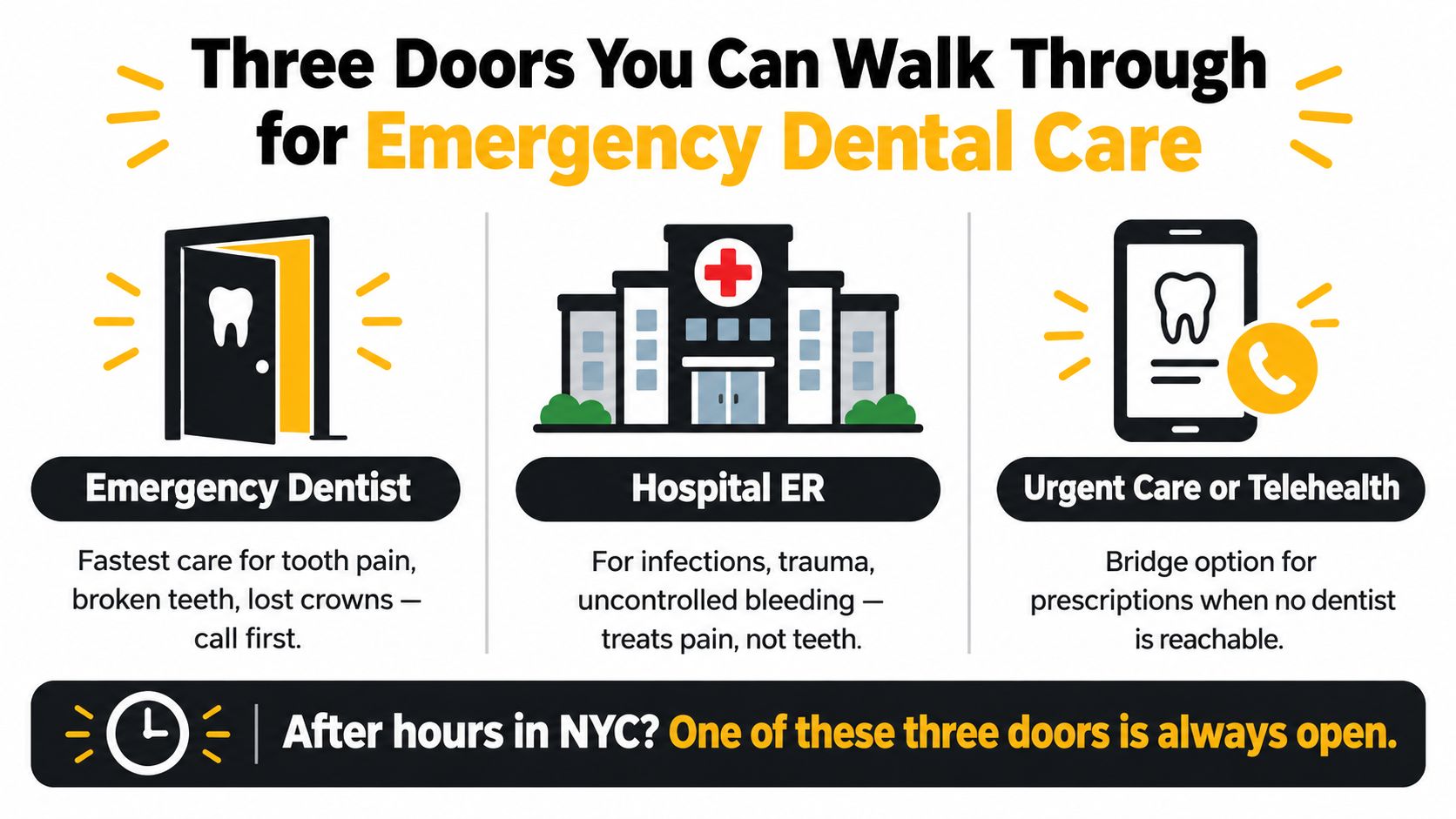
When a dental crisis hits after hours, you have three practical doors: an emergency dentist, a hospital ER, or teledentistry. The symptoms decide which one you should use. Don't choose based only on how painful the tooth feels. Choose based on whether your airway, general health, or facial structures are at risk.
Choose the door that matches the problem
- Emergency dentist: Use this door for intense toothache, a fractured tooth, a lost crown, a knocked-out permanent tooth, a dental abscess without airway symptoms, or a restoration that is cutting your cheek. The dentist can examine the tooth, take diagnostic images, drain an abscess when appropriate, repair or remove a damaged tooth, and start root canal treatment when indicated. Look for a practice that advertises short-notice emergency appointments, such as a Manhattan emergency dentist.
- Hospital emergency room: Use the ER for signs that extend beyond the tooth. Difficulty breathing or swallowing, swelling under the tongue or in the neck, severe facial trauma, uncontrolled bleeding, confusion, or signs of a spreading systemic infection need medical stabilization. The ER can protect your airway, control dangerous bleeding, assess head and facial injuries, and coordinate further care. It usually won't provide definitive root canal treatment or a permanent crown.
- Teledentistry: Use a video or phone consultation when the situation is unclear, your dentist is closed, or you're traveling and need a safe next step. A dentist can review visible swelling or a broken tooth, ask about your symptoms and medications, provide home-care instructions, determine whether a prescription is appropriate, and direct you to a same-day or next-day office.
Practical rule: If you can breathe normally and the problem is centered on one tooth, call an emergency dentist first. If breathing, swallowing, consciousness, or uncontrolled bleeding is involved, choose the ER.
Historically, most hospital dental visits have been treat-and-release encounters rather than admissions. A prior U.S. analysis found that 98% of dental-condition ED visits were treated and released, while 2% resulted in hospitalization, a pattern described in the American Dental Association's emergency department referral guidance. That's why the ER is a safety door, not usually the final destination for tooth treatment.
When to Head to the ER Instead of a Dentist
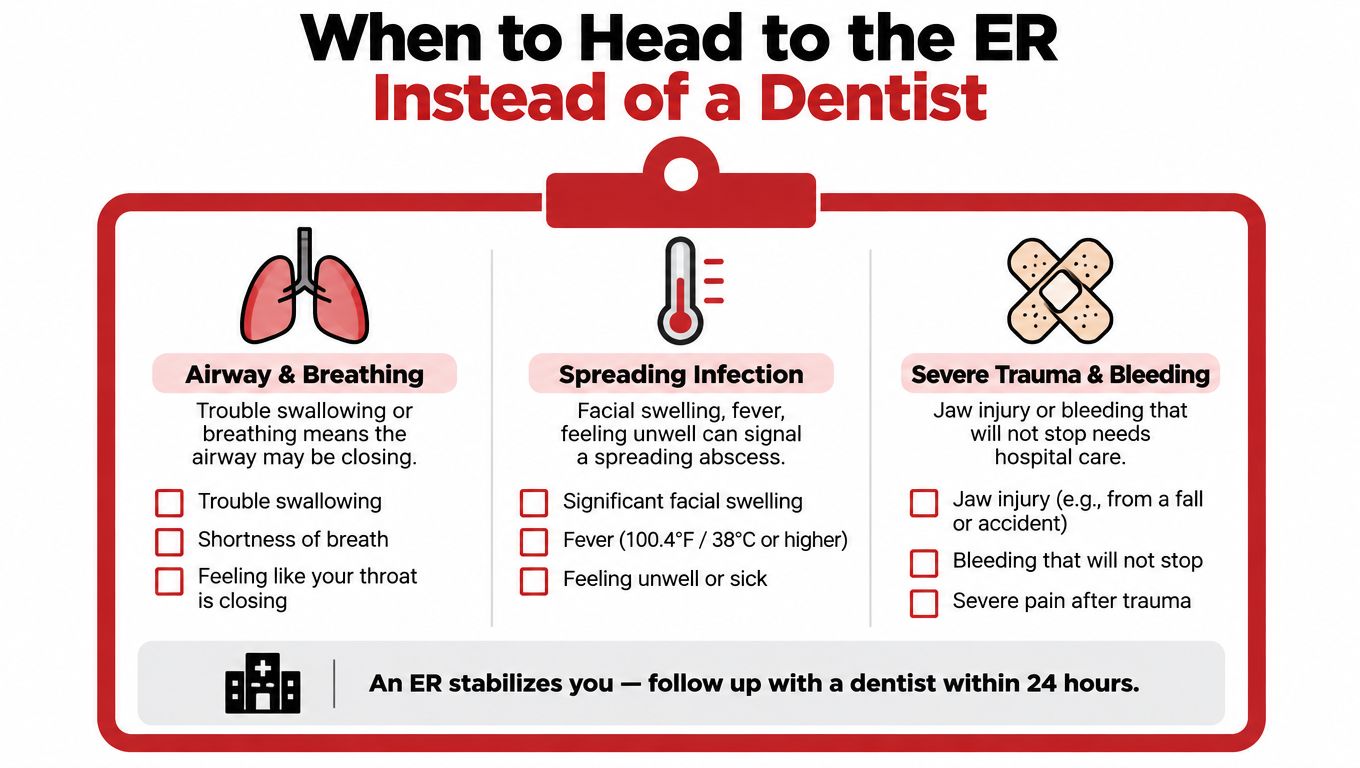
A bad toothache can feel frightening without being medically dangerous. The ER becomes the correct choice when the problem threatens breathing, causes uncontrolled bleeding, involves major trauma, or makes you systemically ill.
Check your airway first
Go to the ER immediately if facial or oral swelling is making it difficult to breathe, swallow, speak, or handle saliva. Swelling beneath the tongue, in the floor of the mouth, or down into the neck deserves particular concern. A feeling of throat tightness is not a symptom to watch at home.
Swelling around the eye, rapidly expanding cheek or neck swelling, or a tongue that feels pushed upward also calls for medical evaluation. Don't lie flat if breathing feels compromised. Call emergency services if you can't safely travel or symptoms are progressing quickly.
Treat bleeding and infection seriously
Firm pressure with clean gauze is reasonable for ordinary mouth bleeding after an injury or extraction. If the bleeding won't slow with sustained pressure, or if you feel weak, faint, confused, or unwell, go to the ER. Bring the information about any blood-thinning medication you take.
Fever, chills, a racing heartbeat, confusion, or swelling spreading toward the eye or neck suggests more than an isolated sore tooth. The ADA guidance on dental emergencies can help you recognize abscess symptoms, but worsening general illness requires medical care rather than a routine dental appointment.
Don't underestimate facial trauma
Choose the ER for a suspected jaw fracture, a displaced jaw, loss of consciousness, vision changes, or any injury that may involve the head. A knocked-out tooth in a young child also deserves medical assessment if there's concern that the tooth was inhaled or swallowed.
The ER can stabilize the dangerous part of the injury, but it generally won't complete the dental repair. Once you're medically cleared, arrange dental follow-up promptly. Guidance summarized by the ADA describes life-threatening emergencies as appropriate for 911 or the nearest emergency department, while non-life-threatening dental problems should be routed to dental care when possible.
What to Do in the First Hour for the Most Common Dental Emergencies
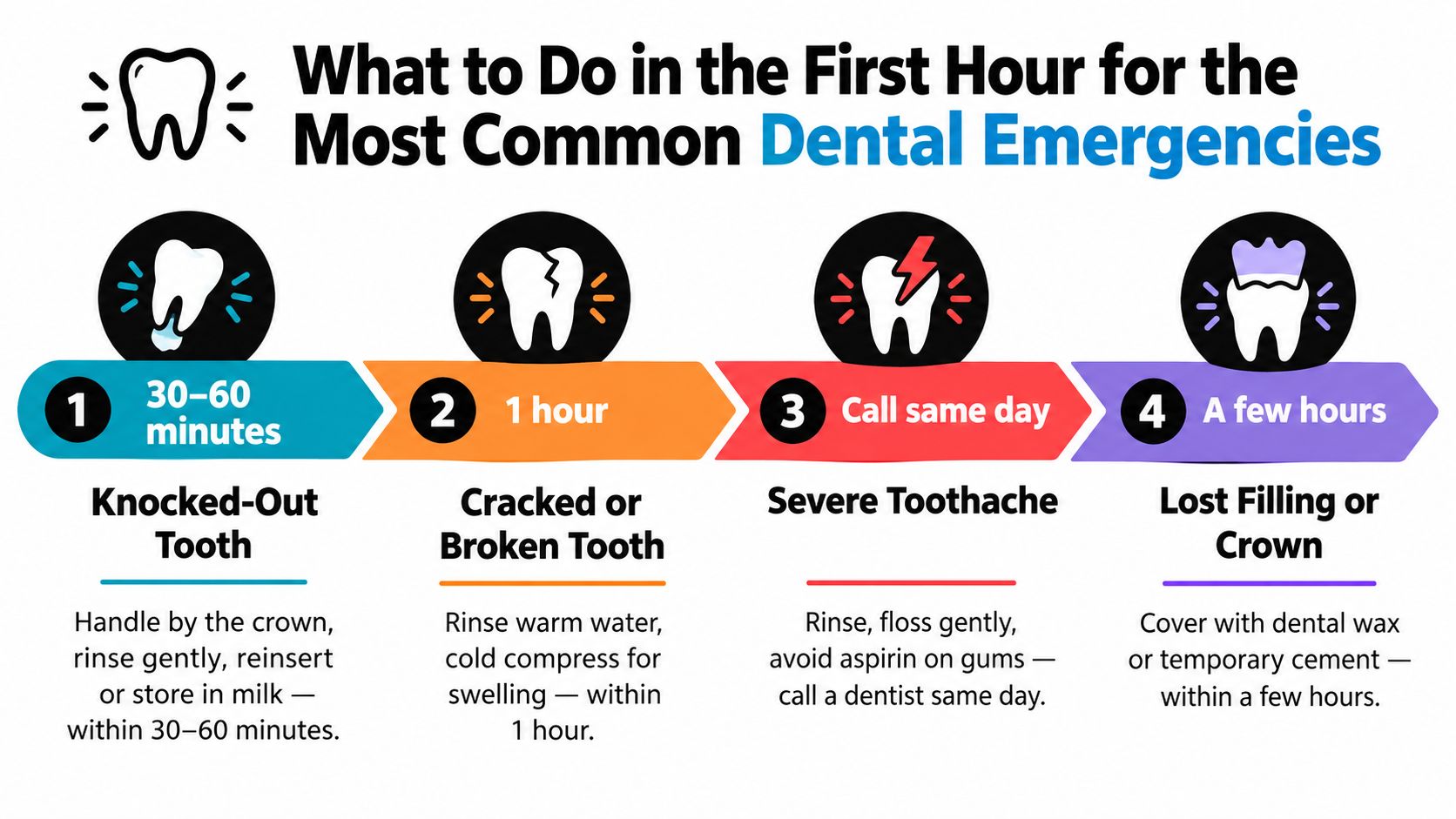
Your first actions can protect the tooth and make the eventual appointment more productive. Don't scrub injured tissue, apply household chemicals, or try to drain swelling yourself. Call an emergency dental office while you begin basic first aid, unless the symptoms already require the ER.
A knocked-out permanent tooth
Pick up the tooth by the crown, the visible part, not the root. Rinse it gently if it's dirty, but don't scrub it or scrape away attached tissue. If you can, place it back into the socket and hold it gently in position.
If reinsertion isn't possible, keep it moist in cold milk, saline, or saliva held inside the cheek. Don't wrap it in a dry tissue or leave it on a countertop. Call a dentist immediately and travel for care without delay, because the dentist needs to assess the socket and the tooth's supporting tissues while they're still viable.
A cracked or broken tooth
Find and save any fragments. Rinse your mouth with warm water, then use a cold compress against the cheek if swelling develops. Cover a sharp edge temporarily with dental wax or sugarless gum so it doesn't cut your tongue or cheek.
Avoid chewing on that side, especially hard foods. A dentist may be able to bond a fragment, place a temporary restoration, restore the tooth with a crown, or begin root canal treatment if the pulp is exposed. More detail on protecting the tooth before your visit is available in this guide to a broken tooth and what to do.
Severe toothache
Floss gently around the painful tooth to remove trapped food. Rinse with warm salt water, then take an over-the-counter pain reliever according to its label if you can safely use it. Don't place aspirin directly on the gum. It can irritate or burn the tissue.
A severe toothache that persists needs a same-day dental call, even if medication reduces it. Pain may come from decay, a cracked tooth, inflammation inside the tooth, or an infection. The goal is to identify and treat the source, not just suppress the signal.
Watch this short visual explanation before your appointment if you're trying to understand what may happen during an urgent visit.
Swelling or a suspected abscess
Rinse with warm salt water and apply a cold compress to the outside of the face. Don't puncture, squeeze, or attempt to drain the swelling. That can injure tissue and won't eliminate the infected source.
Contact an emergency dentist for an examination and same-day treatment when possible. Depending on the findings, treatment may involve drainage, pulpal debridement, root canal therapy, extraction, and medication. Antibiotics may be appropriate in selected cases, but they don't replace source control. Evidence from an endodontic emergency cohort supports prompt treatment of the offending tooth, with pain reported as the dominant complaint and non-surgical root canal treatment producing strong one-year outcomes among followed patients, as detailed in this peer-reviewed endodontic emergency study.
How to Reach an Emergency Dentist Fast in NYC
Call first. Search for a dedicated emergency dental line or the after-hours number listed on a practice's Google Business Profile, then speak to a person rather than relying on an online booking form. A live call lets the office decide whether you need an immediate slot, a remote assessment, or the ER.
Use a direct phone script
Say this clearly:
- “I have severe pain, a broken tooth, swelling, bleeding, or a knocked-out tooth.”
- “It started at [time or part of day].”
- “I do or don't have facial swelling, fever, trouble swallowing, or trouble breathing.”
- “The tooth was knocked out recently,” if that applies.
- “I take these medications and have these allergies.”
Then ask four practical questions:
- Can you see me today or the next available morning?
- Can you stabilize this problem in the first visit?
- Are you in-network with my plan, and what should I expect to pay before insurance?
- Can I speak with a dentist by video or phone before arriving?
A dental practice with a trained hire dental receptionist can collect this information accurately, identify urgent symptoms, and route the call to the appropriate clinician. That matters when the patient is in pain and the front desk needs a concise clinical picture.
Use teledentistry as a bridge
Teledentistry is useful when the office is closed, you're outside Manhattan, or you can't tell whether swelling is becoming dangerous. A dentist may be able to inspect the visible area, discuss pain control, decide whether medication is appropriate, and send you to a local office for definitive treatment. Use a teledentistry consultation as a bridge, not as a substitute for in-person care when the tooth needs drainage, restoration, extraction, or root canal treatment.
Keep your phone charged and take a clear photo only if it doesn't delay care. Don't let a remote consultation delay the ER when you have breathing difficulty, spreading swelling, uncontrolled bleeding, or major trauma.
Keep a backup route
If your first call fails, try another emergency dental practice, a dental urgent-care service, or a hospital-based dental program. You can also use NYC 311 to ask for clinic-directory information. Hospital programs associated with major institutions such as NYU Langone or Mount Sinai may provide direction, but confirm availability before traveling.
What to Bring and What to Ask at the Emergency Appointment
You can assemble the essentials in a minute. Bring a photo ID, insurance card, medication list, allergy list, and the name and phone number of your regular dentist if you have one. Add any relevant medical information, especially blood thinners, immune-suppressing medication, diabetes, or recent surgery.
For a knocked-out tooth, bring it moist in milk, saline, or saliva inside the cheek. Never transport it dry, and don't handle the root. If you're able, arrive a little early so the office can complete medical and insurance forms before the clinical assessment.
Ask the treating dentist:
- Is this tooth savable?
- What must happen today, and what can wait?
- Would drainage, root canal treatment, restoration, or extraction address the source?
- What is the estimated total cost before insurance?
- Which symptoms mean I should go to the ER?
- When should I return for the permanent repair?
If sedation may be used, arrange a companion and confirm whether you can drive afterward. Bring your questions in your phone's notes app. Pain makes it easy to forget important details.
Insurance, Costs, and Aftercare After Emergency Treatment
Ask for a written estimate before treatment begins. Emergency fees vary by examination, imaging, tooth, procedure, complexity, insurance, and whether the office is in-network. Don't assume an emergency visit has the same coverage as a routine cleaning. Check your plan portal or call the insurer while the office confirms the diagnosis and proposed treatment.
| Procedure | Typical Cost Range NYC | Insurance Coverage Estimate |
|---|---|---|
| Emergency examination and diagnostic imaging | Varies by office and imaging needed | Confirm emergency exam, diagnostic, deductible, and network benefits |
| Temporary repair or restoration | Varies by tooth and materials | Ask whether restorative benefits apply immediately |
| Extraction | Varies with tooth position and surgical complexity | Confirm extraction, surgical, anesthesia, and follow-up benefits |
| Root canal treatment | Varies by tooth and clinical complexity | Confirm endodontic, restoration, annual maximum, and deductible rules |
| Definitive crown or replacement tooth | Varies by restoration and laboratory work | Ask about waiting periods, replacement limits, and preauthorization |
Some offices offer membership arrangements, third-party financing, or an uninsured-patient payment option. Ask before consenting, and review the plan details in this guide to dental insurance and payment plans. If Medicaid or an HMO directs you to specific clinics, call the plan or clinic directory rather than assuming every emergency office accepts the benefit.
After treatment, take prescribed medication exactly as directed and complete an antibiotic course when one has been prescribed. Use a cold compress for swelling, eat soft foods while chewing is uncomfortable, and avoid smoking or straws after an extraction. Follow the dentist's instructions over general internet advice, especially if bleeding continues or swelling worsens.
Schedule definitive follow-up with a general dentist. Emergency treatment often stabilizes the problem, while the permanent solution may require a crown, implant, replacement filling, or additional periodontal or endodontic care. Paul L. Gregory, DDS offers short-notice assessment and stabilization for sudden pain, fractures, infections, and broken restorations in Midtown Manhattan. Visit Paul L. Gregory, DDS to request emergency dental care and discuss the next step for your tooth.