


A routine root canal usually takes 60 to 90 minutes in a single visit. For a simple front tooth, it can be closer to 30 minutes, while a complex molar can take more than 90 minutes.
You're probably trying to plan your day around a diagnosis you didn't expect. That makes the timing question feel bigger than the procedure itself, because a root canal isn't just a dental appointment, it's a block of time you need to fit into work, travel, and the rest of a very normal day.
Your Root Canal Timeline Explained
If you just heard that you need a root canal, the first question is usually practical. How long will you be in the chair, and will this turn into an all-day ordeal?
The short answer is that a routine root canal is typically a single chairside visit of about 60 to 90 minutes Cleveland Clinic. A straightforward front tooth often takes less time because it usually has simpler internal anatomy. A back tooth can take longer because it may have more canals to find, clean, and seal, which adds steps to the visit. If you need urgent care for sudden pain or swelling, you can also look at emergency dentistry options in Manhattan while you're arranging the next step.
Why there isn't one fixed number
A root canal is closer to repairing the wiring inside a wall than patching the outside surface. The dentist has to numb the tooth, open it, clean the canals inside it, then seal everything carefully so bacteria cannot keep causing trouble. A tooth with more internal spaces, curved canals, or harder-to-reach anatomy takes longer because each canal has to be located and treated on its own.
The same visit can also run longer if the tooth is already inflamed or the infection has spread deeper into the surrounding area. In those cases, the dentist may need extra time to clear the canals thoroughly and make sure the tooth is ready for a stable seal. That is why your dentist may give you a time window instead of a single number.
Practical rule: the more complex the tooth anatomy and the more active the infection, the more likely the visit stretches toward the longer end of the range.
If you are trying to judge how much time to block off, ask your dentist which tooth is involved and whether it looks like a simple case or a more involved one. That conversation usually tells you more than a generic estimate does, because the timeline depends on the tooth in your mouth, not on a standard clock.
The Root Canal Process Step by Step
A root canal sounds mysterious until you break it into parts. It's a lot like fixing a leak inside a wall, except the “plumbing” is the narrow canal system inside the tooth.
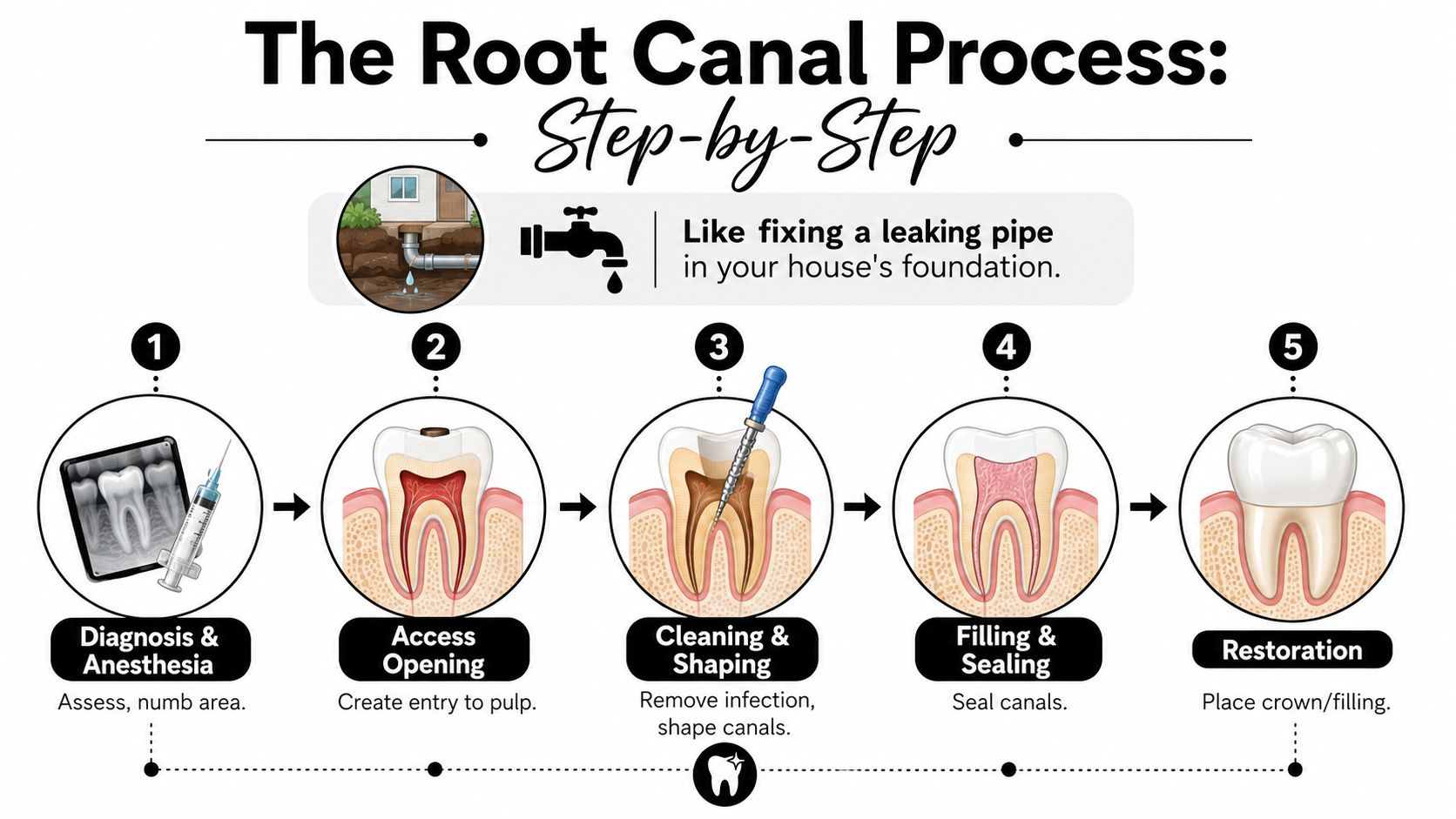
The dentist starts with diagnosis and numbing, then works through the tooth in a controlled sequence. If you want a visual companion to the process, this diagram helps connect the steps to the appointment flow:
1. Numbing and access
First, the area is numbed so the tooth and surrounding tissue stay comfortable during treatment. Then the dentist makes a small opening in the tooth to reach the inner canal system. That opening is the access point, not a large drilling job, and it's the doorway that lets the dentist work inside the tooth instead of removing it.
2. Cleaning and shaping the canals
Once inside, the dentist removes the infected or irritated tissue and cleans each canal. This is usually where the time goes, especially in teeth with more than one canal, because each space has to be found, cleaned, and shaped with care.
3. Filling and sealing the tooth
After the canals are cleaned, they're filled and sealed to block bacteria from returning. That final seal is the difference between a temporary cleanup and a lasting treatment. In many cases, the tooth still needs a final restoration afterward, which is why your dentist may discuss a crown or filling as part of the plan.
A little more detail can help if your dentist recommends imaging before treatment. You can see how dental X-rays help guide treatment planning and make the procedure more predictable.
Key Factors That Affect Your Treatment Time
The biggest source of confusion is that two people can both say “I had a root canal,” yet their appointment lengths can be very different. That's because the tooth itself matters just as much as the diagnosis.
The main technical drivers are tooth type and number of canals. Incisors and canines usually have 1 to 2 canals, premolars usually have 1 to 2 canals, and molars often have 3 to 4 canals or more, which is why molars commonly take longer and are more likely to be split across visits Mid County Endodontics.
| Estimated Root Canal Duration by Tooth Type | Typical Number of Canals | Estimated Time per Visit |
|---|---|---|
| Front teeth, such as incisors and canines | 1 to 2 | Usually on the shorter side |
| Premolars | 1 to 2 | Often moderate |
| Molars | 3 to 4 or more | Often the longest |
The pattern is simple. More canals mean more searching, cleaning, shaping, disinfecting, and sealing. That extra work is one reason a molar may need a longer appointment window, while a front tooth can often move faster through the same basic steps.
Why complexity changes the clock
Infection severity also changes the timeline. A straightforward tooth with a clean canal path may move efficiently, while a tooth with curved roots, calcified canals, or a prior failed root canal can take longer. Those cases often need more patience and careful handling, which is why your dentist may suggest a staged plan rather than trying to force everything into one short visit.
If you're comparing treatment types, it can help to think of root canal work the same way you'd think about cavity fillings. Both treat a damaged tooth, but the internal work in a root canal is far more detailed, so the appointment length is naturally different.
A good question to ask your dentist is simple, “Is my tooth a straightforward case, or is it one that needs extra time because of anatomy or infection?”
Single Visit vs Multiple Appointments
A lot of patients want one clear answer. Will it be finished today, or will they have to come back?
For many teeth, a single-visit root canal is enough. That's especially true when the anatomy is straightforward and the infection isn't unusually complicated. Clinical research summarized in the provided data shows that single-canal teeth typically took 19 to 55 minutes, while teeth with more than one canal typically took 42 to 106 minutes Animated Teeth. Those ranges help explain why some appointments finish quickly and others need more room.
The reason for multiple visits is usually planning, not trouble. Some teeth need extra time because the canals are harder to locate or because the infection is more involved. In those cases, the dentist may prefer to clean and stabilize the tooth first, then finish the sealing step at a later visit. That doesn't mean the treatment is failing, it means the dentist is choosing the safer route for that tooth.

What makes a second visit more likely
A dentist may recommend more than one appointment when the tooth has harder-to-treat anatomy or when the infection needs extra management between visits. In practical terms, that means the schedule is being shaped around the tooth, not around a generic office template.
If you're asking about the finishing step, a crown often becomes part of the conversation for back teeth that need added strength, and you can read more about crowns for teeth if your dentist has already mentioned that possibility. The important thing is that the canal treatment and the restoration work together.
Your Recovery Timeline After the Procedure
Most of the fear around root canals is about the appointment itself, but recovery matters too. Patients often feel relieved to know the treated tooth is supposed to feel better, even if the area is a little tender at first.
The first few hours
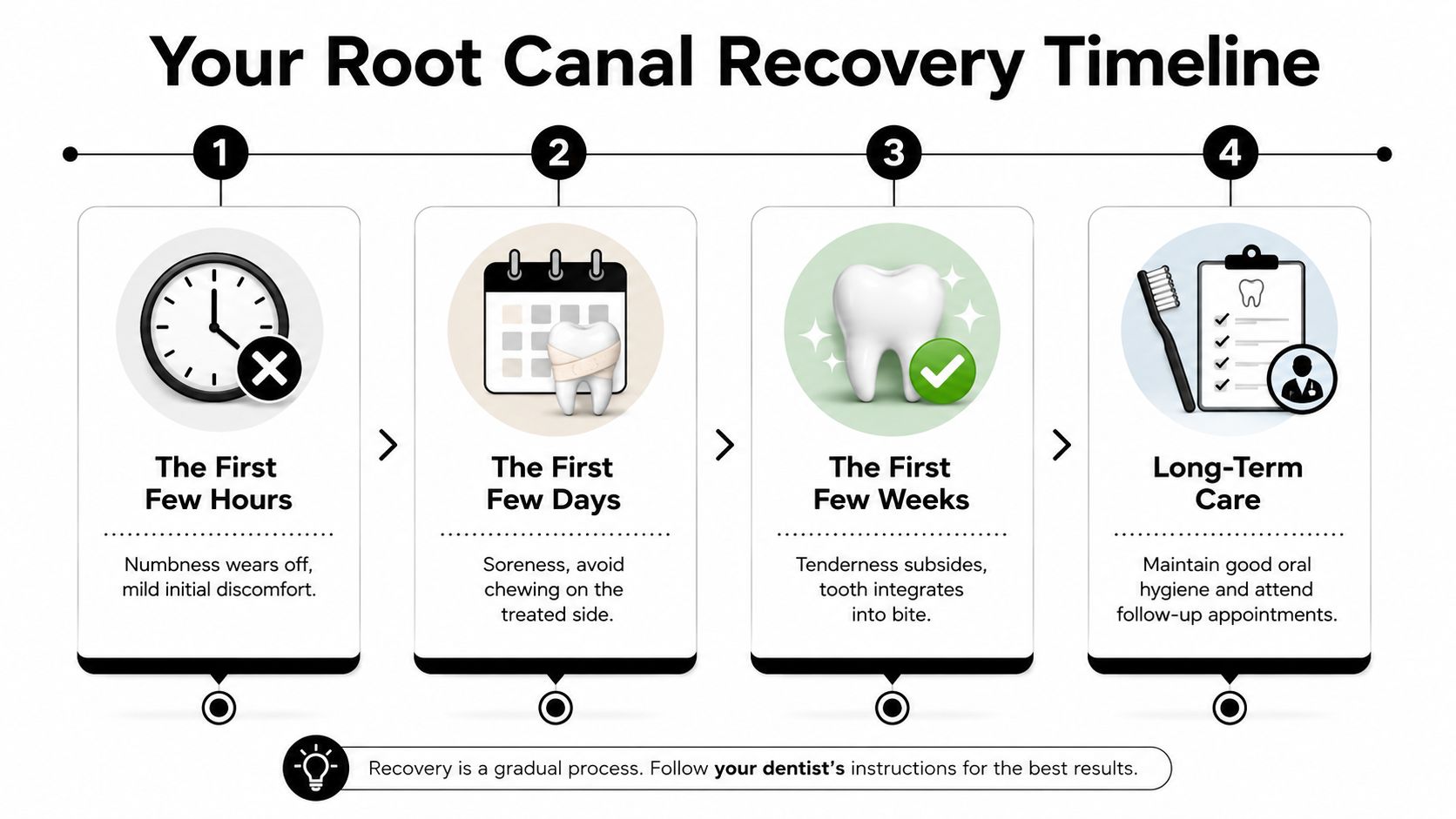
As the numbness wears off, the tooth and surrounding tissue may feel strange or mildly sore. That's normal. It helps to avoid chewing until sensation returns fully, because a numb mouth makes it easy to bite your cheek or tongue without realizing it.
The first couple of days
Tenderness can linger for a short time, especially if the tooth was inflamed before treatment. Soft foods are usually easier than anything hard or sticky, and it's smart to avoid overloading the treated side while it settles down.
The following weeks
The final restoration matters here. A treated tooth still needs full protection, and your dentist may discuss the next step in your plan if the tooth hasn't been permanently restored yet. For patients who later need implant-based care for other teeth, it can help to understand the healing process after dental implants, since both treatments depend on proper follow-through.
Recovery should trend in the right direction every day. If discomfort is getting worse instead of easing, that's the time to call your dentist.
Frequently Asked Questions About Root Canals
Is the root canal procedure painful?
With modern numbing, the goal is comfort during treatment. Many patients are more aware of the tooth's condition before the appointment than the procedure itself, which is often what creates the anxiety in the first place.
Will I definitely need a crown afterward?
Not every tooth needs the same final restoration. Your dentist decides based on how much structure is left and which tooth was treated. Back teeth usually need more protection than front teeth, much like a bridge needs sturdier support than a small footpath.
Why does retreatment take longer than an initial root canal?
A retreatment can take longer because the tooth has already been worked on once, and the dentist may need to clear out older material or address a previous problem before sealing it again. That extra work is part of making the tooth stable and comfortable.
Why do some teeth need more than one visit?
Some teeth are harder to treat and need care in stages. A tooth with a more complex infection may need the space and time of a second visit so the dentist can finish the treatment safely. Mayo Clinic guidance summarized in the provided material notes that some teeth may need more than one visit Healthline.
What should I ask before my appointment?
Ask whether your tooth is likely to be finished in one sitting, whether a crown is expected afterward, and whether your case is routine or more complex. Those three questions usually give you the clearest picture of your personal timeline.
If you're trying to plan treatment in Manhattan, Paul L. Gregory, DDS provides root canal care, restorative dentistry, and the follow-up planning that helps a treated tooth stay functional. If you want a calm, straightforward discussion about what your own appointment might involve, visit Paul L. Gregory, DDS and schedule a visit.