

Popular advice often treats crown cement as a kind of dental superglue. That misses what matters: tooth crown cement is selected to suit the tooth, the crown material, and the way the crown is designed to stay in place. The right choice can differ for a temporary crown, a thin ceramic restoration, or a crown held mainly by the shape of the prepared tooth.
That's also why a crown coming loose shouldn't be fixed with household glue. The cement is part of a carefully controlled clinical process, and a home repair can make it harder to clean, assess, or rebond the restoration. Knowing what the cement does can help you understand your dentist's choices and what to do if a crown shifts.
What Crown Cement Is and Why It Is Not Generic
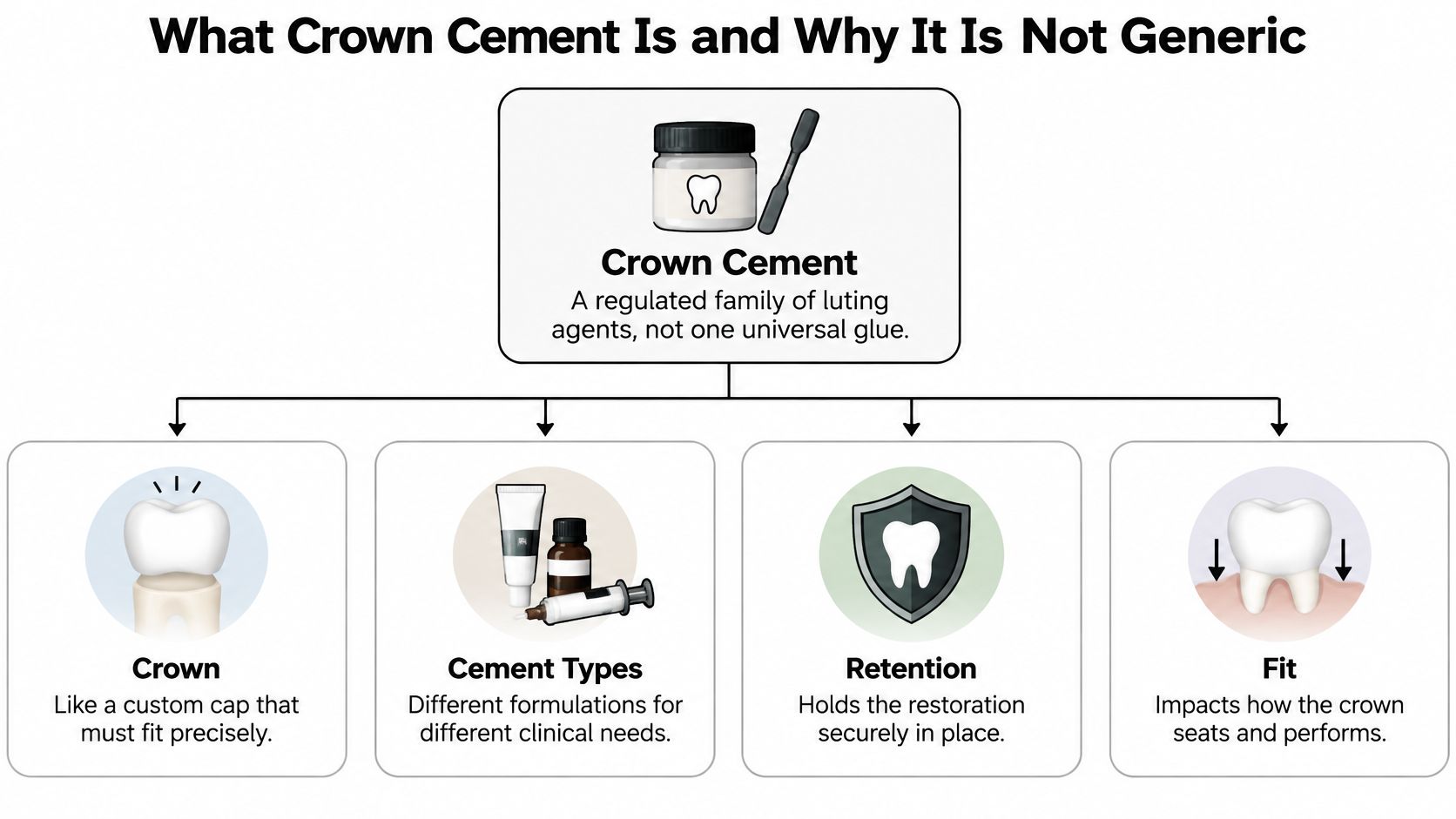
Ask a room of crown patients what material their crown is made from and a few will know. Ask which cement holds it in place and almost none will. Yet that second choice often shapes how well the first one performs. Crown cement, called a luting agent in clinical language, is a family of dental materials made to flow into the thin space between a prepared tooth and a restoration, then set in a way that suits the job at hand.
That job varies more than patients expect. U.S. regulators classify dental crown cements as distinct device categories because composition and intended use change what a cement is expected to do. A material sealing a temporary crown faces different demands than one bonding a thin ceramic crown to a conservatively shaped tooth.
The key-and-lock analogy helps here. A crown is shaped to fit one tooth the way a key is cut for one lock, and the cement fills the microscopic gap between them without changing the crown's shape. When the fit or the cement layer is off, the crown may not seat as intended.
Temporary and permanent cementation solve different problems
A temporary crown protects a prepared tooth for a limited stretch of time and must come off cleanly later. Its cement needs to seal and hold through everyday chewing while still allowing retrievability at the next visit. A permanent crown carries a different assignment. Depending on the case, its cement may need to retain the crown against years of biting force, seal the margin, tolerate a moist field, and stay compatible with the ceramic's appearance and thickness.
None of these demands can be separated from the tooth underneath. How much tooth structure remains, how the preparation is shaped, how thick the crown is, and what the ceramic is made of all steer the selection. The dentist is matching a material to a specific treatment situation, and the same cement that suits one crown can be the wrong match for the crown beside it.
If you want the wider context of how crowns are planned and placed, this overview of dental crown services shows where cementation fits in the sequence. Crown, tooth, preparation, and cement succeed or struggle together.
Comparing the Main Families of Luting Agents
Cement families work like footwear. Boots, running shoes, and sandals all protect your feet, yet each suits a different situation. Luting agents divide the same way. Some are chosen for temporary crowns, others for permanent restorations, and the match depends on what the cement has to accomplish in your specific case. A category name alone never settles the question.
| Cement family | Typical clinical role | Regulatory note |
|---|---|---|
| Zinc oxide-eugenol | Often used for temporary restorations or temporary crown and bridge cementation | Generally Class I for these uses in the United States |
| Zinc phosphate | A traditional luting option for selected restorations | Many formulations for similar crown and bridge uses are Class II |
| Zinc polycarboxylate | A luting option used for selected restorations | Many formulations for similar uses are Class II |
| Glass-ionomer | Used for selected permanent restorations | Many formulations for similar uses are Class II |
| Resin-modified glass-ionomer | Used when the clinical situation suits a modified glass-ionomer system | Many formulations for similar uses are Class II |
| Resin-based cement | Often selected when adhesive retention or compatibility with the restoration is important | Modern crown resin cements commonly fall under Class II |
As noted earlier, regulators classify these products by intended use. That is why a temporary material and a permanent adhesive can sit in different device classes even though both hold crowns in place. The classification follows the job the cement is designed to do, not its brand name.
The restoration changes the decision
The crown itself steers the choice. A metal crown, a glass ceramic crown, a zirconia crown, and a composite restoration each interact with cement differently, so the same product rarely suits all four.
Your dentist weighs three main inputs: the ceramic or metal the crown is made from, how thick or thin that crown is, and how much shaped tooth is left to grip. A tall, well-shaped preparation may hold a crown through conventional retention, while a short or tapered one may need a cement that bonds chemically to tooth structure. The cement is chosen to fill whatever gap the crown and tooth leave behind.
The most useful question you can ask is, "What does this cement need to do for my crown?" Reading a guide discussing dental adhesive options can help you frame that conversation before your appointment.
The cement family matters again if a crown ever loosens. A temporary material is designed to release on purpose. A permanently cemented crown that lets go signals a problem your dentist should see promptly.
How Cement Thickness Controls Crown Fit
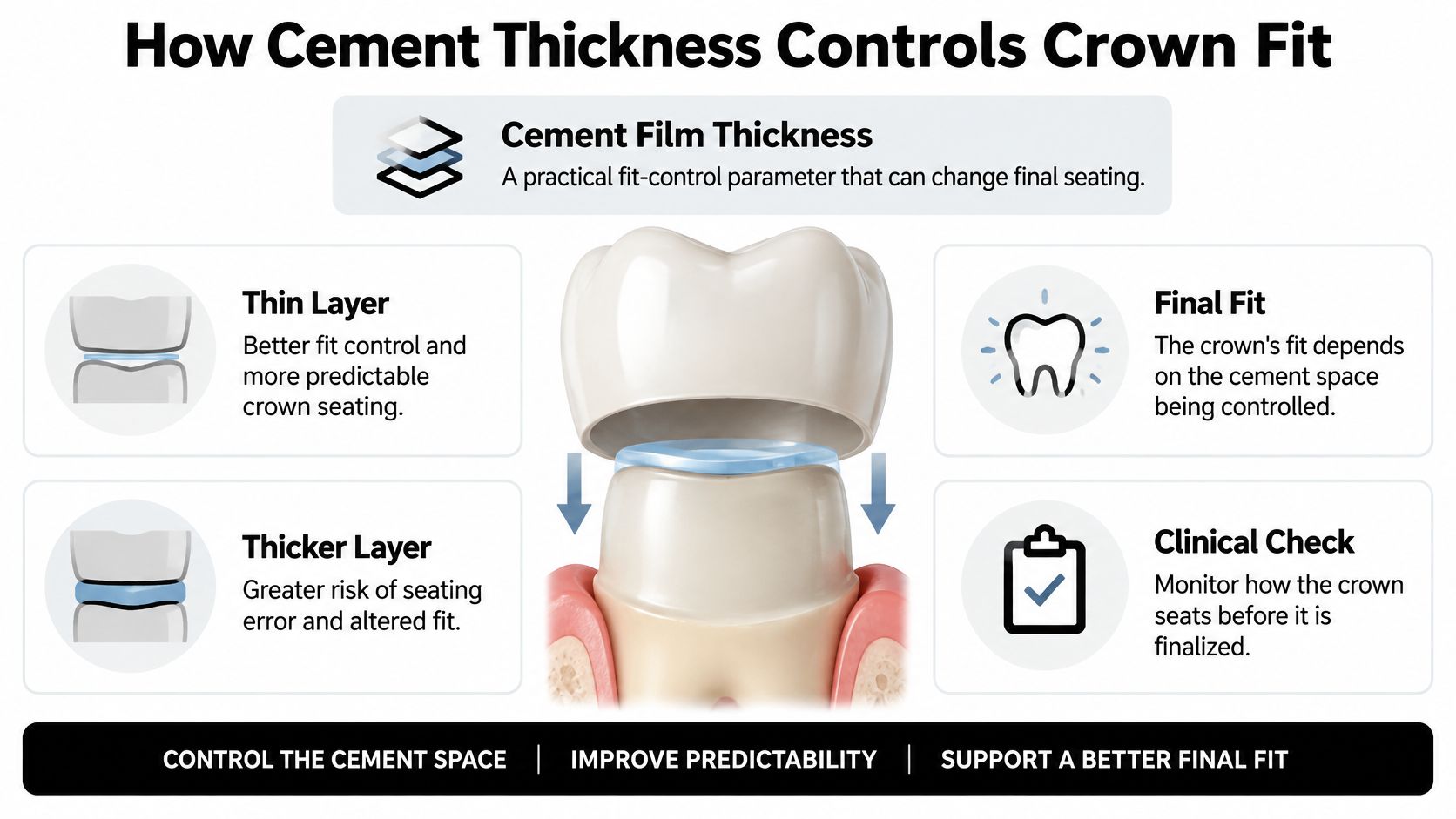
A crown seats onto a tooth the way a lid seats onto a jar. A thin film between the two surfaces is fine. Add too much material, and the lid stops short, leaving a gap along the rim.
That gap is what dentists worry about with cement. If the hardened layer is too thick, the crown may stop short of its intended position. The edge can stay slightly open, the teeth can meet differently, and the bite can feel off in a way you notice every time you chew.
Material standards exist to keep that layer within tested limits. ISO 4049 sets a 50 µm maximum film thickness for polymer-based luting materials, and other regulatory criteria set their own limits for different cement classes. Passing a standard qualifies the material itself. It says nothing about whether your individual crown will seat fully, because that still depends on the crown, the preparation, and the technique used on the day.
How delivery and mixing affect the layer
Two samples of the same cement can form different layer thicknesses depending on how the material leaves its package and how it is mixed. Laboratory comparisons of resin-modified glass-ionomer cements have found that automix tips, hand mixing, and clicker-style dispensers each change the thickness of the film the cement produces. A cement your dentist trusts still has to be dispensed and handled exactly as its directions describe, or the layer it creates may not match what the manufacturer intended.
The appointment reflects this. Before cementation, the dentist confirms the crown seats fully during try-in and adjusts the contacts or bite if needed. The mixing ratio, working time, seating pressure, and cleanup timing then follow the material's instructions step by step. Cement cannot reliably compensate for a crown that has not seated fully.
For a plain-language look at the stages a crown goes through before this appointment, see this Aspiring Smiles Dental and Braces crown guide. Knowing how the crown is shaped makes it easier to see why cementation is a fit-sensitive step rather than a final squeeze of glue.
Bonding Versus Conventional Retention for Thin Crowns
Can a very thin-looking crown be cemented like a conventional crown? Sometimes, but the answer depends on the crown's ceramic, thickness, preparation, and how much retention the tooth's shape provides.
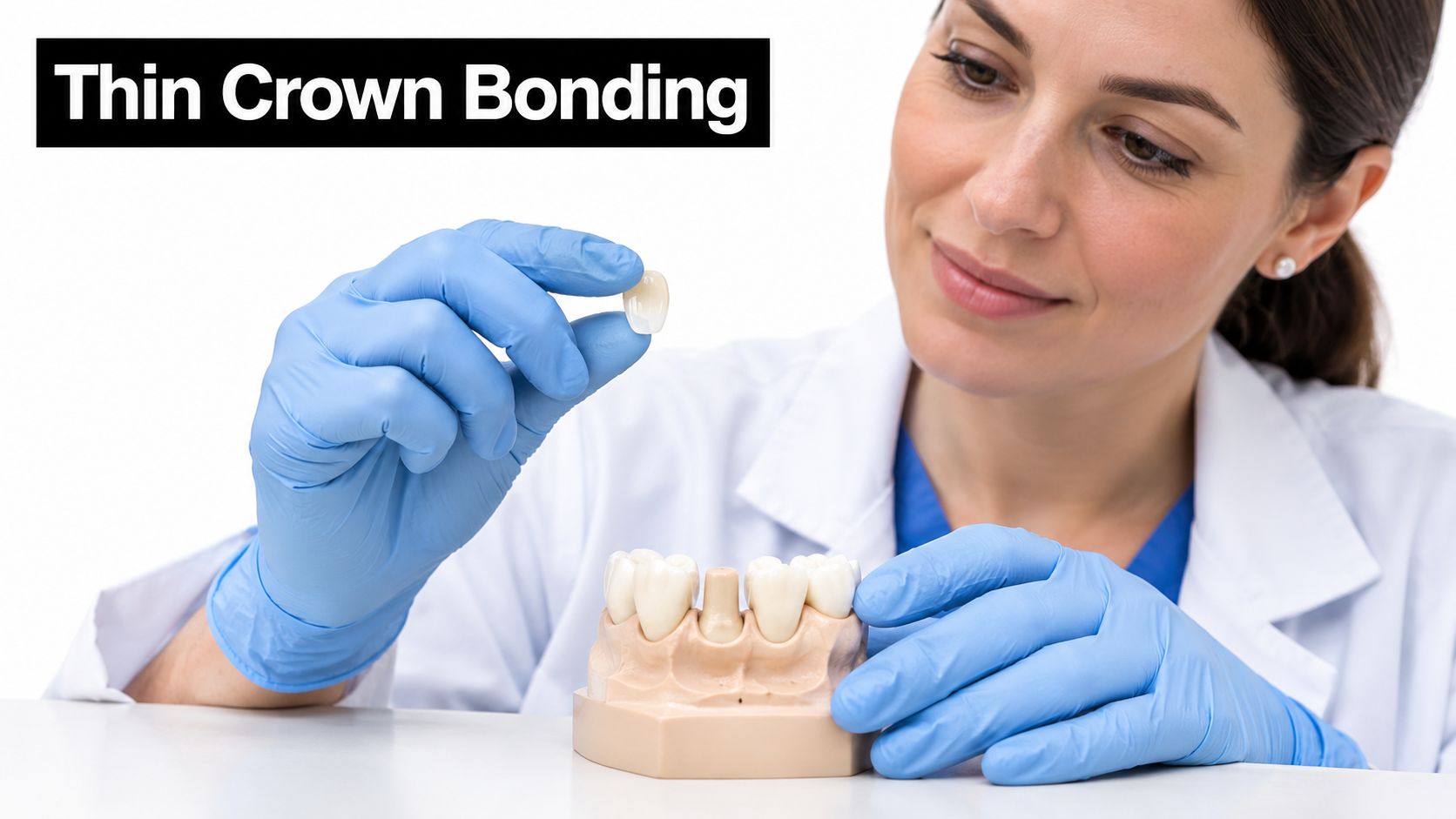
Conventional cement mainly fills the space between the crown and tooth, then hardens to help retain the restoration. Adhesive resin cement can also form an adhesive interface with the tooth and restoration when the materials are prepared appropriately. Surface treatment, isolation, and the type of ceramic matter because different restoration surfaces respond differently.
A systematic review published in 2025 examined 14 studies and found conflicting overall evidence on mechanical reliability. In relevant comparisons, conventional cements produced significantly lower fracture resistance than resin cement, with a standardized mean difference of 2.39 and a 95% confidence interval of 1.21–3.57. The review also reported that cement type affected fracture resistance across thin, ultrathin, and thicker zirconia or glass-ceramic crowns, regardless of surface pretreatment. These findings are reported in the systematic review of crown cementation and fracture resistance.
What the evidence does, and doesn't, tell you
Those results don't mean resin cement guarantees an individual crown won't fracture. Laboratory measures of fracture resistance help compare materials and protocols, but they can't predict every patient's outcome. Bite forces, tooth preparation, crown design, and other clinical details still matter.
Adhesive resin cement may be especially important when a restoration is thin or depends on bonding for support. Conventional cement may be suitable when the crown design and preparation offer adequate retention. The choice is about the whole treatment plan, not a universal ranking of cement types.
The bonding protocol also depends on the crown material and the condition of the tooth. Your dentist may explain how the cement and restoration surface will be treated before the crown is placed. For a closer look at how crown materials differ, this guide to zirconia crowns versus porcelain-fused-to-metal crowns offers useful context.
The distinction between adhesive and conventional cementation becomes especially relevant when the crown's thickness or material limits how much it can rely on the tooth's shape alone. The final decision should account for both retention and the possibility that the restoration may later need repair or removal.
For a visual overview of crown placement, you can also watch this video about dental crown cementation.
Why Preparation and Cementation Drive Longevity
Cement works like grout between a tile and a wall: it fills the gap, while the wall's shape does most of the holding. The tooth preparation is that wall. Its height, taper, surface area, and condition determine how well a crown resists being lifted or twisted by chewing, and the cement's job is to complete what the preparation started.
A literature review identifies preparation taper, preparation geometry, tooth-surface area and condition, biting stresses, and the luting agent as the main influences on retention. It describes an optimal taper of approximately 6 to 20 degrees, while noting that short clinical crowns, extensive destructive caries, abfraction, and developmental abnormalities make retention harder to achieve, according to the review of factors affecting crown retention.
That dependence on preparation shape is why cement selection is a decision about the specific case. A tall, well-tapered preparation under a sturdy zirconia crown can often rely on conventional retention, while a short preparation or a thin glass-ceramic crown may need the extra grip of an adhesive protocol. Preparation design, ceramic type, and crown thickness all feed into the same choice.
Performance standards and real-world outcomes
Cement performance has become more measurable through standards that sort materials by chemistry and setting behavior. The ISO 9917 series covers water-based dental cements, with parts addressing powder/liquid acid-base cements and resin-modified cements, while polymer-based luting materials are commonly assessed under ISO 4049. As noted earlier, the FDA's recognized-standards record lists editions of these standards, including an ISO 9917-1 third edition dated May 2025.
What standards cannot predict is how one crown will fare in one mouth. Survival depends on the whole chain: preparation quality, crown fit, surface conditioning, moisture control during seating, and maintenance afterward. A suitable cement can still underperform if a single link in that chain is weak.
A successful cementation is a sequence: preparation, fit, material selection, surface conditioning, cement placement, seating, cleanup, and curing. Care at each stage helps explain why the same crown material can last very different lengths of time for different patients, a pattern explored in how long dental crowns last.
Once your crown is placed, follow your dentist's instructions on eating and cleaning. For a practical picture of the first days after treatment, a Scottsdale dentist's crown aftercare advice is a helpful reference. If a crown ever feels loose, call the office promptly; a quick recementation visit is far simpler than treating a tooth left unprotected.
Recognizing Signs of Cement Failure and Loose Crowns
A temporary crown coming loose is relatively common, and it doesn't automatically mean that the tooth or dentist has failed. The response still matters because the prepared tooth needs protection, and the crown may need cleaning or reassessment before it can be put back.
Clinical reporting cites an 18.1% decementation rate for long-term temporary restorations over a median wear period of 362 days. Decementation was significantly greater with provisional or self-adhesive cements than with adhesive cementation, according to the clinical-literature report on temporary crowns. Cement residue on a prepared tooth can also reduce the bonding strength of the definitive restoration.
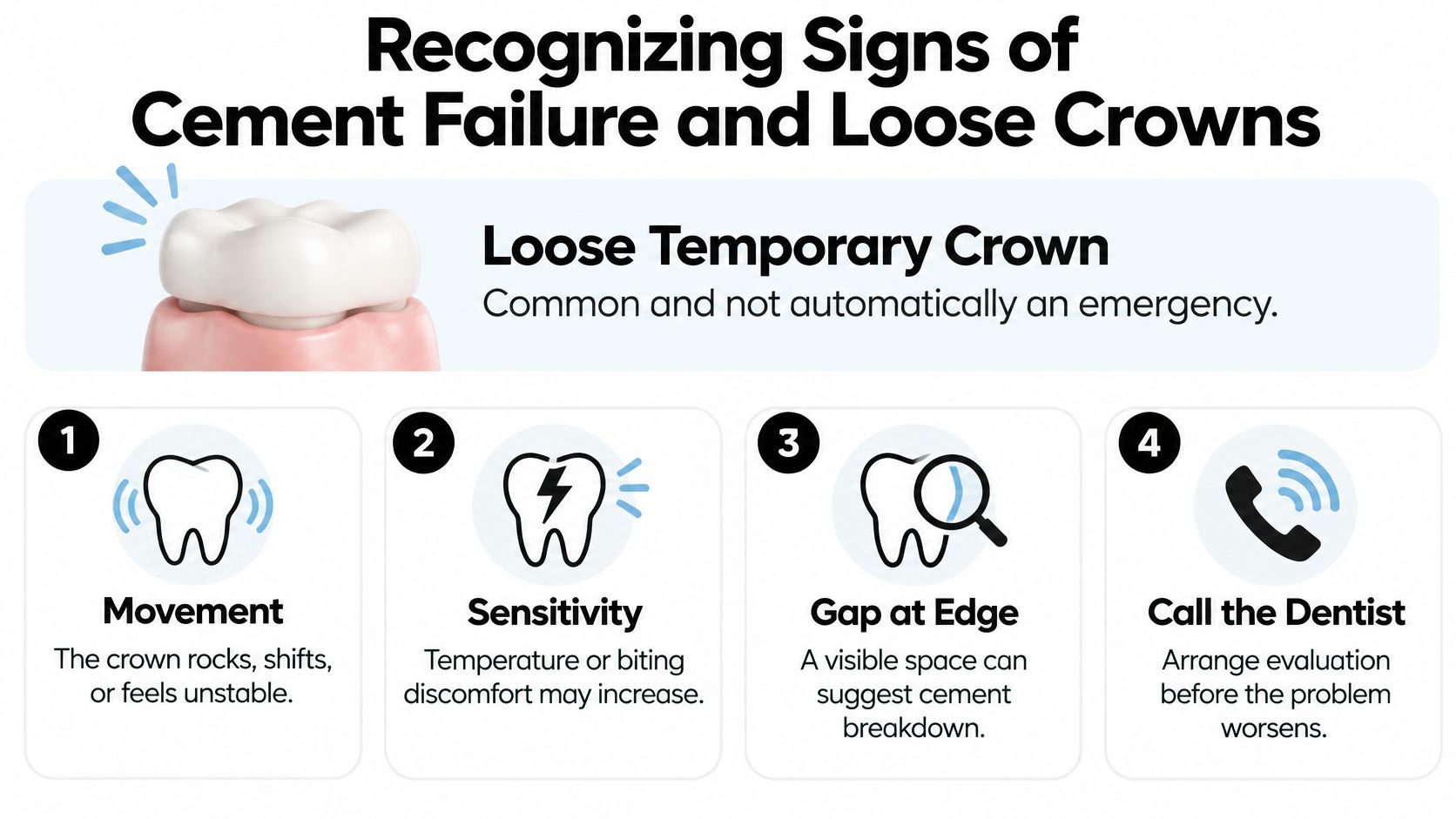
Signs that deserve a call to your dentist
Pay attention to changes such as:
- Movement: The crown rocks, shifts, or feels unstable.
- Sensitivity: Temperature or biting discomfort increases.
- Poor fit or a gap: The crown feels different at the edge, or you can see a space.
- Changed bite: Your teeth meet differently than they did before.
- Possible damage: You notice decay, a crack, or a piece of the crown or tooth has broken.
These signs don't tell you exactly why the crown has changed. A dentist needs to assess whether the crown still fits and whether the tooth underneath is sound. Recementation may not be appropriate if there's decay, a fracture, poor fit, or a changed bite.
What to do if a crown comes loose
Preserve the crown. Keep it safe and take it with you when you contact the dental office. Avoid chewing on that side until you've received advice, so the exposed tooth and crown aren't put under unnecessary pressure.
Next, contact the dental office promptly and describe what happened. Don't use superglue or household adhesive. Glue can contaminate the tooth preparation, and residue may interfere with the bonding needed for a definitive restoration.
If you're unsure whether a crown has fallen off or is moving, this guide to what to do when a tooth crown falls off can help you prepare for the call. The dental team can assess the crown, the tooth, and the bite before deciding whether recementation, repair, or another treatment is appropriate.
Caring for Cemented Crowns and Taking Your Next Step
After crown cementation, follow the instructions your dentist gives you about eating and caring for the restoration. If your bite feels high, the edge feels rough, or the crown seems to move, tell the dental office rather than trying to adjust it yourself. Keeping regular dental exams also gives your dentist a chance to notice changes before they become more disruptive.
A crown that has come loose may be recementable if the tooth is sound and the restoration still fits. If the tooth has changed, the crown is damaged, or the bite is no longer right, the dentist may recommend a different repair. An early assessment helps identify which situation you're facing and protects the prepared tooth while the next step is planned.
Getting an assessment in Manhattan
Paul L. Gregory, DDS is a Midtown Manhattan dental practice at 57 W 57th St, near Central Park South and Columbus Circle. The office provides crown and bridge care, emergency assessment with short-notice availability, and diagnostics including digital scanners and intraoral cameras. Those tools can help the dentist examine a crown's fit and show you what they see during the evaluation.
Patients travel to Midtown from Midtown, Chelsea, the Upper West Side, the Upper East Side, Lenox Hill, Turtle Bay, Hell's Kitchen, the Theatre District, Gramercy Park, the West Village, Greenwich Village, NoHo, the East Village, SoHo, Tribeca, Hudson Yards, Chinatown, and Wall Street. Wherever you're coming from, contact the dental office if a crown feels loose, sensitive, or out of place. You can also review these after-care steps for a tooth crown as you plan your next appointment.
Book an assessment to find out whether your crown can be recemented, repaired, or replaced. A dentist can examine the restoration and tooth, check the bite, and recommend a plan based on what they find.
Paul L. Gregory, DDS offers crown and bridge care, emergency assessment, and diagnostic tools to help evaluate loose or uncomfortable restorations. Contact Paul L. Gregory, DDS to book an assessment and find out whether your crown needs recementation, repair, or replacement.